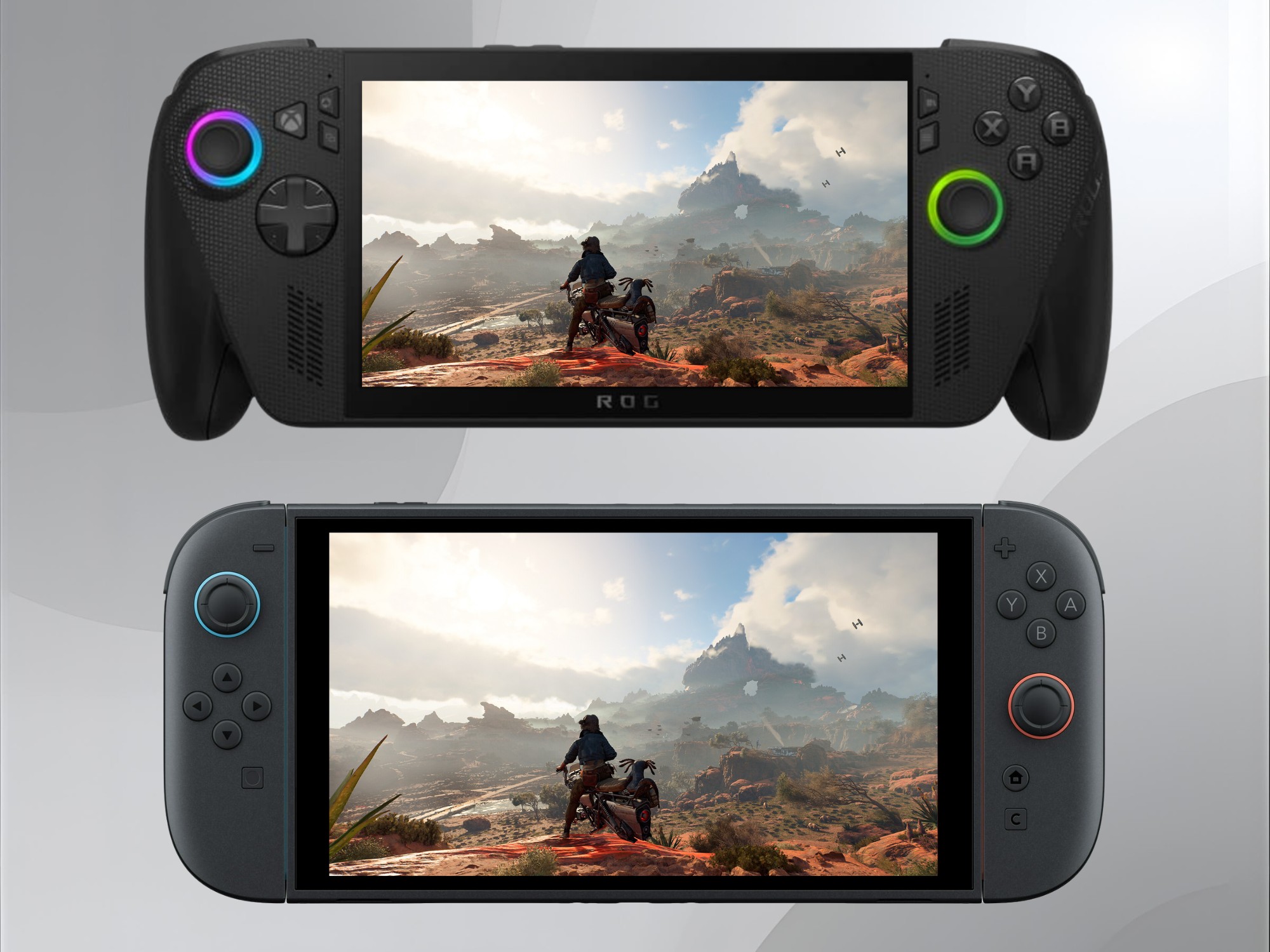
Switch 2 vs ROG Ally X: a budget handheld that punches way above its price
With a price that’s less than half of the ROG Ally X, you might expect Nintendo’s Switch 2 to lag far behind in real-world performance. A new head-to-head video from ElAnalistaDeBits suggests otherwise. While the Windows 11-based Ally X can edge out higher frame rates in certain scenarios, its image quality often pays the price due to aggressive FSR upscaling. Meanwhile, Switch 2’s custom DLSS solution frequently delivers a cleaner, sharper picture.
Thanks to upgraded hardware, Switch 2 is comfortably running big-name AAA games. In Hogwarts Legacy, the Ally X posts a higher frame rate overall, but it needs Turbo Mode to pull clearly ahead of the Switch 2’s 30 fps target. Even then, the gap isn’t as dramatic as you’d expect given the cost difference.
Star Wars Outlaws tells a similar story. Both handhelds upscale from 635p to 1080p, but the Ally X’s FSR implementation can look noticeably softer, especially on distant textures and fine detail. The Switch 2’s approach often produces a more stable, polished image that looks better in motion and in stills.
Where the ROG Ally X pulls ahead is endurance and storage speed. In lower-power Performance Mode, it lasts longer in titles like Cyberpunk 2077 and Silksong. It also benefits from faster load times thanks to its internal SSD. If you want the broadest game library and access to Windows apps, mods, and storefronts, the Ally X offers unmatched flexibility. That said, the software experience still isn’t as plug-and-play as a traditional console, and it demands more tinkering than some players will want.
It all comes down to value. With the Ally X hovering around $999.99, you might expect a massive performance gulf. That simply isn’t what these comparisons show. Switch 2 delivers competitive frame pacing and consistently strong image quality at a much lower price, making it a compelling choice for anyone who prioritizes simplicity, portability, and great visuals without breaking the bank.
Quick takeaways:
– Switch 2 keeps pace surprisingly well, often with better image quality thanks to custom DLSS.
– ROG Ally X can hit higher frame rates, especially in Turbo Mode, but differences are often modest.
– Ally X wins on battery life in Performance Mode and delivers faster load times via its SSD.
– Windows 11 and Steam access give Ally X a huge library and flexibility, but it’s less straightforward than a console-like experience.
– Given the Ally X price tag, the Switch 2’s value proposition looks especially strong for most handheld gamers.