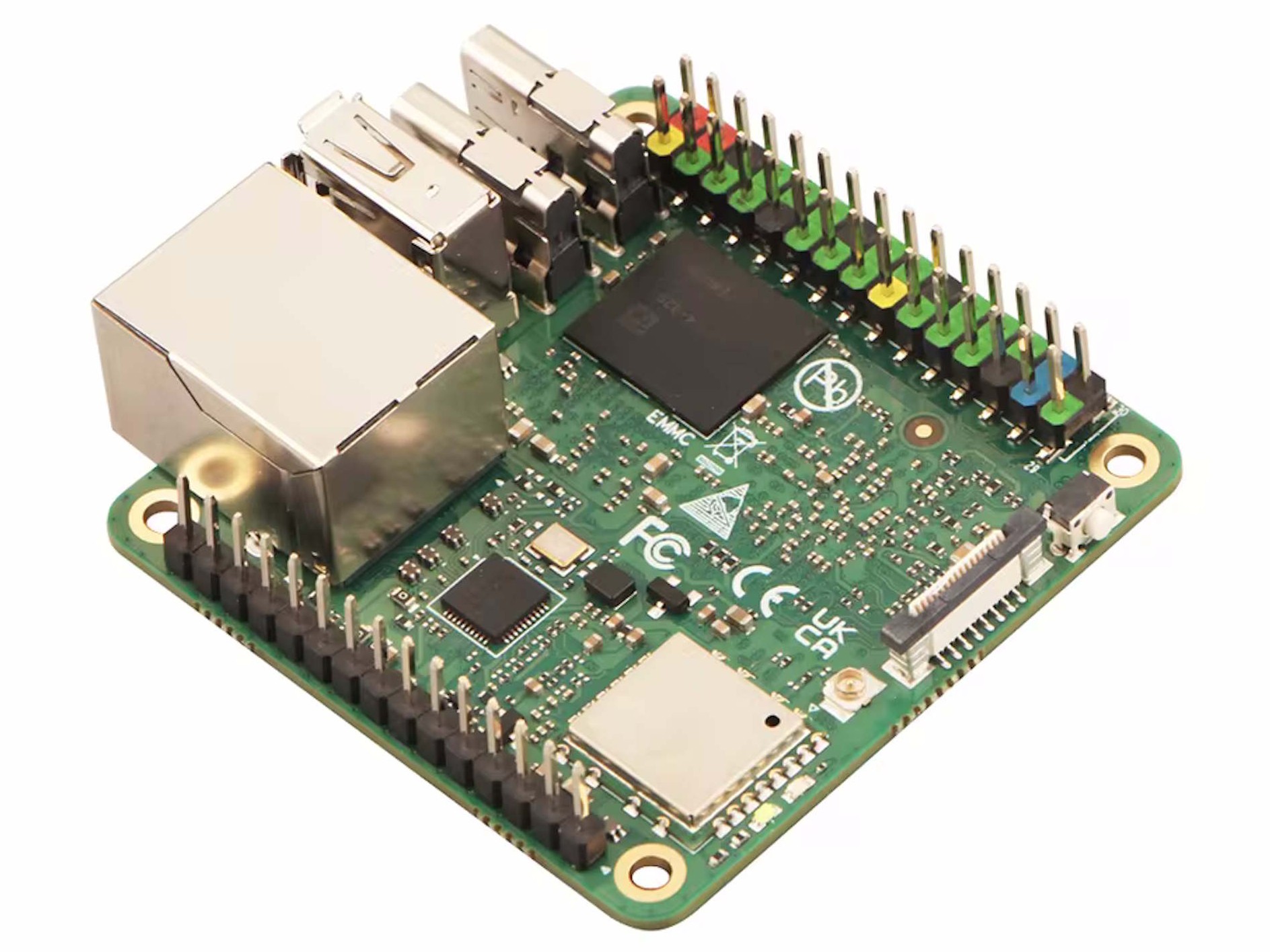
A new, compact Raspberry Pi alternative has arrived, and it’s priced to appeal to hobbyists, makers, and anyone building small embedded projects. The Radxa Cubie A7S is now available starting at around $44 plus shipping at one retailer, while another listing shows it from about $25 for the base configuration. Pricing and availability can vary by seller, but the key takeaway is that this board is positioned as a budget-friendly single-board computer with surprisingly modern connectivity.
The Radxa Cubie A7S comes in multiple memory options, including 4GB, 8GB, or 16GB of LPDDR5 RAM. For storage, buyers can choose configurations with optional onboard eMMC (up to 256GB), and there’s also a microSD card slot, which is a familiar and convenient way to install an operating system and get up and running quickly.
At the heart of the board is the Allwinner A733 system-on-chip, featuring a big.LITTLE-style CPU layout with two Cortex-A76 performance cores and six Cortex-A55 efficiency cores. For AI-focused projects, Radxa lists an NPU rated at 3 TOPS, which can be useful for lightweight on-device tasks such as image recognition or other accelerated inference workloads.
Video output is another standout, though it takes a different route than many classic SBCs. Instead of HDMI, display output runs through USB-C with DisplayPort Alt Mode, supporting up to 4K at 60fps. That can be a convenient setup for modern monitors and USB-C display adapters. On the input side, the Cubie A7S supports MIPI CSI for connecting compatible cameras, opening the door to computer vision builds and automated image analysis projects.
Connectivity is strong for a board in this size and price range. You get Gigabit Ethernet for reliable wired networking, plus WiFi 6 for faster and more efficient wireless performance. Bluetooth 5.4 is also included, making it easy to pair common peripherals like keyboards, mice, controllers, and other accessories.
Power is delivered via USB-C as well, and the board includes additional USB support (including USB 2.0). For hardware tinkering, the Cubie A7S offers 45 GPIO pins for attaching sensors, actuators, and expansion modules—ideal for robotics, home automation, and prototyping.
One of the most interesting features is expandability for storage and add-ons. Despite the compact 51 x 51 mm footprint, the board includes an FPC connector that exposes a PCIe 3.0 interface (one lane). That means you can connect compatible PCIe devices, including NVMe SSDs, which is a big plus for projects that need faster storage than a microSD card can provide.
Overall, the Radxa Cubie A7S targets the sweet spot for people who want an affordable Raspberry Pi alternative without giving up modern essentials like WiFi 6, USB-C DisplayPort video, GPIO for maker projects, and PCIe-based expansion for faster storage.