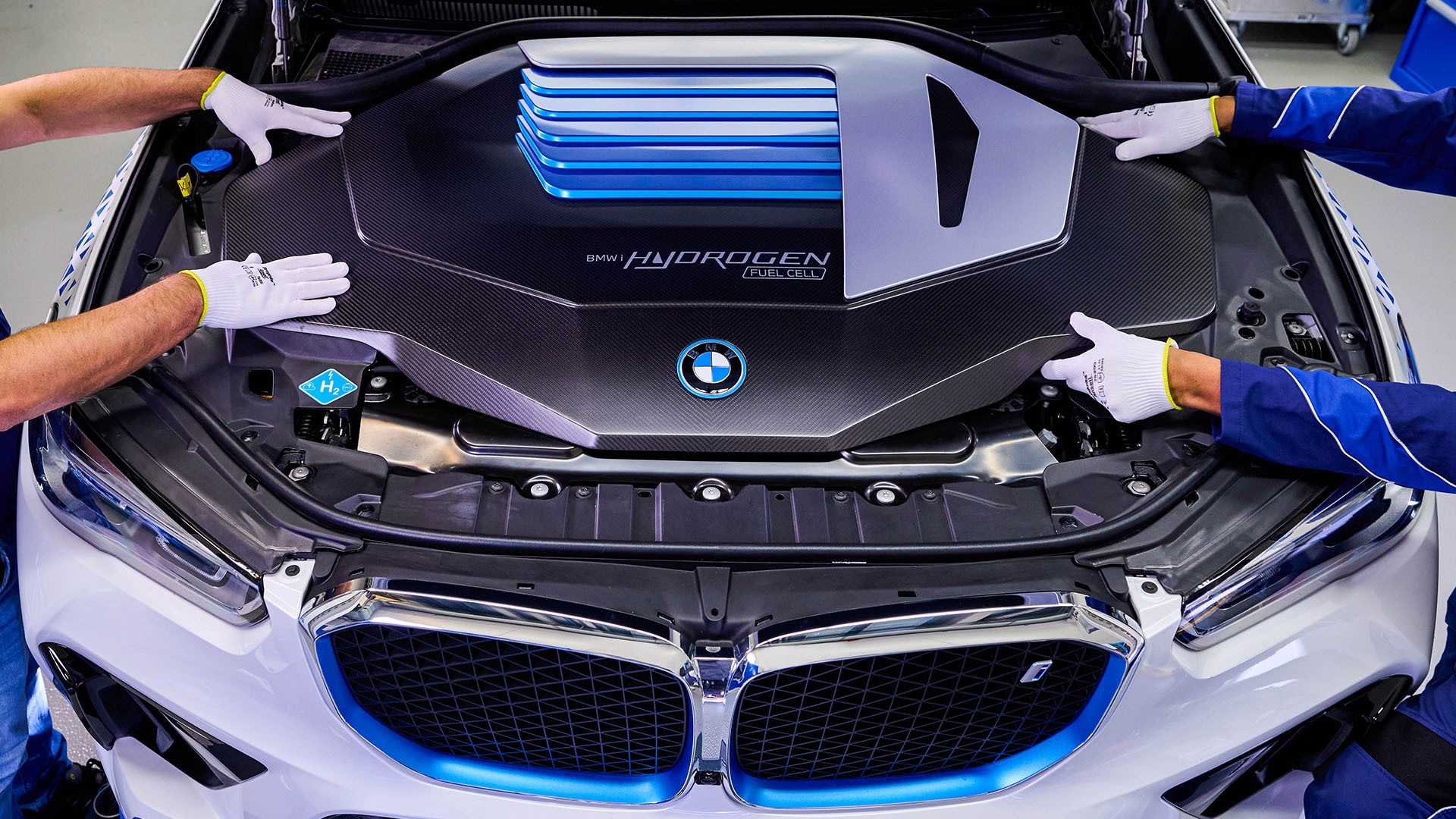
BMW made waves in the automotive world with the unveiling of its iX5 Hydrogen SUV in 2019, marking a significant milestone in the company’s journey towards embracing hydrogen technology. According to a recent Reuters report, BMW is now gearing up to launch its first commercial hydrogen-powered vehicle in 2028. This revolutionary car will be developed in collaboration with Toyota, building on the shared advancements in fuel cell technology. While specific details about the model, pricing, and production volume remain under wraps, it’s clear that this partnership aims to reduce costs and enhance the development of hydrogen drive systems for both passenger cars and commercial vehicles.
BMW’s commitment to hydrogen technology is exemplified by the iX5 Hydrogen, a vehicle that boasts an impressive range of 500 kilometers (310 miles) and can be refueled in just three to four minutes—far quicker than traditional electric vehicles. This feature alone places hydrogen cars in a unique position within the green vehicle market. However, the road to widespread adoption is not without obstacles. The primary challenge lies in the high cost of hydrogen production and the lack of extensive fueling infrastructure.
Hydrogen vehicles operate using an electric motor powered by a hydrogen fuel cell, which generates electricity through a process that splits hydrogen molecules. Despite the advantages of quick refueling and long-range capabilities, only a handful of automakers, including Hyundai with its Nexo and Honda with its Clarity fuel cell, are actively pursuing this technology. It’s fascinating to note that fuel cell technology was originally developed for space missions by NASA, first making its debut on the Gemini V spacecraft in 1965.
Looking ahead, BMW anticipates significant improvements in hydrogen infrastructure by 2028. The automaker’s strategy of simultaneously investing in hydrogen and battery-electric vehicles positions it to adapt to evolving consumer demands and infrastructure developments. This dual approach not only showcases BMW’s commitment to innovation but also its foresight in preparing for a future where either or both green technologies could dominate the market. This strategic flexibility may well afford BMW a competitive advantage in the ever-evolving landscape of sustainable transportation.