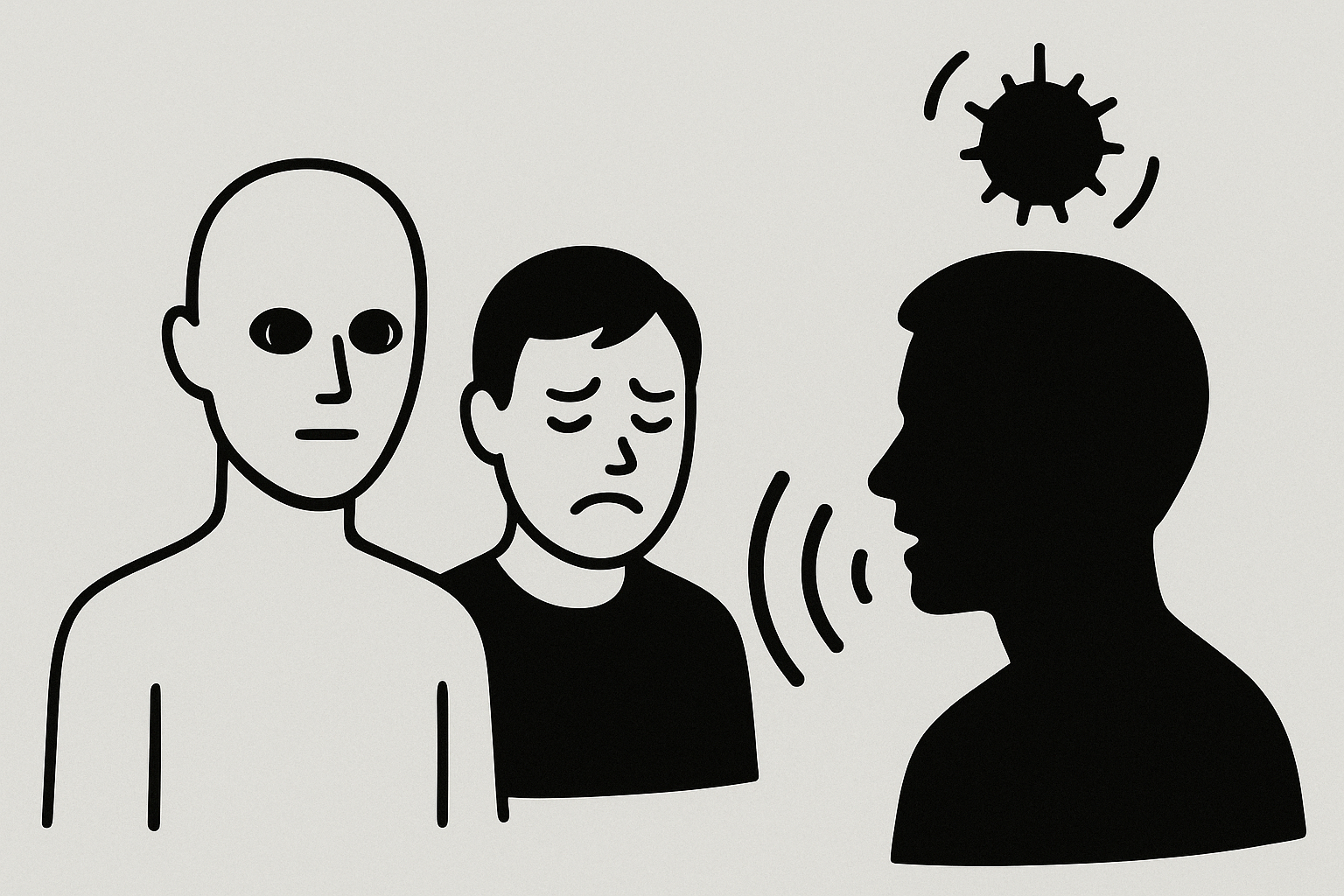
Why do almost-human avatars give you the creeps? Your body might be trying to protect you. New research from the University of Hamburg suggests the uncanny valley effect doesn’t just feel unsettling—it can quietly activate your immune system.
In the study, participants interacted in virtual reality with three kinds of digital characters: stylized cartoon figures, highly realistic human avatars, and avatars that looked nearly human but with subtle imperfections that made them feel uncanny. Saliva samples taken before and after these interactions were analyzed for secretory immunoglobulin A (sIgA), a frontline antibody in mucosal immunity.
Only the uncanny avatars triggered a significant rise in sIgA. That spike didn’t match participants’ conscious ratings of the avatars, pointing to an automatic, unconscious response. In other words, even if people didn’t say the avatars bothered them, their bodies reacted as if they did.
Researchers interpret this through the pathogen-avoidance hypothesis: the brain is tuned to detect tiny cues that might signal illness and preemptively activates protective mechanisms. Uncanny avatars—because they look human but not quite right—may be subconsciously flagged as potential sources of disease, prompting an immune response.
What this means for virtual reality and digital design:
– Almost-human isn’t always better. If perfection isn’t achievable, a clearly stylized look may be safer than a near-real human face.
– Small deviations matter. Unnatural eye movement, skin texture, or facial symmetry can push a design into the uncanny zone.
– Consider the context. In health communication, therapy, or training, designers should minimize uncanny cues to avoid stress and unintended physiological responses.
– Test beyond user surveys. Pair subjective feedback with physiological measures to catch reactions people can’t easily report.
Key takeaways for creators and researchers:
– The uncanny valley has measurable physiological effects, not just psychological ones.
– sIgA increases suggest a fast, instinctive defense mechanism at play.
– Avatar design choices can influence comfort, trust, and well-being in VR.
What’s next? Future studies could explore whether repeated exposure reduces the immune response, how cultural backgrounds or age groups differ, and whether other biomarkers (like heart rate variability or cortisol) show similar patterns.
Bottom line: When digital humans miss the mark, our bodies notice. Embracing either clearly stylized characters or truly high-fidelity realism—and rigorously testing for subtle “off” cues—can make virtual experiences more comfortable, more effective, and better aligned with how we’re hardwired to react.


