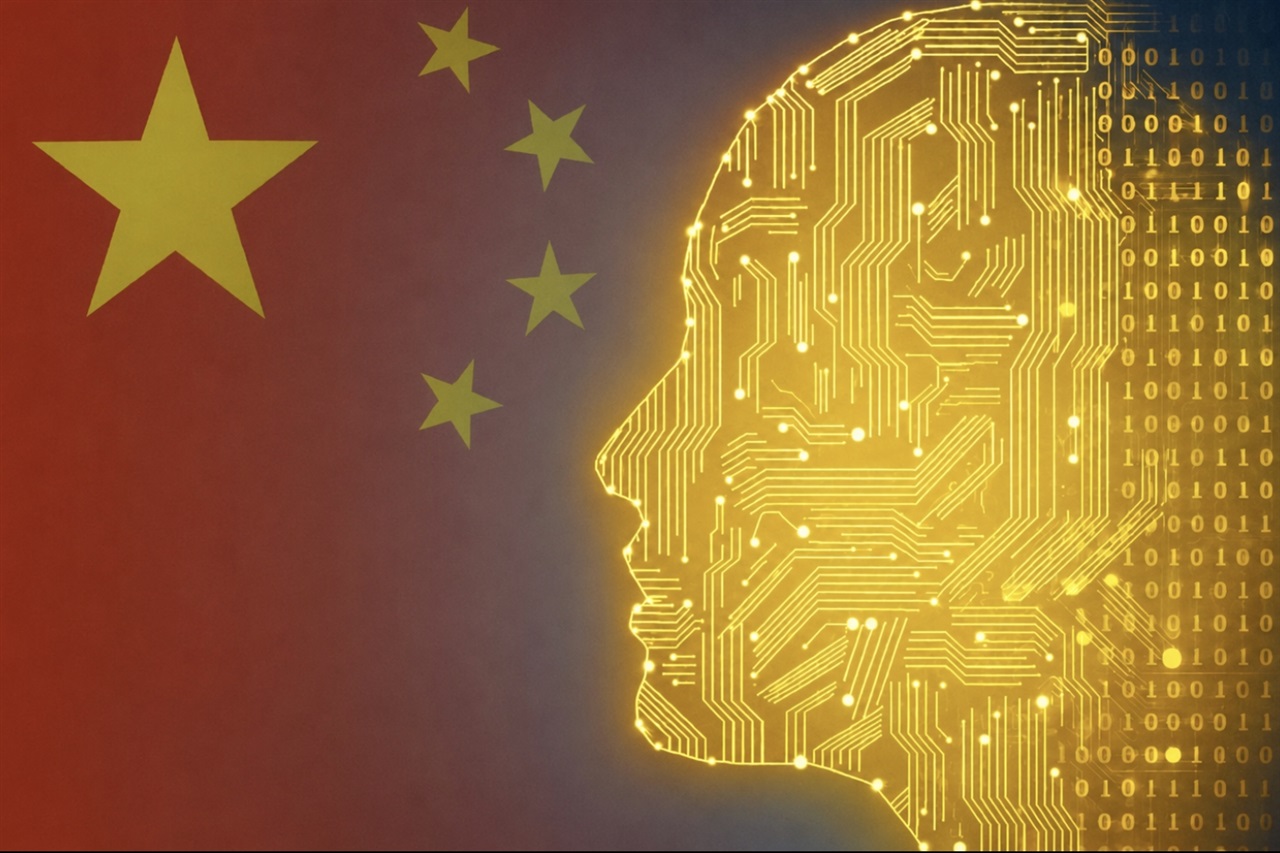
US-China AI Talks Signal a New Phase in the Race for Artificial Intelligence Control
The upcoming artificial intelligence dialogue between Washington and Beijing may look like a diplomatic opening, but it is unlikely to mark a real thaw in US-China tech tensions. Instead, it points to a new stage in the global AI rivalry, where the competition is no longer only about who can build the most powerful models, but also about who gets to shape the rules around them.
For years, the United States and China have been locked in a high-stakes contest over advanced chips, cloud computing, data access, and AI talent. Now, that rivalry is moving deeper into policy, regulation, and national security. Both governments are becoming more determined to control how frontier AI systems are developed, deployed, and shared.
Washington has already taken aggressive steps to limit China’s access to advanced semiconductors and chipmaking tools, arguing that powerful AI infrastructure could strengthen military capabilities and surveillance systems. Beijing, meanwhile, is working to reduce reliance on foreign technology while tightening oversight of domestic AI companies and large language models.
The planned talks suggest that both sides recognize the risks of an uncontrolled AI race. Frontier AI systems are becoming more capable, more expensive to train, and more important to economic and military power. As a result, governments are treating AI not simply as a commercial technology, but as a strategic asset that must be closely managed.
One major focus is likely to be the governance of advanced AI models. As these systems become more powerful, concerns are growing over misuse, misinformation, cyber threats, and the possible military applications of generative AI. The United States wants stronger safeguards around the most advanced models, while China is also building a regulatory framework designed to keep AI aligned with state priorities.
However, cooperation will be difficult. Trust between the two countries remains low, and both sides view AI leadership as essential to future influence. Even if the talks produce shared language on safety or risk reduction, they are unlikely to slow the broader competition. Instead, the dialogue may help define boundaries in a rivalry that is becoming more complex.
The shift is important because AI competition is expanding beyond hardware. Export controls on chips remain a key tool, but the next battleground may include model access, cloud restrictions, data rules, safety testing, and international standards. Whoever sets those standards could shape the future of AI markets around the world.
For technology companies, this creates a more uncertain environment. AI developers may face stricter reporting requirements, tighter security reviews, and more pressure to prove that their models are safe. Companies operating across borders could also encounter new limits on where they train models, who can access them, and what types of AI services can be offered in different regions.
For the global economy, the outcome of US-China AI negotiations could influence everything from chip supply chains to enterprise software, defense technology, and consumer AI tools. Nations outside the two superpowers will also be watching closely, as many are trying to balance economic ties with China against security partnerships with the United States.
The upcoming dialogue should not be mistaken for a pause in the AI race. It is better understood as an attempt to manage competition before it becomes too dangerous or unpredictable. Both Washington and Beijing want to avoid losing control over technologies that could transform military power, financial systems, media ecosystems, and national infrastructure.
In the end, the US-China AI rivalry is entering a more strategic phase. Building better AI models is still important, but controlling the rules around those models may prove just as decisive. The next chapter of the competition will be shaped not only in research labs and data centers, but also in government offices, diplomatic meetings, and regulatory frameworks.
The message is clear: artificial intelligence is now at the center of global power politics, and the race between the United States and China is far from slowing down.