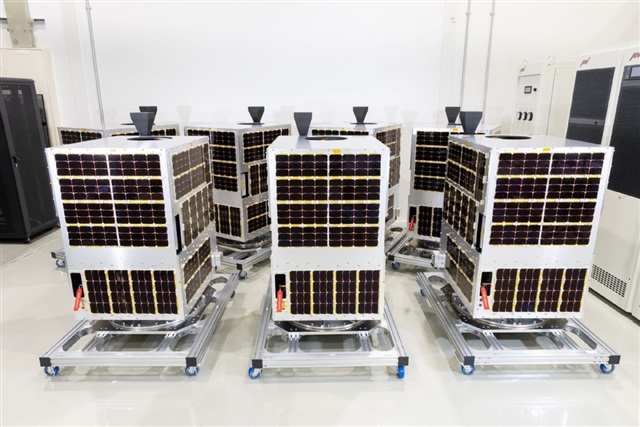
Japanese Startup Axelspace Plans 2026 SpaceX Launch for Next-Generation Earth Observation Satellites
Japanese space company Axelspace is preparing for a major step forward in its satellite imaging ambitions, with plans to launch up to seven next-generation GRUS-3 Earth-observation microsatellites as early as July 2026.
The satellites are expected to fly aboard a SpaceX Falcon 9 rocket from Vandenberg Space Force Base in California, a launch site frequently used for missions heading into polar and sun-synchronous orbits. These types of orbits are especially valuable for Earth-observation satellites because they allow consistent imaging conditions as spacecraft pass over the same regions of the planet.
The upcoming GRUS-3 satellites are designed to expand Axelspace’s ability to capture detailed imagery of Earth from orbit. By deploying multiple microsatellites at once, the company aims to strengthen its observation network and improve the frequency of image collection. This can be important for industries and organizations that rely on timely satellite data, including agriculture, environmental monitoring, disaster response, urban planning, and infrastructure management.
Axelspace has been building its position in the small satellite market by focusing on compact, cost-efficient spacecraft capable of delivering useful Earth-imaging data. The planned 2026 launch marks an important milestone for the company as it works to enhance its satellite constellation and support growing global demand for space-based monitoring services.
The use of a Falcon 9 rocket also highlights the continued role of commercial launch providers in helping smaller satellite companies reach orbit. Shared and dedicated launch opportunities have made it easier for startups and private space firms to deploy advanced spacecraft without relying solely on traditional government-led missions.
If the schedule holds, the July 2026 mission could become one of Axelspace’s most significant launches to date. With up to seven GRUS-3 microsatellites planned for deployment, the company is positioning itself to offer improved Earth-observation capabilities at a time when demand for accurate, frequent, and accessible satellite imagery continues to grow.
The mission also reflects Japan’s expanding presence in the commercial space sector. As more companies develop small satellites for communications, imaging, climate research, and data services, Japan’s private space industry is gaining momentum on the global stage.
For Axelspace, the GRUS-3 launch is more than a satellite deployment. It represents a broader push toward faster, more flexible Earth observation from space, with the potential to support decision-making across business, science, and public safety.