Qualcomm and Amazon AWS Could Deepen AI Chip Partnership as Inference Costs Become a Bigger Focus
Qualcomm may be preparing to strengthen its relationship with Amazon Web Services as demand for more efficient AI infrastructure continues to rise. According to analysis from Wells Fargo, AWS could become a major partner for Qualcomm’s next-generation AI chips, particularly as cloud providers look for ways to reduce the cost of AI inference and improve operating margins.
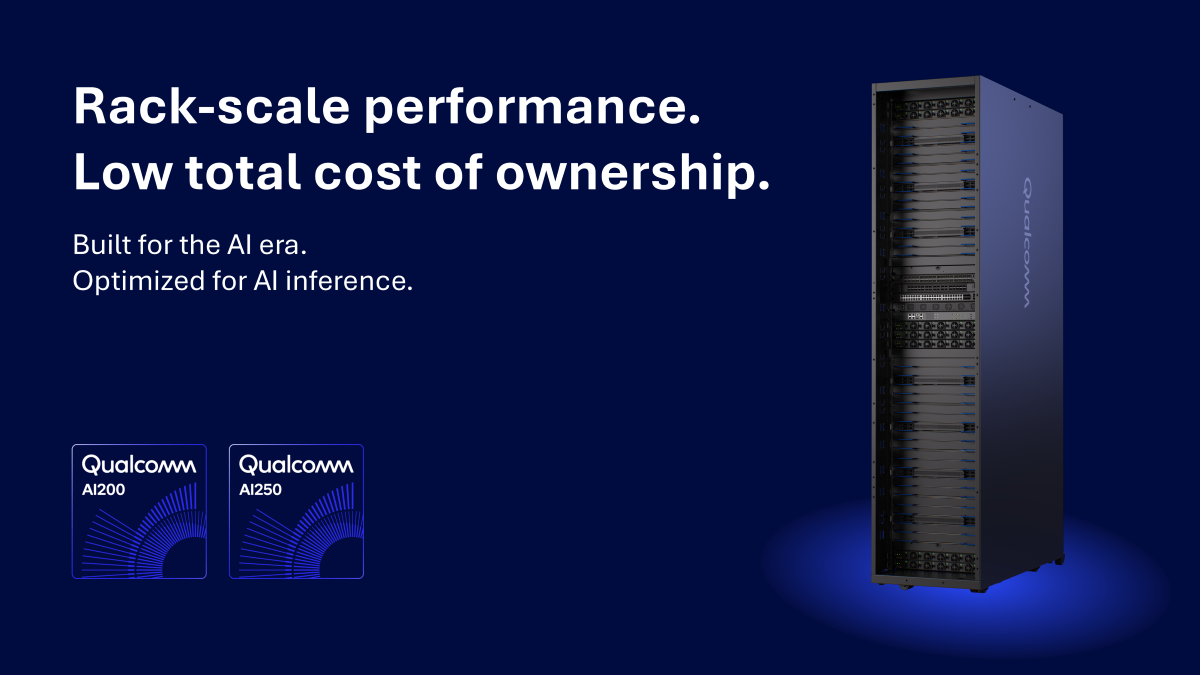
The report points to Qualcomm’s AI200 accelerators, which were introduced as chips designed specifically for AI inference workloads. These processors are expected to play a larger role in the market when they begin rolling out in 2026. One of their key selling points is memory capacity, with support for up to 768GB of memory per chip. That capability could make them useful for running large language models and other advanced AI applications more efficiently.
Wells Fargo believes Amazon AWS may emerge as a leading hyperscale partner for Qualcomm’s AI chip ambitions. The bank’s view is based on Qualcomm’s previous comments about working with a large cloud company, as well as AWS’s existing use of Qualcomm’s AI100 Ultra chips. The AI100 Ultra is already available through AWS and is viewed as competitive in terms of cost efficiency when measured against performance.
The economics behind Qualcomm’s AI200 are also attracting attention. Wells Fargo estimates that deployments could cost around $3.5 billion per gigawatt, while potentially adding up to $2.50 to Qualcomm’s earnings per share. However, that upside may depend on Qualcomm’s ability to increase the number of AI accelerators that can be placed in each rack, improving density and overall efficiency.
Amazon’s interest in custom and efficient silicon fits with its broader cloud strategy. AWS has spent years developing and deploying in-house chips to reduce reliance on third-party hardware, cut capital expenses, and improve margins. As artificial intelligence workloads grow, especially inference tasks, the cost of running AI models has become a major challenge for cloud providers and their customers.
Inference is the stage where AI models generate responses after being trained. As more businesses integrate generative AI into products and services, inference demand is increasing quickly. This has made token-based pricing a central issue in the AI industry. Many infrastructure providers now charge customers based on the number of tokens processed, often measured in millions of tokens.
Lowering the cost per token has become a priority because high inference expenses can limit adoption. If running AI models remains too expensive, smaller companies and cost-sensitive customers may struggle to use advanced AI services at scale. That is why cloud giants are searching for more efficient AI accelerators that can deliver strong performance while reducing operating costs.
Qualcomm’s AI200 chips could benefit from this shift. While GPUs have dominated AI training and inference, the market is increasingly open to alternative accelerators designed for specific workloads. Qualcomm’s strength in power-efficient chip design may give it an opportunity to compete in AI infrastructure, especially if major cloud providers such as AWS adopt its hardware more broadly.
The report also comes as interest grows around agentic AI, a category of artificial intelligence designed to perform tasks, make decisions, and interact with software tools more independently. This trend has renewed attention on CPUs and specialized chips within the AI data center, as future systems may require a more balanced mix of processors rather than relying only on traditional AI accelerators.
If AWS becomes a key partner for Qualcomm’s AI chips, it could mark an important step in Qualcomm’s push beyond smartphones and mobile computing. The company has been expanding into automotive, PCs, edge AI, and data center technologies, and a stronger role in cloud AI infrastructure would open another major growth opportunity.
For Amazon, the potential appeal is clear: more efficient AI chips could help AWS offer lower-cost inference services, improve margins, and compete more aggressively in the cloud AI market. For Qualcomm, a major hyperscale partnership would provide validation for its AI accelerator roadmap and could help the company capture a larger share of the fast-growing AI hardware market.
As AI adoption spreads across industries, the competition to reduce inference costs is becoming just as important as the race to build larger models. Qualcomm’s AI200 chips, combined with AWS’s massive cloud reach, could become a notable part of that next phase if the partnership develops as Wells Fargo expects.