ASUS ROG Equalizer 16-Pin Cable Reportedly Melts Despite Being Built to Prevent GPU Connector Burnout
ASUS’s ROG Equalizer 16-pin power cable was introduced as a premium solution designed to make high-end graphics card power delivery safer. However, a new report suggests that the cable may have suffered the very issue it was meant to prevent: a burned 16-pin connector.
The ROG Equalizer cable is based on the newer 12V-2×6 power connector standard, which was created to improve reliability over earlier 16-pin designs. ASUS promoted the cable as offering balanced power delivery, lower cable temperatures, and better load handling for modern graphics cards. With those claims, many PC enthusiasts expected it to be a safer option for power-hungry GPUs.
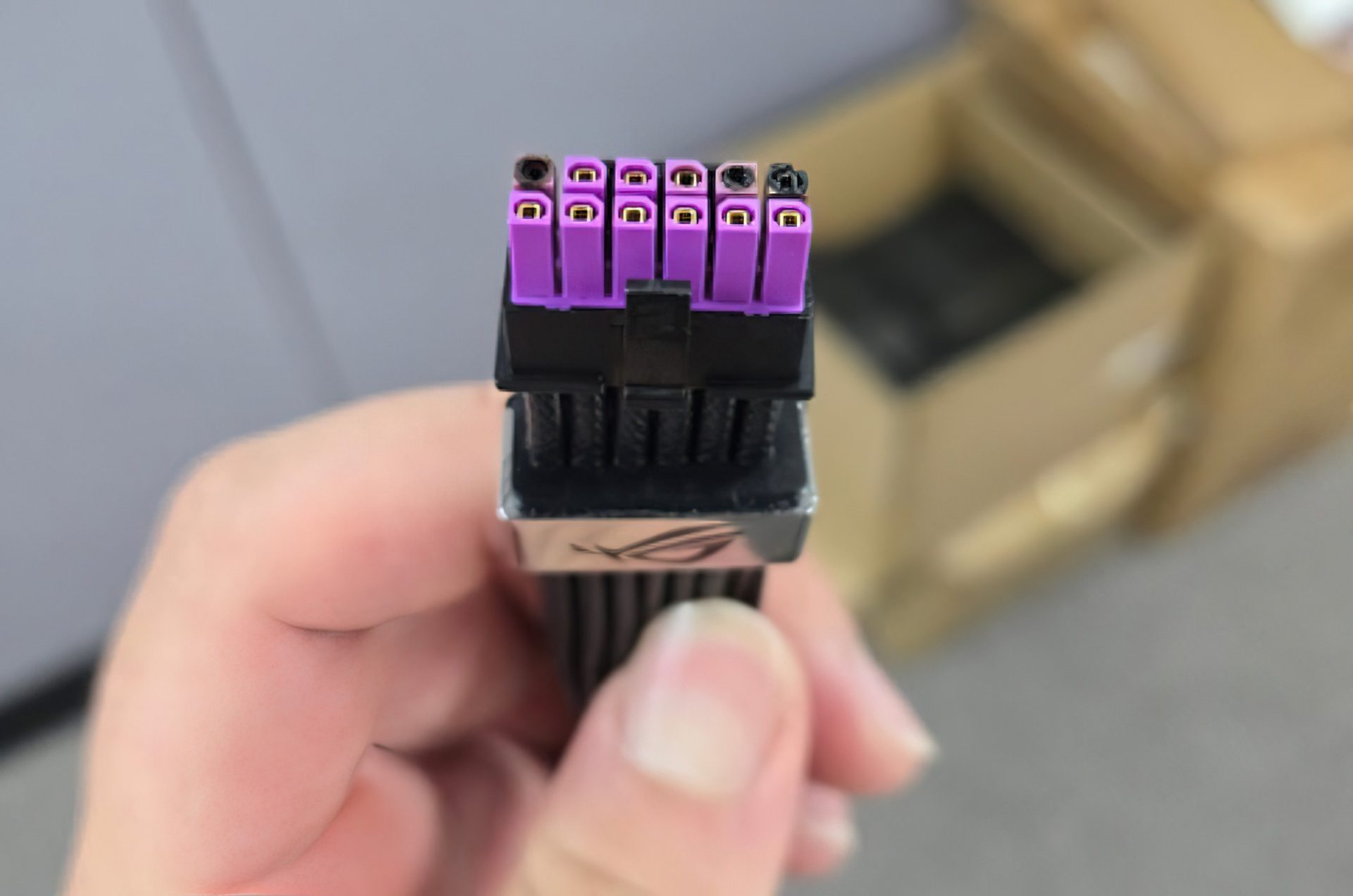
Now, images shared on a Chinese hardware forum appear to show an ASUS ROG Equalizer cable with visible burn damage around the connector. The cable can reportedly be identified by its distinctive purple-tinted connector and ASUS ROG-branded cable comb, which also functions as part of the cable’s electrical bridge design.
In the image, at least three of the main 12 power pins show signs of burning. One pin in particular appears to have suffered severe damage, with the surrounding plastic visibly melted. While the exact graphics card used with the cable has not been confirmed, many recent 16-pin connector failure reports have involved extremely power-demanding GPUs, especially newer flagship models.
This reported failure is notable because the ROG Equalizer cable is not a budget accessory. It sells for around $50, making it a relatively expensive add-on for users looking to protect their graphics card investment. For buyers, the concern is simple: if a premium cable marketed for improved safety can still melt, confidence in 16-pin GPU power connectors may take another hit.
The issue also lines up with earlier independent testing from overclocking expert Der8auer, who examined the ASUS ROG Equalizer cable and found unexpected behavior. In his testing, the cable showed noticeable current imbalance across the connector pins, with differences of up to 4A on an RTX 5080-class graphics card.
That kind of imbalance can be risky because some pins end up carrying more load than others. When certain pins are forced to handle more current, they can heat up faster, increasing the chance of connector damage, melting, or long-term reliability problems.
The testing also suggested that the cable’s electrical bridge under the comb may contribute to added resistance. Higher resistance in a power cable can lead to additional heat buildup, especially when paired with graphics cards that draw large amounts of power during gaming, rendering, AI workloads, or benchmarking.
The 16-pin GPU power connector has been controversial since its introduction. Although newer 12V-2×6 designs are intended to improve safety and reduce failure risk, real-world results remain under heavy scrutiny. Connector seating, cable bending, current distribution, power spikes, and manufacturing quality can all play a role in whether a setup remains safe.
For now, this appears to be a single reported case, and ASUS has not provided an official public response regarding the burned ROG Equalizer cable. Until more information is available, users who own or plan to buy the cable may want to inspect their GPU power connections carefully, ensure the connector is fully inserted, avoid sharp cable bends near the plug, and monitor for unusual heat or discoloration.
The reported incident is a reminder that even premium GPU power accessories are not immune to potential problems. As graphics cards continue to push higher power limits, manufacturers are still searching for the most reliable way to deliver that power safely through compact connectors.
For PC builders and gamers using high-end GPUs, the takeaway is clear: cable quality matters, but so does installation, connector design, and proper load balancing. Until ASUS or other industry players provide a clearer solution, the 16-pin GPU connector debate is far from over.