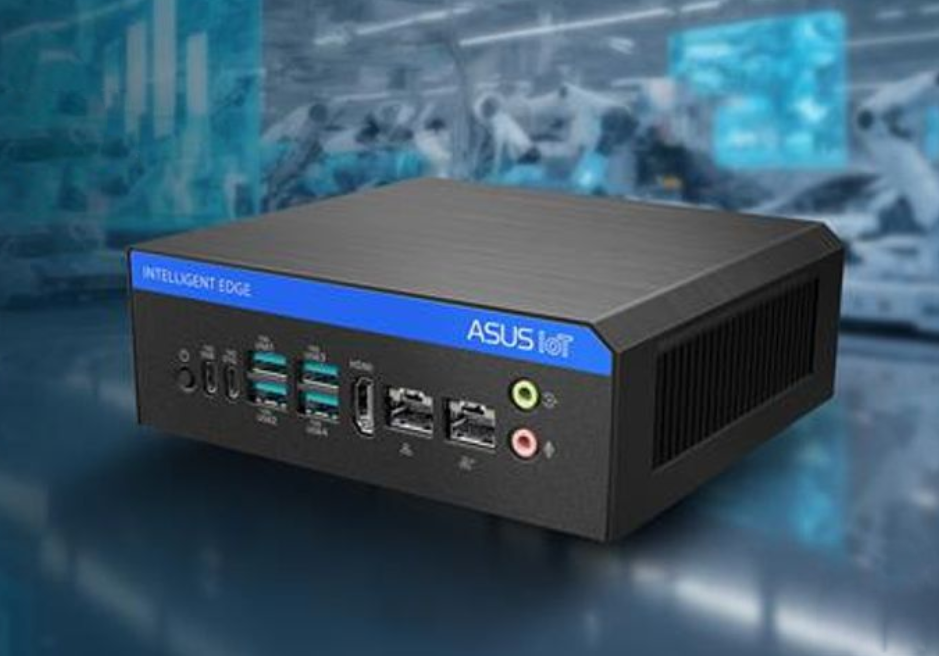
Asus IoT unveils the PE3000N, a rugged mini PC built around Nvidia’s Jetson IGX Thor platform and aimed squarely at next‑generation robotics, industrial automation, and smart infrastructure. With Nvidia’s Jetson IGX Thor dev kit and standalone module now available to order, partners are stepping up with deployable systems—and this compact, hard‑wearing unit is among the first out of the gate.
At the heart of the PE3000N is the Jetson IGX Thor T5000 module, combining a Blackwell‑class GPU with a 14‑core ARM processor and up to 128 GB of LPDDR5X memory. The platform is rated at 2,070 FP4 TFLOPS, translating to serious edge AI performance for sensor fusion, autonomy, real‑time video analytics, and AI‑driven control—without relying on the cloud.
Designed for harsh environments, the system features a rugged chassis compliant with MIL‑STD‑810H and is engineered to run reliably from -20°C to 60°C. That durability, paired with abundant I/O and networking options, positions the PE3000N for high‑throughput, deterministic workloads in factories, healthcare, logistics, energy, and smart city deployments.
Highlights and key specs
– Jetson IGX Thor T5000 module with Blackwell GPU and 14‑core ARM CPU
– Up to 128 GB LPDDR5X and 2,070 FP4 TFLOPS of AI performance
– Rugged MIL‑STD‑810H design; operating range from -20°C to 60°C
– Up to 4x 25 GbE NICs for high‑bandwidth networking
– Support for up to 16 GMSL cameras for advanced machine vision and sensor fusion
– Desktop‑style ports: 4x USB‑A, 2x USB‑C, HDMI, and audio jacks
– Optional expansion stack with PoE, additional GMSL, CAN, and QSFP28
– PTP/PPS for precise time sync across distributed sensors and actuators
– TPM 2.0 for hardware‑rooted security
– Optional LTE/5G/GNSS for remote and mobile deployments
Beyond raw horsepower, the PE3000N is optimized for modern AI workflows at the edge. It can efficiently run generative AI models, including visual language models and large language models, alongside latency‑sensitive tasks such as multi‑camera analytics and closed‑loop control. Compatibility with Nvidia Isaac for robotics, Holoscan for real‑time sensor processing, and Blueprint for video analytics AI agents accelerates development and deployment.
Availability is slated for Q1 2026. While pricing hasn’t been finalized, expect it to track near the cost of Nvidia’s official dev kit—around 3,000 EUR—with higher configurations likely commanding more depending on I/O, networking, and expansion options.
For teams building autonomous machines, inspection systems, or real‑time analytics at the edge, the Asus IoT PE3000N looks like a compact, configurable, and field‑ready platform designed to keep pace with the latest in edge AI.