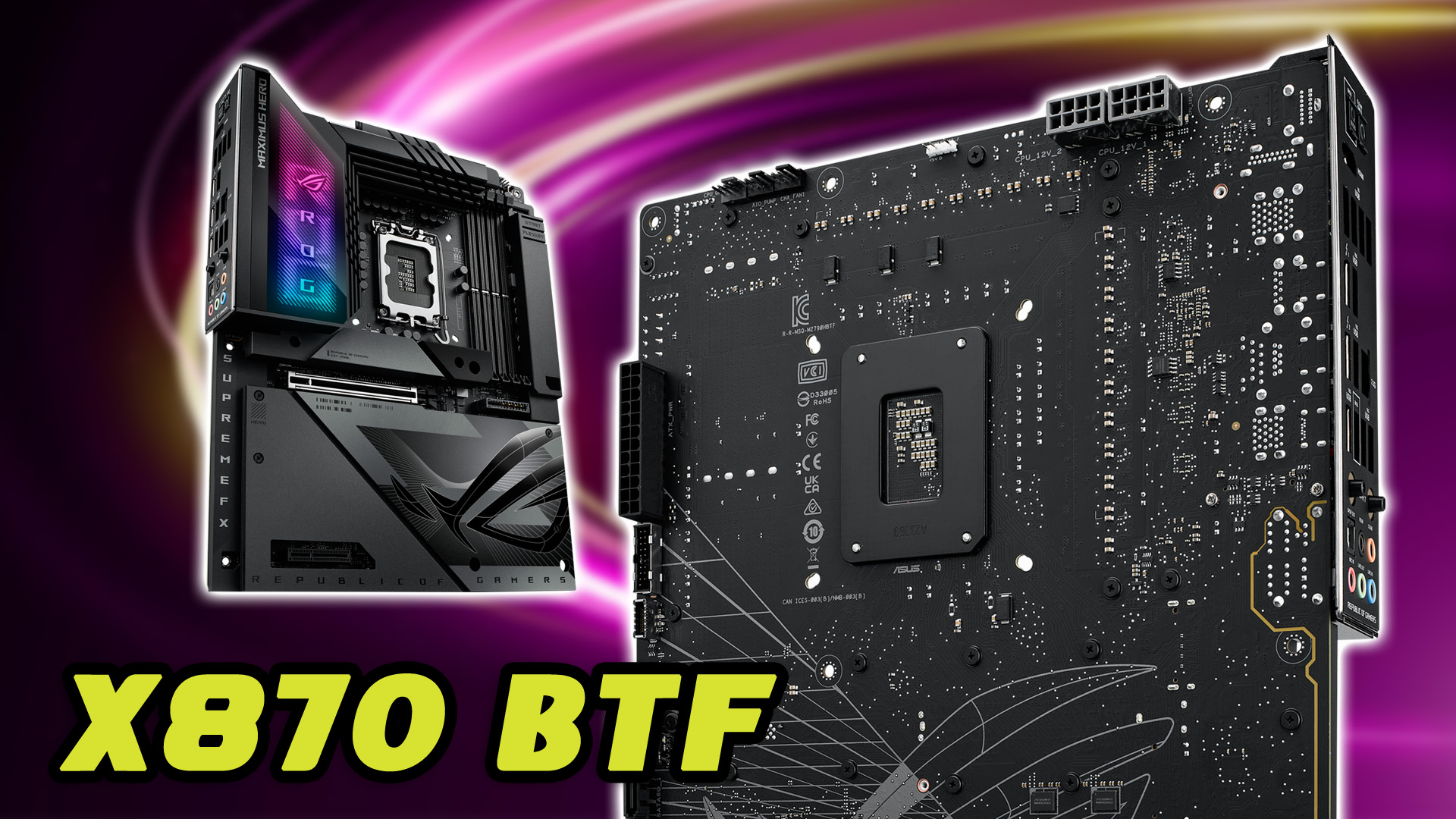
ASUS is making waves in the tech world with its exciting plans for AMD’s X870 motherboards, promising a sleek, clutter-free, connector-less experience. This fresh approach, inspired by their “BTF” design, is already getting tech enthusiasts buzzing. While ASUS decided not to incorporate this futuristic design with Intel’s Z890 series, the focus has shifted toward bringing this innovation to AMD CPUs.
Exciting news has come directly from ASUS’s General Manager in China, confirming that these X870 BTF motherboards will be launching in tandem with AMD’s groundbreaking Zen 4 and Zen 5 processors. Enthusiasts eagerly anticipate the debut of these models, especially at notable tech events like CES 2025, where they are expected to make their grand entrance alongside AMD’s Ryzen 9000X3D processors, alleged to be some of the most powerful on the market.
These upcoming motherboards are tailor-made for users who dream of a streamlined, cable-free system. The innovative design relocates all primary connectors to the back, demanding custom case modifications to accommodate this design leap. Fortunately, there’s been a growing array of compatible cases, such as the Thermaltake 600 Tower, which embraces this cutting-edge architecture.
Economically-minded builders also have options, with GameMax providing the F36 and F46 cases, perfect examples of affordable innovations designed to house these kinds of motherboards. This ecosystem of equipment is gradually expanding, with more manufacturers likely to jump on board as ASUS leads the charge.
While ASUS is setting the stage with its X870 BTF initiative, competitors like Gigabyte and MSI have yet to reveal similar advancements for their respective motherboards. Still, the success of ASUS’s venture could pave the way for others to follow suit, potentially sparking a new trend in motherboard design across the industry.
Stay tuned to see how this unfolds, as the tech community eagerly awaits these transformative changes in PC building. As excitement builds around this breakthrough, ASUS’s latest innovation could set a new standard for motherboards, paving the path to a neater, more efficient computing future.


