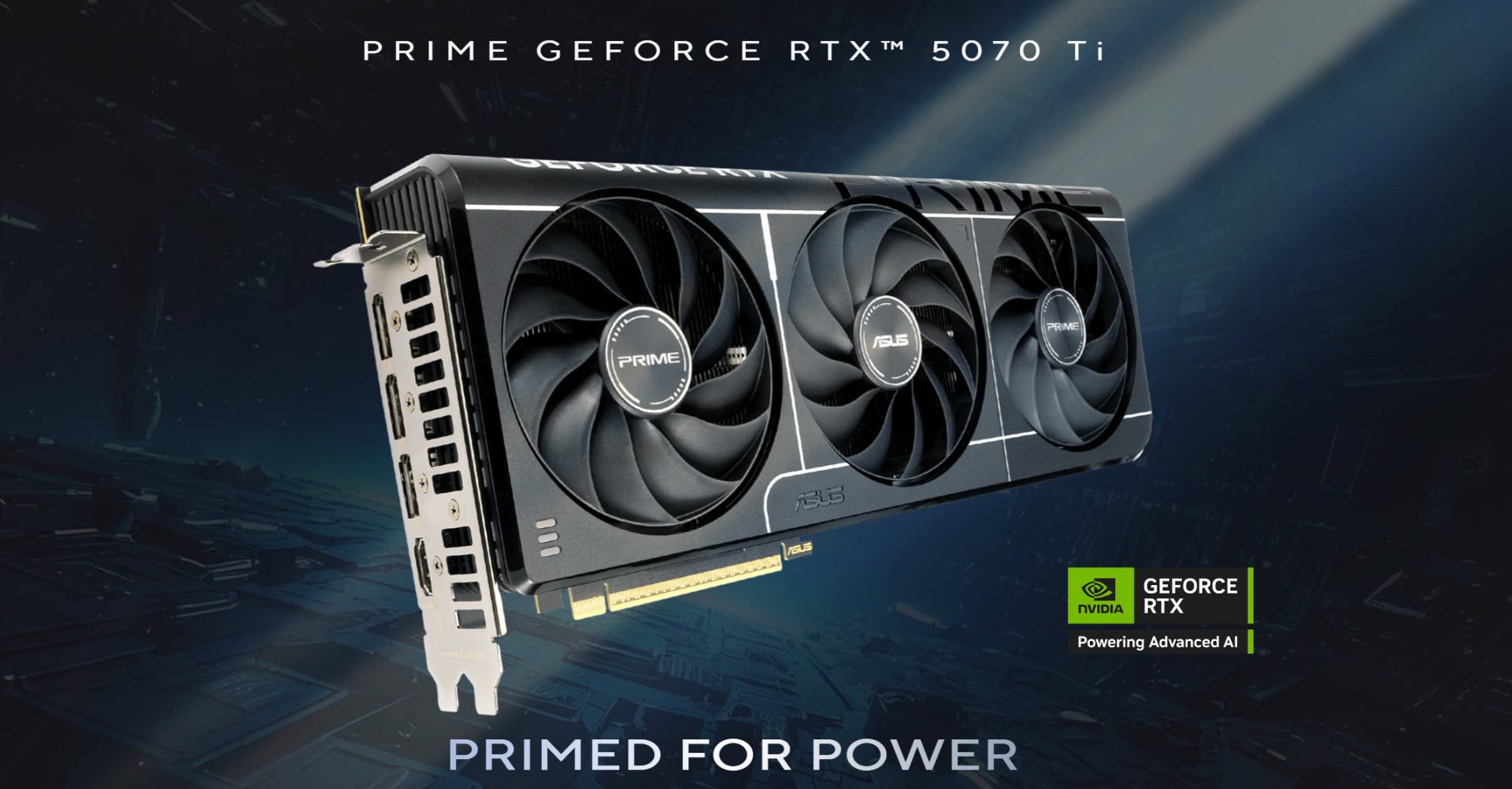
ASUS is reportedly preparing to scale back production of its GeForce RTX 5070 Ti graphics cards and shift more of its manufacturing focus toward the higher-end GeForce RTX 5080. If you’ve been watching GPU availability and pricing trends, this is the kind of supply-side move that can quickly influence what’s easy to find in stock—and what starts getting harder to buy.
According to industry chatter cited by Channel Gate, ASUS is adjusting its high-end graphics card strategy beginning in Q2 2026. The change is tied to broader upstream supply conditions, including ongoing memory-related constraints and general supply chain pressure. Even though NVIDIA has stated that overall production across the GeForce RTX 50-series lineup remains stable, board partners can still make their own decisions about how they allocate capacity across specific models.
The two main GPUs impacted by ASUS’s reported shift are the RTX 5070 Ti and the RTX 5080. The message from the supply chain side is straightforward: expect a tighter supply of certain models as ASUS rebalances its lineup.
What’s changing for the RTX 5070 Ti?
The report indicates ASUS will continue reducing the supply of RTX 5070 Ti cards. Rather than keeping a wide range of versions available, ASUS is expected to concentrate on only a few mainstream variants—most notably the Dual and PRIME series. Higher-tier versions that typically attract enthusiasts, such as premium gaming-focused lines, are expected to be limited and potentially phased out as production capacity is reallocated elsewhere.
In practical terms, that could mean fewer RTX 5070 Ti options on shelves, less variety in custom designs, and potentially more volatility in pricing if demand remains steady while supply tightens.
Why prioritize the RTX 5080?
A key detail here is that both the RTX 5070 Ti and RTX 5080 are 16 GB VRAM graphics cards. When memory supply and pricing are under pressure, manufacturers often prioritize the model that delivers higher margins or stronger positioning in the premium market. In this case, the RTX 5080 appears to be getting the nod, with ASUS reportedly shifting capacity to ensure the RTX 5080 maintains its market presence.
The report also suggests ASUS wants to push RTX 5080 sales more aggressively through online channels and high-end DIY PC builds, potentially supported by additional sales initiatives.
A new RTX 5080 model may be on the way
Alongside the production shift, ASUS may be preparing additional RTX 5080 variants, including a rumored RTX 5080 Master EVO edition that could arrive later. If that happens, it would likely be part of a broader effort to strengthen ASUS’s lineup at the higher end of the GeForce RTX 50-series market and give buyers more premium options—while the RTX 5070 Ti range becomes narrower.
What this could mean for GPU buyers
If you’re shopping for a 16 GB RTX 50-series GPU, this strategy change could influence your timing and your choices:
1) RTX 5070 Ti availability could tighten over time, especially for higher-end custom models.
2) RTX 5080 cards may become more prominent in ASUS’s lineup, with more marketing and potentially more model variety.
3) Other board partners may make similar moves if market conditions continue favoring higher-end GPUs with the same VRAM capacity.
For gamers and PC builders, the big takeaway is that “stable overall production” doesn’t always translate to stable availability for every specific graphics card. Manufacturer prioritization can reshape the market quickly—especially when components like GDDR memory are under pricing or supply pressure.