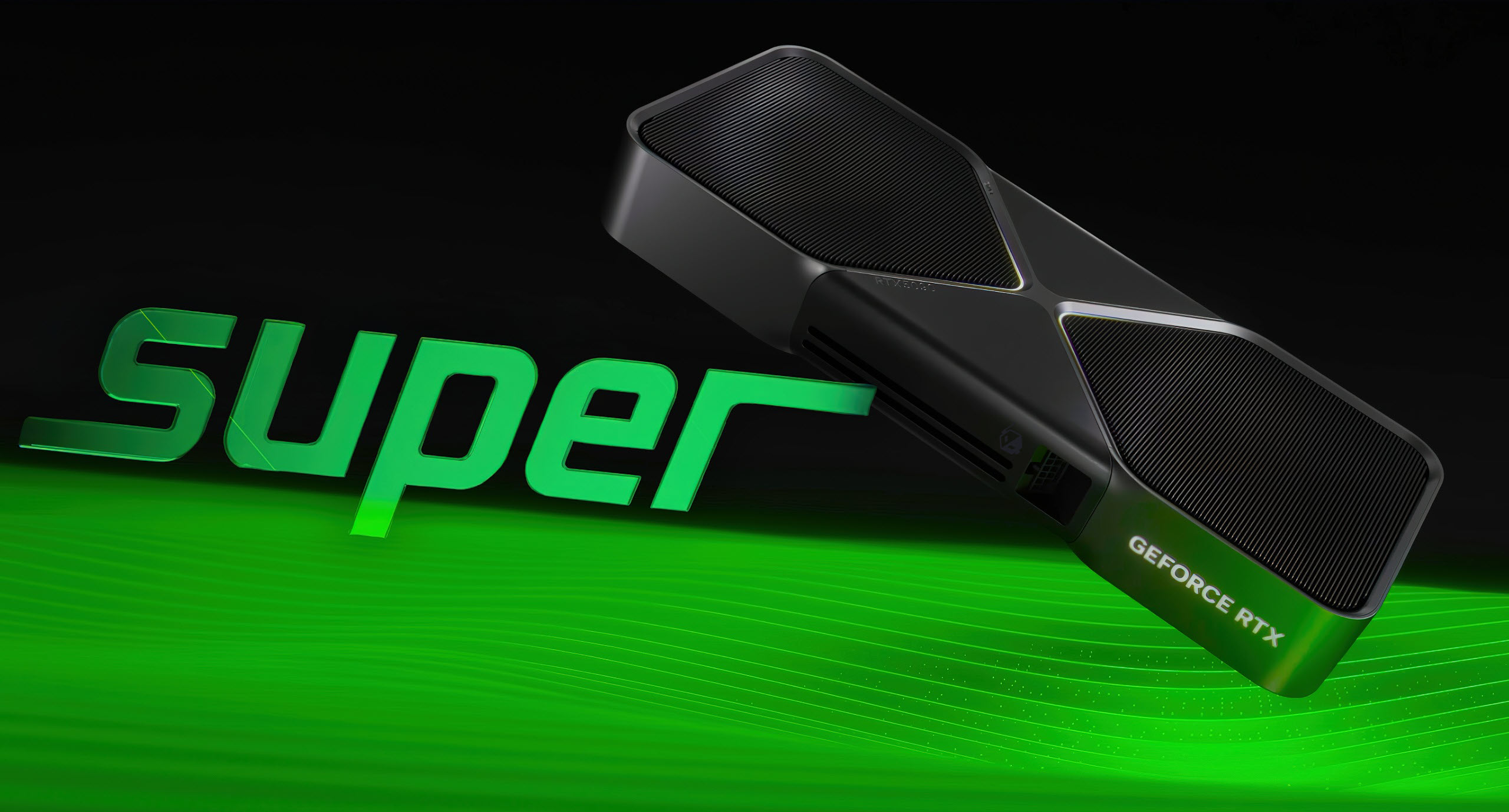
Rumor watch: NVIDIA’s GeForce RTX 50 SUPER series could be slipping down the calendar—and possibly off the roadmap altogether—due to a global squeeze on GDDR7 memory. Multiple industry whispers point to severe DRAM supply constraints, price spikes, and shifting priorities toward higher-margin products as key factors behind the uncertainty.
What’s happening with GDDR7
– DRAM and NAND prices have surged in recent weeks, with the AI boom soaking up manufacturing capacity across the memory industry.
– Consumer DDR5 kits are reportedly selling for roughly double what they cost just a few months ago.
– Spot pricing for older GDDR variants has also jumped sharply week over week, according to market trackers. While GDDR7 prices aren’t widely published yet, it’s reasonable to expect a similar trend.
– The most acute pain point appears to be newer 3 GB GDDR7 memory chips, which are central to building higher-capacity consumer GPUs without bloating PCB complexity.
Why the RTX 50 SUPER family is at risk
– The rumored GeForce RTX 50 SUPER refresh was expected to use 3 GB GDDR7 chips to unlock larger VRAM configurations at mainstream enthusiast tiers.
– With those chips in short supply and costs climbing, insiders suggest NVIDIA may prioritize products with better margins and stronger professional demand.
– High-value alternatives include workstation-grade Blackwell GPUs such as an RTX PRO 6000-class card with up to 96 GB of VRAM, as well as a potential RTX 5090 Laptop GPU featuring up to 24 GB of GDDR7 on a 256-bit bus. Both would rely on the same scarce 3 GB dies.
– There’s also talk that current desktop models using 2 GB GDDR7 could get more expensive soon as those chip prices rise too.
The timeline—what changed
– Earlier chatter pointed to a GeForce RTX 50 SUPER rollout in the first half of 2026, possibly timed around CES 2026 or a dedicated GeForce event.
– Officially, no SUPER cards have been announced. The expectation was a quiet 2025 on the SUPER front, with any unveil reserved for 2026.
– With memory conditions tightening, the SUPER plan now looks vulnerable to delays—or even cancellation—depending on how the supply situation evolves.
What gamers were hoping to see
A key appeal of the rumored RTX 50 SUPER series was extra VRAM across the stack, aimed at creators and high-resolution gamers who have been asking for more headroom:
– GeForce RTX 5080 SUPER: up to 24 GB GDDR7 on a 256-bit bus
– GeForce RTX 5070 Ti SUPER: up to 24 GB GDDR7 on a 256-bit bus
– GeForce RTX 5070 SUPER: up to 18 GB GDDR7 on a 192-bit bus
That represents roughly a 50% boost in VRAM compared to their non-SUPER counterparts—an enticing upgrade for modern game textures, AI workloads, and demanding creation pipelines. However, with DRAM costs rising fast, matching the pricing of non-SUPER models would be tough, which could blunt the value proposition even if the cards do arrive.
Where the current lineup stands
While SUPER is up in the air, the non-SUPER Blackwell lineup has taken shape for 2025. Based on earlier materials, here’s how things stack up:
– GeForce RTX 5080
– GPU: GB203-400, 84 SMs, 10,752 cores
– Memory: 16 GB GDDR7, 256-bit, 30 Gbps, 960 GB/s
– Power: 360W, 16-pin power
– Target price: around $999
– Availability window referenced: late January 2025
– GeForce RTX 5070 Ti
– GPU: GB203-300, 70 SMs, 8,960 cores
– Memory: 16 GB GDDR7, 256-bit, 28 Gbps, 896 GB/s
– Power: 300W, 16-pin power
– Target price: around $749
– Availability window referenced: late February 2025
– GeForce RTX 5070
– GPU: GB205-300-A1, 48 SMs, 6,144 cores
– Memory: 12 GB GDDR7, 192-bit, 28 Gbps, 672 GB/s
– Power: 250W, 16-pin power
– Target price: around $549
– Availability window referenced: early March 2025
The rumored SUPER refresh would have built on these with higher memory capacities and, in some cases, higher memory speeds, but all of that depends on GDDR7 availability and cost.
Why NVIDIA can afford to wait
Competition at the top end appears manageable for now, reducing pressure to rush a SUPER refresh. With the AI sector driving extraordinary demand for memory and compute, allocating scarce GDDR7 to professional and mobile flagship products likely delivers better margins. That calculus becomes even more compelling if desktop pricing would need to climb to offset memory costs, undermining the SUPER cards’ appeal.
Rumor confidence
Plausible (41–60%). Memory market data supports the idea that GDDR7 is both scarce and expensive right now, and NVIDIA’s incentives to prioritize high-margin segments make business sense. Still, without official statements, timing and product decisions can change quickly as supply conditions evolve.
What to watch next
– DRAM spot pricing trends for both 2 GB and 3 GB GDDR7 chips
– Any signals of NVIDIA reallocating memory toward workstation and laptop SKUs
– CES 2026 as a potential checkpoint for the future of the RTX 50 SUPER family
– Retail pricing shifts on existing Blackwell desktop models, which could reflect rising memory costs
Bottom line
A GeForce RTX 50 SUPER launch packed with bigger VRAM pools sounded like the right move for power users, but the GDDR7 crunch may push that dream back—or off the roadmap—while NVIDIA focuses on products that make better use of limited memory supply. If you’ve been eyeing a next-gen upgrade, keep an eye on pricing over the coming months and watch the memory market. The path to SUPER is entirely tied to GDDR7 availability and the economics that come with it.