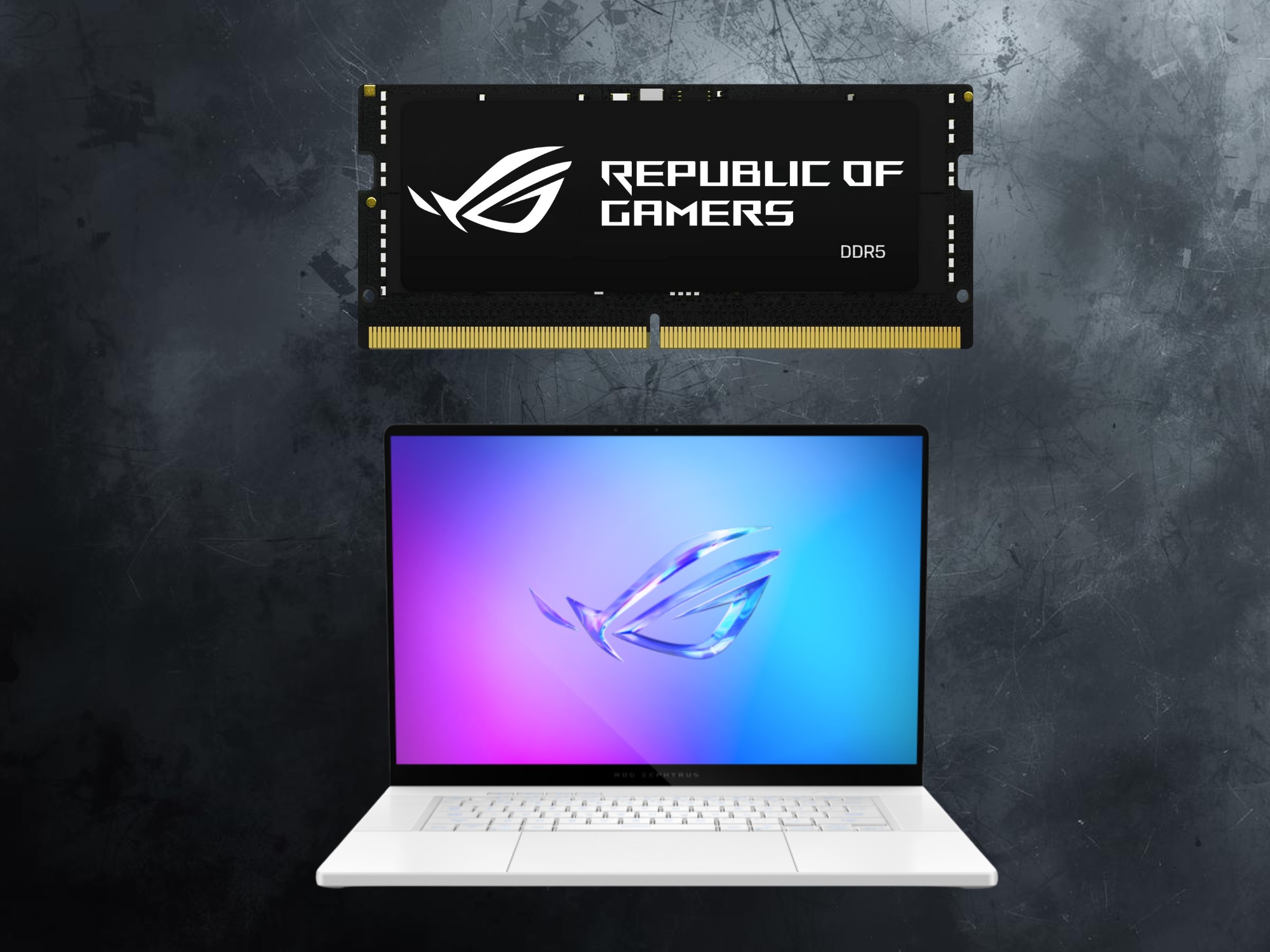
With DDR5 RAM prices climbing fast and supply staying tight, Asus may be preparing a bold move that could eventually help gamers and laptop buyers: getting into DRAM manufacturing. A fresh report from a Persian IT publication suggests Asus could begin producing DRAM as early as 2026, a development that—if it happens—could ease pressure on laptop pricing and reduce dependence on the industry’s biggest memory suppliers.
Right now, the problem is simple: there isn’t enough memory to go around, and what is available is getting more expensive. Major DRAM makers have been allocating more resources to high-demand AI data center products, and that shift has helped push DDR4 and DDR5 RAM prices sharply upward. The knock-on effect is already being felt across the PC market, with several well-known laptop brands signaling price increases tied directly to the ongoing memory shortage.
For Asus, this situation is especially painful. The company sells huge volumes of gaming laptops, consumer notebooks, desktops, and DIY PC components—product lines where memory pricing has an outsized impact on the final retail cost. If RAM remains costly or constrained, popular systems such as the ROG Zephyrus G16 and other gaming-focused machines could become more expensive, making upgrades and new purchases harder for everyday buyers to justify. And because graphics products also rely heavily on memory (including VRAM), GPU pricing could face additional upward pressure, slowing the entire PC build-and-upgrade cycle.
That’s why the idea of Asus entering DRAM production is attracting attention. In theory, producing memory in-house—at least partially—could give Asus more control over supply and pricing, helping it avoid massive cost spikes whenever the broader market tightens. But there’s also plenty of skepticism. Building competitive DRAM manufacturing is enormously complex and capital-intensive, and most companies can’t simply launch memory fabs quickly without deep partnerships, specialized tooling, and extensive know-how. Even if Asus does move forward, it may still need to rely on established suppliers for a significant portion of its memory needs, especially in the early stages, which could limit any near-term impact on prices.
There’s also another potential path: sourcing support from newer players. One name being discussed is CMXT, a Chinese manufacturer that surprised observers by revealing LPDDR5X and DDR5 memory products. If CMXT can scale, it could become an alternative source for DDR5 RAM and help add competition to a market dominated by a small number of giants. However, scaling is the hard part. CMXT reportedly faces restrictions and supply-chain hurdles—particularly around access to certain manufacturing equipment—which makes it difficult to produce enough chips to materially affect global availability.
For consumers, the hope is straightforward: more supply, more competition, and less sticker shock on laptops, gaming PCs, and key components. The worst-case outcome, of course, is that brands simply pass higher costs along to buyers—or treat scarce DDR5 RAM as a premium add-on with aggressive markups. With some forecasts suggesting tight conditions could drag on for years, any credible sign of new manufacturing capacity is likely to get attention from gamers and PC builders watching prices closely.
If Asus truly follows through on DRAM manufacturing plans for 2026, it won’t fix the DDR5 RAM shortage overnight—but it could be a meaningful step toward reducing reliance on the current supply bottleneck and stabilizing future laptop and PC hardware pricing.