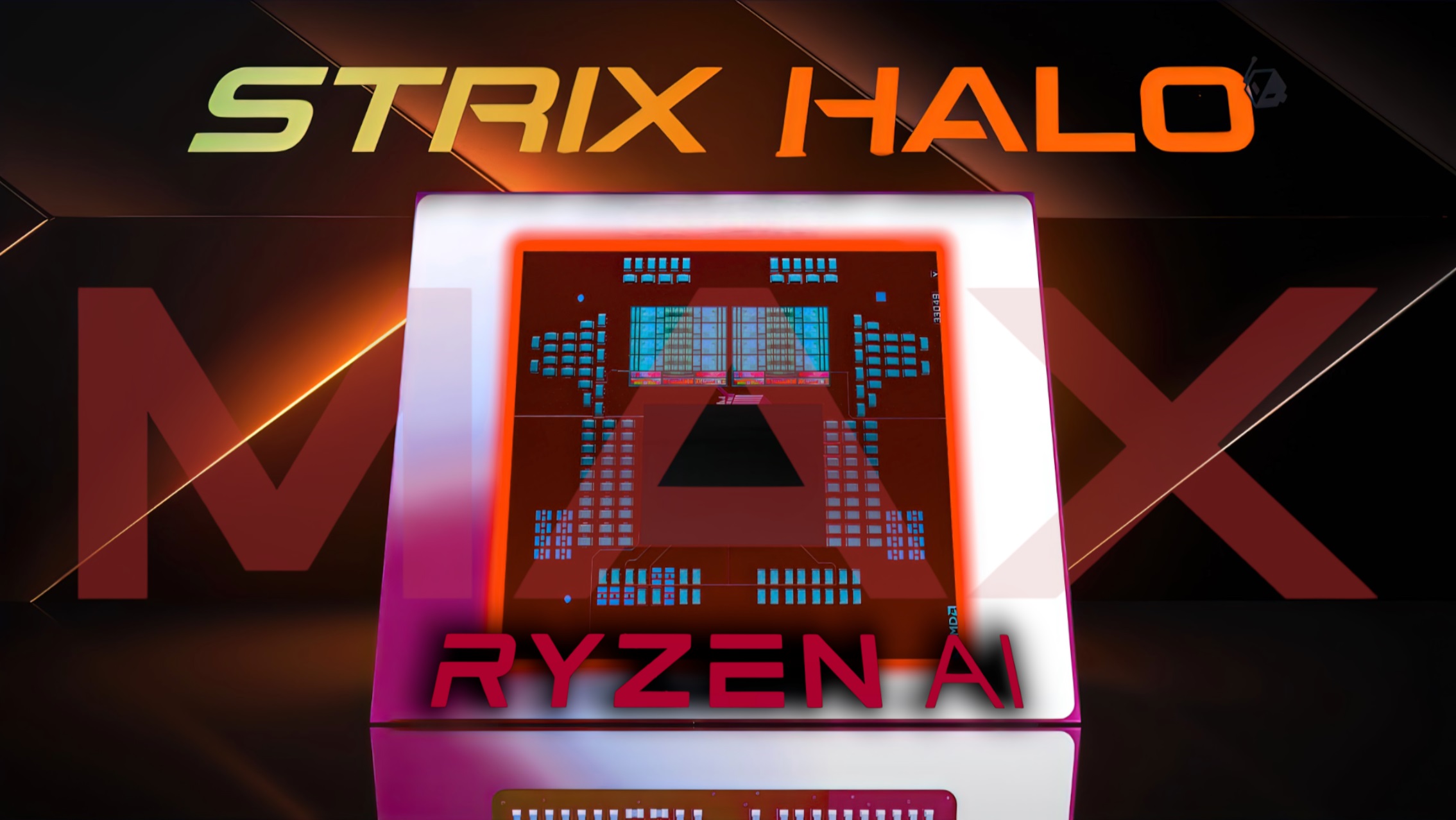
The AMD Ryzen AI Max+ 395 “Strix Halo” APU has once again shown its prowess in recent Geekbench benchmarks, delivering noteworthy multicore performance results.
Recently spotted in the ASUS ROG Flow Z13 model, the Strix Halo APU is heating up the anticipation for AMD’s upcoming lineup. This variant, the GZ302EA, is powered by the AMD Ryzen AI Max+ 395 CPU, one of the standout offerings in AMD’s chipset portfolio, with only the Ryzen AI Max+ Pro 395 ranked higher. The APU impresses with its 16-core, 32-thread architecture and the integration of Radeon 8060S graphics leveraging the advanced RDNA 3.5 architecture.
In the latest Geekbench tests, the processor achieved 2928 points for single-core and 19484 points for multicore performance. During these tests, the CPU operated at a base frequency of around 3.0 GHz, with the capabilities to boost up to 5.1 GHz. Although performance scores have been fluctuating—with a slight rise in single-core but a dip in multicore scores—it’s important to consider the natural variability of Geekbench results.
Built on the Zen 5 architecture, the Ryzen AI Max Strix Halo APUs stand out with specifications that differ notably from the Strix Point series. While the Strix Point’s flagship—Ryzen AI 9 HX 370/375—caps at 12-core and 24-thread configurations, the Strix Halo line elevates this with up to 16 cores and 32 threads.
A major advancement in the Strix Halo APUs is their integrated graphics capability. Offering a substantial 40 Compute Units, this upgrade dwarfs the Strix Point’s mere 12 units. The Radeon 8060S promises to deliver exceptional gaming performance, potentially outperforming the Radeon 880M and 890M, and rivaling discrete GPUs like the RX 7600.
Such a robust CPU and iGPU combination makes the Strix Halo a formidable choice for budget gaming laptops, reducing the necessity for separate graphics cards. It also promises superior computational speed for CPU-heavy tasks. While synthetic benchmarks of the Radeon 8060S have surfaced, we’re yet to see specific gaming benchmarks, which adds to the excitement leading up to its anticipated launch at CES 2025. Expectations are high as tech enthusiasts eagerly await AMD’s next big reveal.