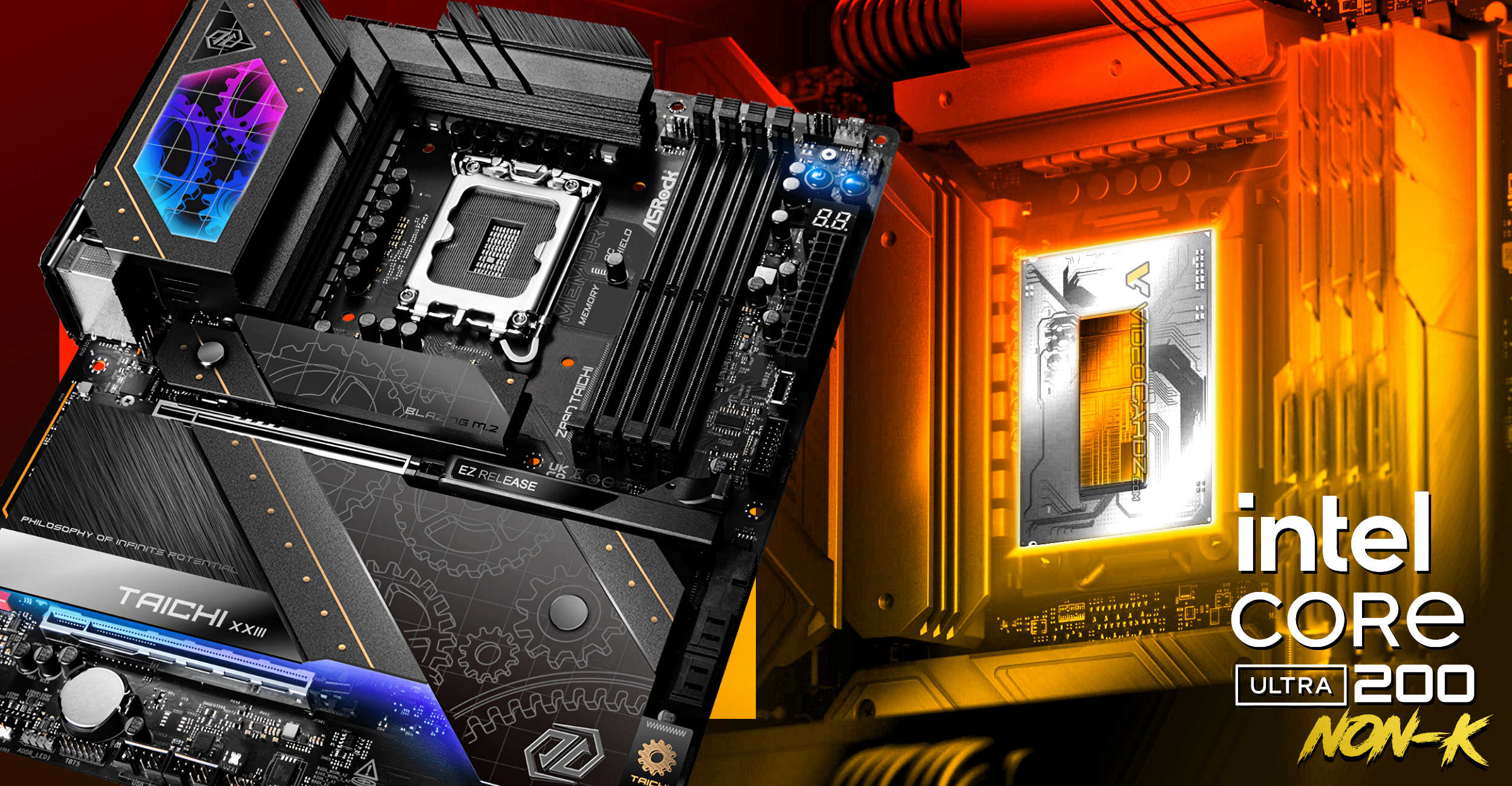
ASRock has recently stirred curiosity in the tech community with hints about the upcoming 65W and 35W SKUs designed for desktop use. Their Z890 platform qualification and validation lists reveal a clear distinction between the Core Ultra 200K and non-K models when it comes to DDR5 memory support. While the Core Ultra 200K series boasts support for memory speeds up to 9066 MT/s, the non-K series is limited to 7200 MT/s. This notable difference suggests varying capabilities between the two lines.
Interestingly, ASRock has yet to provide an explanation for the differences in memory support, nor have they detailed the specifications on their motherboard’s website. The only available insight is a statement indicating that memory support may vary based on system configurations. Furthermore, the profiles for memory settings may differ depending on specific system setups, memory modules, and motherboard models.
The listing of the Core non-K series by ASRock might be premature, given that Intel has not officially announced these models. It seems these lists could be based on early sampling data and may not have been intended for public release at this time. Intel also hasn’t clarified any limitations on memory support for the non-K series in their announcements. Despite this, even at 7200 MT/s, the non-K series exceeds the JEDEC standard of 6400 MT/s, indicating some level of overclocking.
This gap in memory support is particularly puzzling because it’s found in the Z890 Taichi, a high-end board decked out with ASRock’s latest features for the LGA-1851 platform, including the Memory OC Shield. Typically, one might expect slower memory support on more budget-friendly motherboards, such as the B860 series, which haven’t been announced yet.
As we await further clarification from Intel and ASRock, tech enthusiasts are left pondering the reasons behind this memory support disparity and what it could mean for the performance of future desktop configurations.