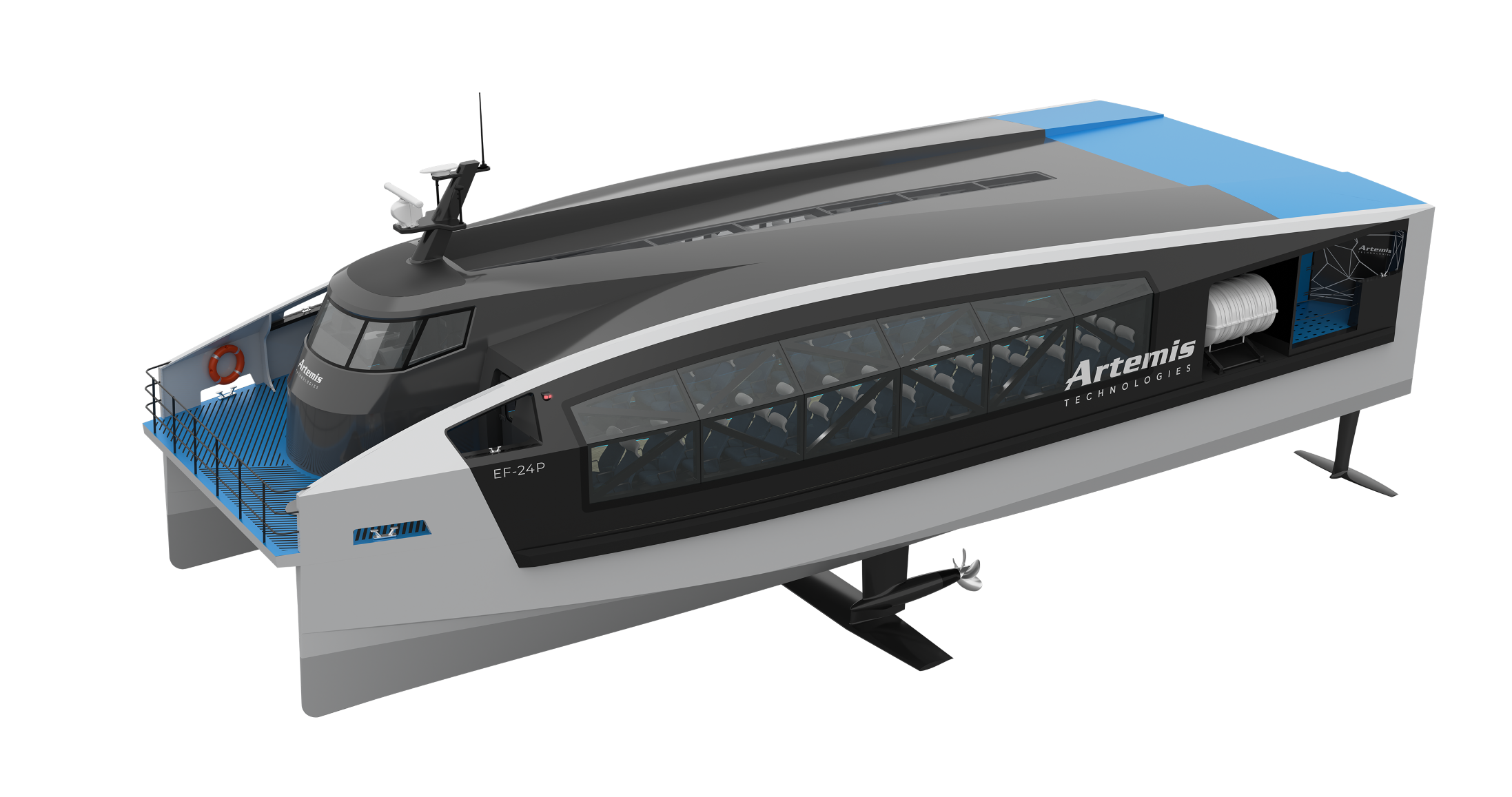
Three brand-new EF-24 high-speed electric ferries powered by hydrofoil technology have officially arrived in Belfast, marking a major step toward faster sea travel across key parts of the United Kingdom. Designed to carry around 150 passengers each, these vessels are being positioned as a cleaner, quieter alternative for busy regional routes—especially where current options can be slow, limited, or overly reliant on road and air travel.
Artemis, the company behind the EF-24 Passenger, says the first three ferries have now been delivered and are currently being fitted out in Belfast. The standout feature is the hydrofoil system, which lifts most of the hull above the water once the vessel gains speed. By reducing drag, hydrofoils allow boats to cruise far faster than traditional ferries while using less energy for the same performance—an approach famously seen in earlier jetfoil-style craft, though modern development in this area has been relatively limited for years.
Unlike older high-speed vessels that often relied on aircraft-style engines and came with heavy maintenance demands, the EF-24 aims to modernize the concept with electric propulsion. The promise is straightforward: high-speed passenger transport on water without the fuel burn and noise typical of older fast-ferry designs.
Planned UK routes include three service areas that could benefit from quicker connections:
1) Belfast (Northern Ireland) to Bangor (Wales)
2) Services around the Orkney Islands (Scotland)
3) Southampton (England) to Cowes on the Isle of Wight
If these routes move forward as expected, they could offer a compelling new option for commuters, tourists, and regional travelers—especially where traveling by road is time-consuming or where short-haul flights are less practical.
That said, the project hasn’t been completely smooth. Artemis has acknowledged delays, citing unexpected challenges that came with implementing new propulsion technologies. For now, there’s no confirmed launch date for passenger service, but if outfitting and sea trials go well, operation in 2026 appears increasingly realistic.
Performance targets are one of the most attention-grabbing parts of the EF-24 story. The ferries are expected to cruise at around 34 knots (roughly 63 km/h or 39 mph) and have a stated range of about 70 nautical miles (around 130 km or 80 miles) in fast hydrofoil mode. Artemis also claims the craft can reach high speeds quickly—an important factor for routes where time savings depend on getting up to speed efficiently.
Beyond speed, hydrofoils may also bring a coastal benefit. Because the hull rides higher above the water when foiling, the vessel can create smaller wakes compared with conventional ferries traveling at similar speeds. Less wake can mean less shoreline erosion and reduced disturbance near coastal areas. However, operating fast hydrofoil vessels could still require updates or adjustments to local shipping rules, particularly around where and when the ferries are allowed to “lift” and travel at high speed near ports.
With three EF-24 electric hydrofoil ferries now in Belfast and moving through final preparations, the next big milestone will be testing and regulatory clearance. If those steps go as planned, the UK could soon see a new era of high-speed electric ferry travel—one that blends modern clean propulsion with a proven, efficiency-focused hydrofoil design.


