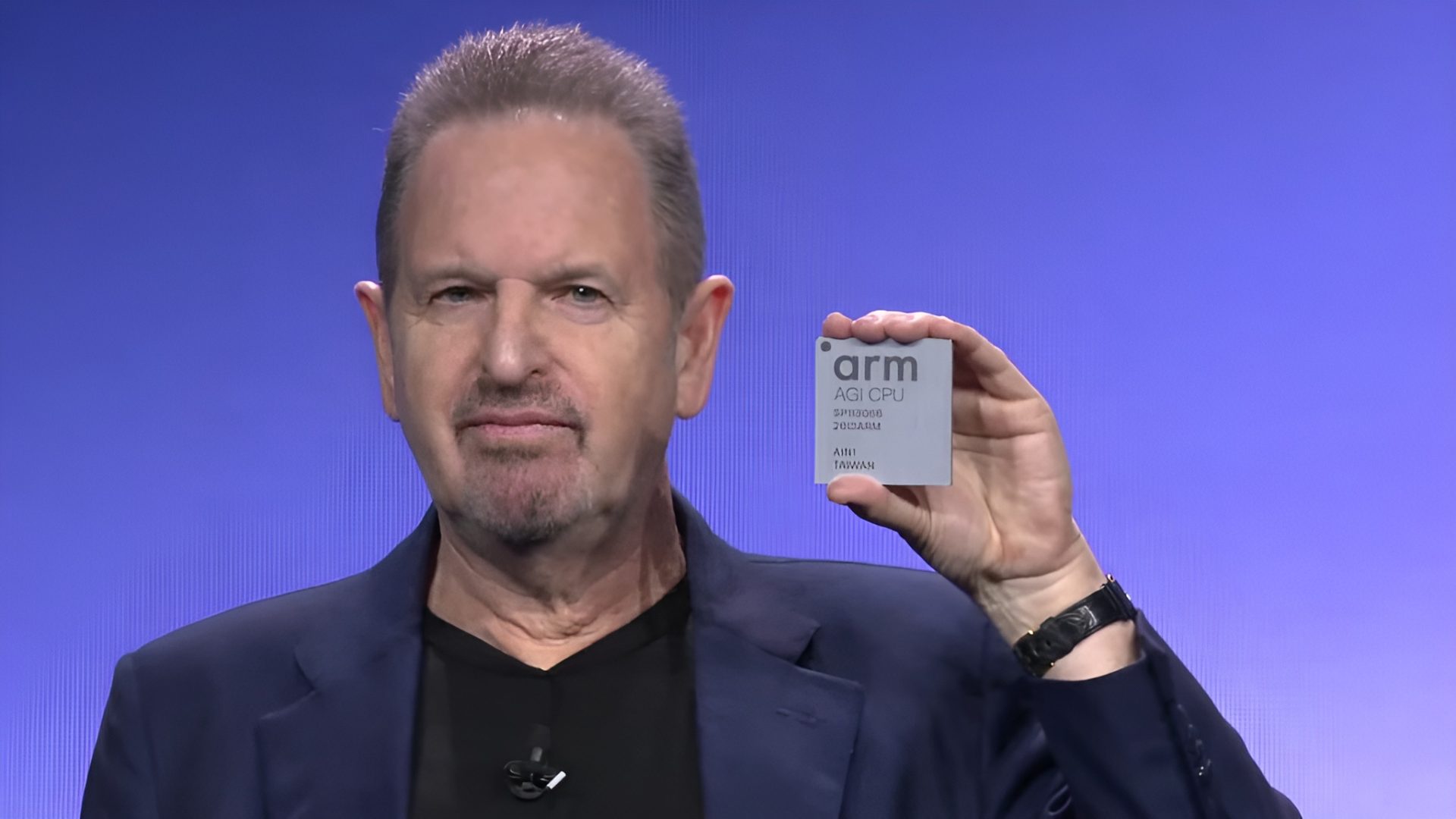
ARM is making one of its boldest moves yet, and CEO Rene Haas sounds convinced it can reshape the server CPU market. At a recent keynote, Haas signaled a major shift in strategy: ARM doesn’t want to be seen only as the company that licenses CPU designs anymore. It wants to step into a bigger role as a “compute platform” provider by building a server processor of its own, called the AGI CPU, aimed directly at the data center and AI-era workloads that are exploding in demand.
The message from ARM is clear: this chip is designed to challenge the long-standing dominance of x86 processors from Intel and AMD. Haas has even attached a big business forecast to the move, projecting the AGI CPU could drive around $15 billion in annual revenue by 2031, helped by rack-scale deployments rather than limited, niche rollouts.
Why would an IP licensing giant start building its own server CPU? Haas argues it’s sometimes good for an ecosystem when the platform owner builds a first-party product that pushes the market forward. He compared ARM’s approach to Microsoft building Surface devices to strengthen Windows adoption, or Google creating Pixel phones while other Android manufacturers continue to thrive. In ARM’s view, shipping an in-house server CPU isn’t about abandoning partners—it’s about accelerating adoption, showcasing what the platform can do, and expanding ARM’s total addressable market in high-growth segments.
A big part of that growth narrative centers on agentic AI. As orchestration, management, and agent-driven workloads rise, ARM believes data centers will increasingly need efficient, scalable compute options. ARM is positioning the AGI CPU as a way to make its server ecosystem stronger and more competitive for modern AI infrastructure, not just traditional cloud computing.
Still, this move comes with real tension. ARM already powers a large portion of the data center ecosystem through partners and customers that use ARM-based designs. That includes major server CPU efforts built on ARM technology. By launching its own server CPU, ARM becomes both collaborator and competitor in the very same market—an uncomfortable dynamic for any company that also sells foundational technology to others.
That conflict-of-interest question has been impossible to ignore, especially with earlier disputes in the broader ARM ecosystem serving as a reminder that it’s hard to both sell the tools and compete with the tool buyers. When asked whether this could upset key partners—particularly those building ARM-based data center chips—Haas downplayed the concern, suggesting that a thriving ARM ecosystem helps everyone involved. In his view, more strong ARM-based server CPUs in the market is good for ARM’s broader platform adoption, and it’s ultimately the x86 incumbents who have the most to lose.
In fact, Haas framed it bluntly: multiple great ARM server products can coexist, but that competitive pressure isn’t “great for Intel and AMD.” That’s the core of ARM’s bet—if ARM can help drive a bigger shift toward ARM-based servers, it can weaken x86’s grip on the market while expanding its own influence dramatically.
There are also practical adoption questions. ARM’s early momentum reportedly includes a major lead customer: Meta, which is expected to integrate the AGI CPU into its rack deployments, possibly alongside internal AI accelerators. Haas also mentioned additional names across memory, networking, software, and cloud infrastructure—companies such as SK hynix, Cisco, SAP, and Cloudflare—suggesting ARM is aiming for broad industry participation rather than a single flagship deployment.
But winning in server CPUs isn’t only about lining up customers. It’s also about reliably producing the chips at scale. ARM’s AGI CPU is being manufactured by TSMC on a 3nm process, and advanced-node capacity has been tight across the industry. If supply is constrained, even strong demand and big-name interest may not translate into meaningful market share quickly.
ARM’s AGI CPU represents a major step into direct competition in the server processor space, and it highlights how valuable data center compute has become in the AI era. The upside is significant: stronger platform control, bigger revenue potential, and a direct shot at Intel and AMD’s dominance. The risks are just as real: partner skepticism, ecosystem politics, and the challenge of scaling supply and adoption in a market where the established players have spent decades refining their hardware, software compatibility, and customer relationships.
For ARM, this isn’t just a product launch—it’s a statement that the company wants to be a front-line competitor in server CPUs, not only the architecture behind everyone else’s chips.