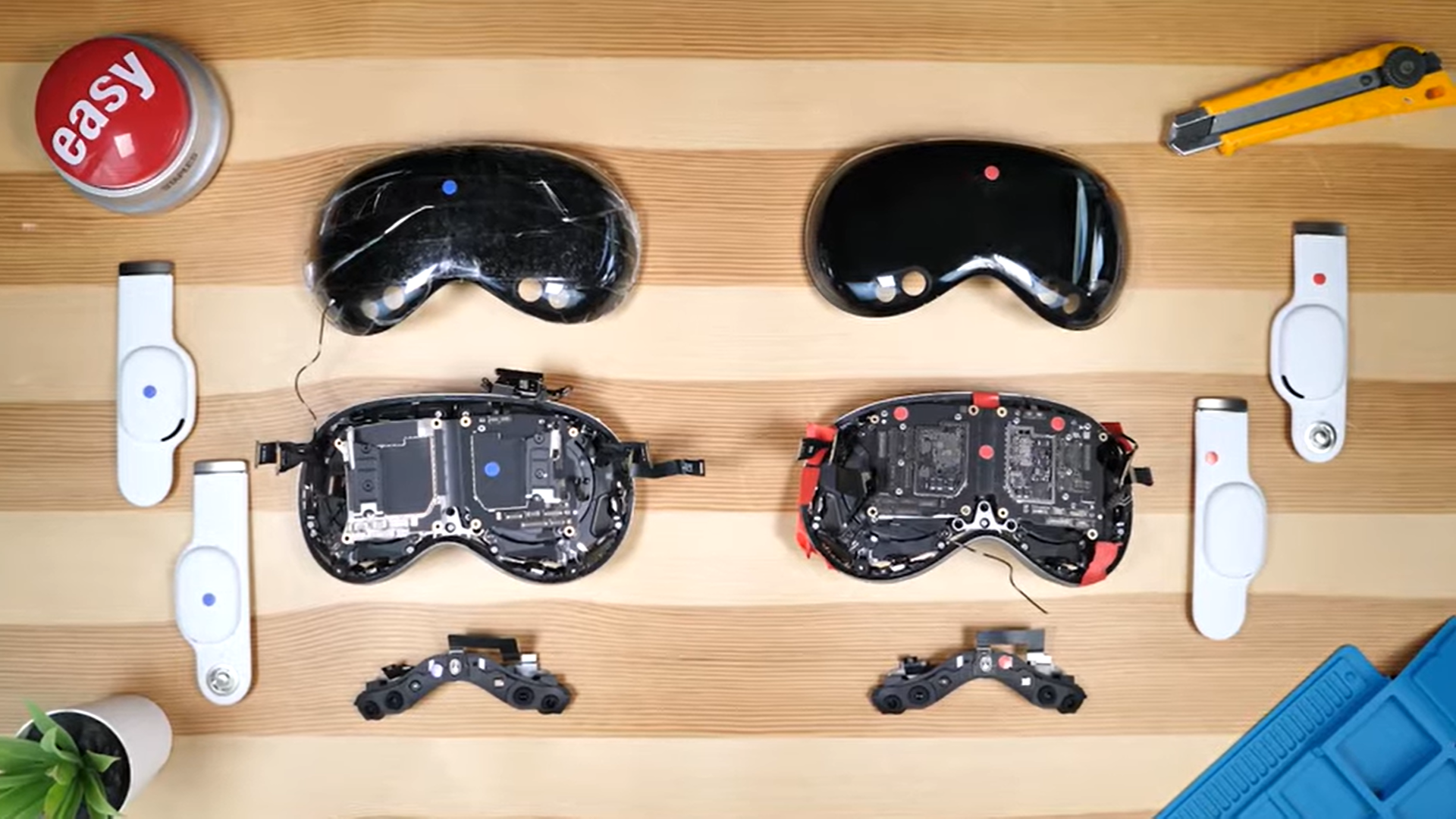
The Vision Pro from Apple has raised the bar for difficult-to-repair devices, surpassing even the company’s notoriously tough-to-tear-down products. For third-party repair technicians, the journey to the device’s core components is obstructed by a series of advanced cameras, sensors, and lenses. Although the M2 chipset can be revealed during disassembly, it’s a small consolation given the challenges that lie ahead.
A detailed examination by a YouTuber known as Phone Repair Guru has revealed the painstaking care needed to open the device without causing damage — a task that might involve securing the plastic-coated Persona Display visor to prevent accidents. However, this “spatial computer” is equipped with several design elements that deter repairs. This includes unusually small ~2mm nuts fastening the motherboard, a characteristic rarely seen in mobile devices, and quite unconventional even by Apple’s standards.
A more concerning hurdle for repairs is the serialization of components, akin to practices in newer iPhone models, which can result in functionality issues when using replacement parts. Although initially no cases of software-locking during disassembly were reported by iFixit, the Canadian vlogger unmasked a critical problem: a Vision Pro headset ceases to function when its biometric-enabling display is replaced by another, even when using genuine Apple components.
The complications extend to other parts like sensors and the Persona Display, which may be due to the necessity of calibrating components to enable pass-through functionality, rendering them incompatible with parts from other units. This hints at Apple’s apparent policy to keep repairs strictly within its domain, especially for a device priced at $3,499.
In stark contrast, the Meta Quest 2, which is considerably more affordable starting at $249 on retail platforms like Amazon, is recognized for being significantly more conducive to user repairs. This difference marks a significant point of distinction between Apple’s premium offering and more accessible VR headsets in terms of repairability and consumer autonomy in maintaining their devices.