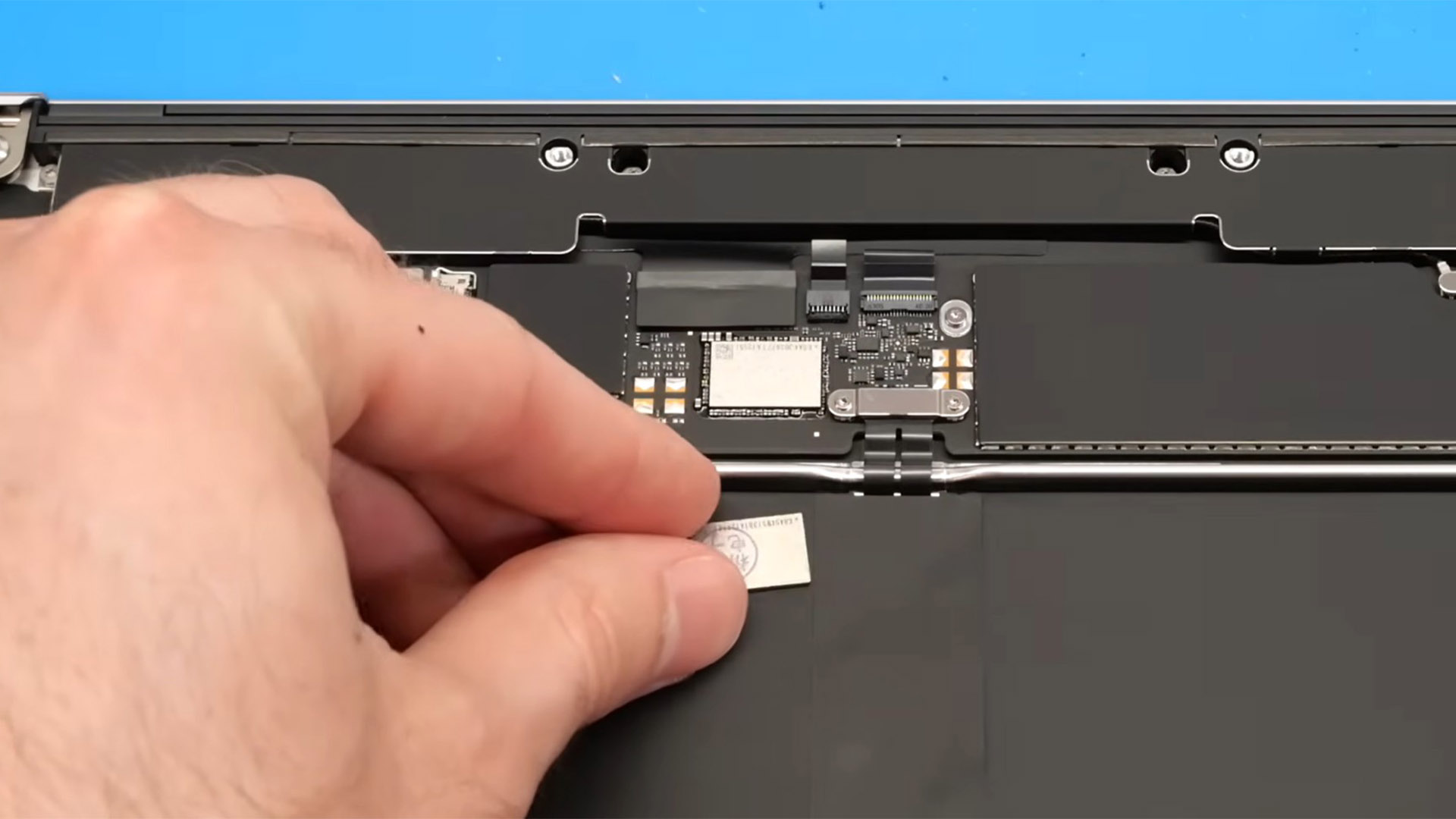
Apple’s rumored MacBook Neo is turning into a fascinating case study in how far Apple can stretch a single set of components across very different products. Beyond using a binned A18 Pro to help power a notebook, a recent SSD modification suggests Apple is also sharing storage hardware between its phones and laptops. The standout detail: the MacBook Neo and the iPhone 16 Pro lineup appear to use the same NAND flash parts, a strategy that could help Apple protect margins while the industry wrestles with rising memory costs.
A new modding demonstration shows that a specific NAND flash chip used in the iPhone 16 Pro and iPhone 16 Pro Max matches the physical requirements of the MacBook Neo. The chip in question is a 1TB K8A5 model, and it reportedly shares the same footprint and thickness as the flash memory already present in the MacBook Neo. That makes it an ideal candidate for an upgrade, allowing the laptop to be pushed to 1TB of storage through a swap, even though Apple’s own configuration caps the machine at half that amount.
There is an important catch, however, and it’s a big one for anyone thinking this is as simple as pulling a chip from a phone and dropping it into a laptop. The NAND can’t just be transplanted from an iPhone 16 Pro or 16 Pro Max into the MacBook Neo and expected to work. If the chip already contains data and an operating system, the laptop reportedly won’t detect it. For the modification to succeed, the NAND module needs to be completely blank.
Even with that limitation, the bigger story is what this says about Apple’s supply chain strategy. Using the same NAND packages across multiple product categories can simplify procurement and reduce manufacturing complexity. Instead of relying on separate designs that require different production tooling, Apple can order larger volumes of the same component, potentially lowering costs and shortening lead times. It’s also a sharp contrast to the broader laptop market, where many manufacturers depend on removable M.2 SSDs sourced from various suppliers, often with more variation in specifications.
This kind of parts commonality matters even more right now because the market has been dealing with upward pressure on SSD pricing. Sharing components across iPhone and Mac hardware may give Apple some breathing room against storage cost spikes, even as the industry faces broader memory supply challenges. Reports also suggest Apple is willing to pay premium prices to secure RAM supply, but avoiding pain on the storage side is still a meaningful advantage.
In short, the MacBook Neo storage mod isn’t just a clever upgrade story. It highlights Apple’s larger play: standardize critical components across devices, streamline the supply chain, and reduce exposure to price swings—all while keeping product design tightly controlled.