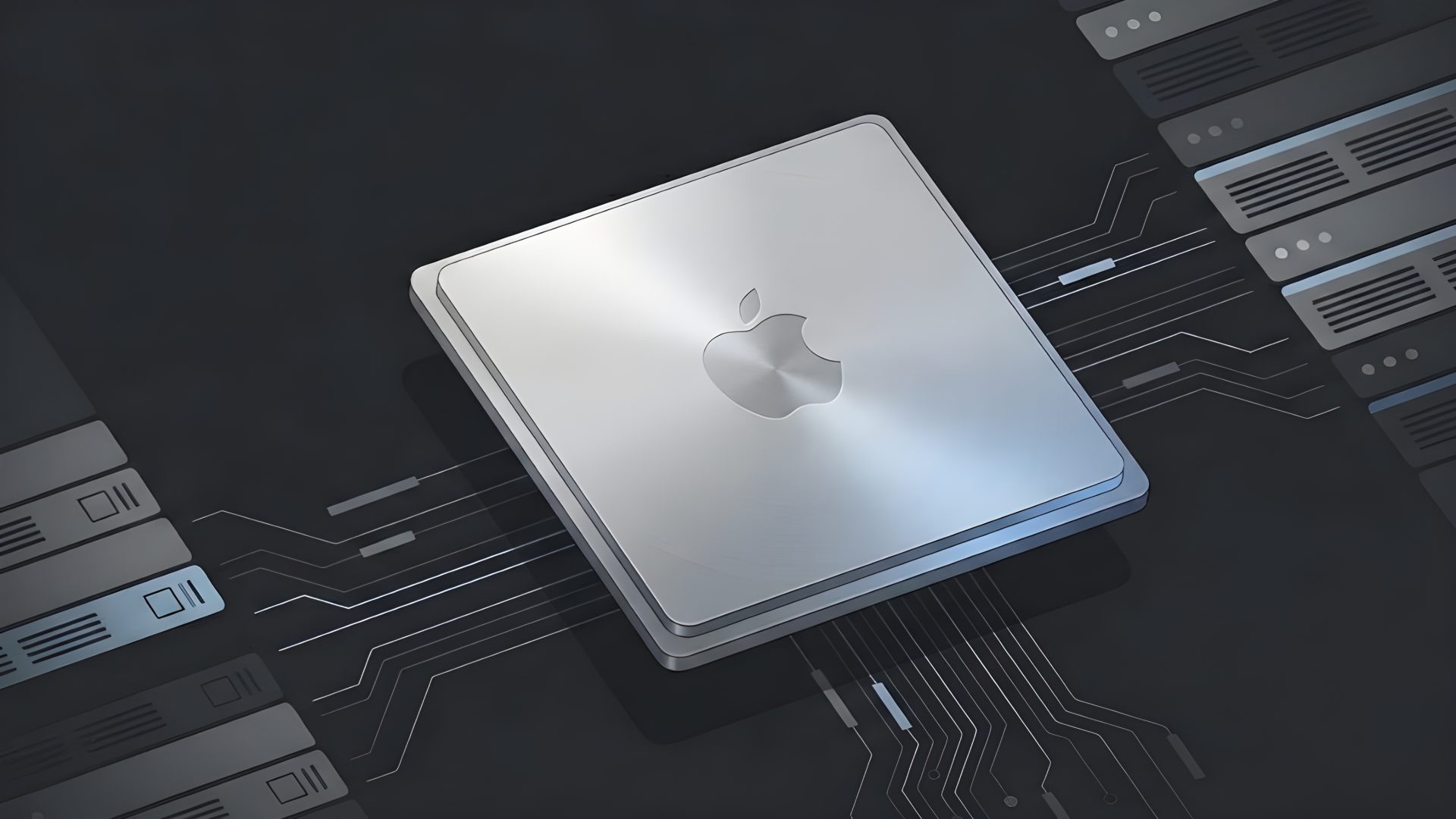
Apple’s “Baltra” AI Server Chip Could Use NVIDIA NVLink to Power Private Compute and Enterprise AI Servers
Apple may be preparing a major expansion of its AI infrastructure strategy, with new reports suggesting the company is exploring NVIDIA’s NVLink connectivity technology for its upcoming custom AI server chip, internally known as “Baltra.”
The move would be significant because it could give Apple a more powerful and flexible foundation for cloud-based AI inference, while also opening the door for the company to sell dedicated AI servers to enterprise customers. If that happens, Apple could be stepping back into a server business it exited in 2011 when it discontinued Xserve.
Apple’s custom AI chip strategy is taking shape
Apple has reportedly been developing its first dedicated AI server chip with help from Broadcom. The chip, codenamed Baltra, is expected to be designed for Apple’s Private Compute infrastructure, which handles AI tasks that are too demanding to run entirely on a user’s device.
Previous reports have suggested that Baltra may use TSMC’s 3nm N3E manufacturing process and could feature a chiplet-based design. In this approach, Broadcom would help design individual chiplets, while Apple would manage the final packaging and integration process.
That structure could give Apple greater control over the complete chip design while keeping key architectural details private, even from some of its partners. This fits Apple’s long-running strategy of tightly controlling hardware, software, and system-level integration.
NVIDIA NVLink could make Apple’s AI servers more flexible
The most interesting part of the latest report is Apple’s possible use of NVIDIA’s NVLink Fusion connectivity solution. NVLink is designed for high-speed, low-latency communication between chips, accelerators, and rack-scale AI systems.
By adding support for NVLink, Apple could make its AI servers more interoperable with NVIDIA-powered infrastructure. This would be especially important in large-scale AI environments where companies need fast communication between different processors and accelerators.
For Apple, this could provide several advantages. It may allow the company to build more scalable AI server clusters, improve performance for cloud-based AI inference, and create server hardware that is appealing to enterprise customers already invested in NVIDIA’s AI ecosystem.
Apple may use M8-based servers for AI workloads
The report also claims Apple is considering dedicated AI servers built around its M8 chip. These systems would reportedly support NVIDIA’s NVLink Fusion technology, allowing them to connect with NVIDIA’s rack-scale AI platforms.
If Apple moves forward with this plan, it could mark a major shift in the company’s server strategy. Apple has traditionally focused on consumer devices and tightly controlled services, but the AI boom is changing how major technology companies think about infrastructure.
Dedicated Apple AI servers could support the company’s own cloud AI needs while potentially becoming a commercial product for businesses that want secure, privacy-focused AI systems.
Foxconn, Lenovo, and Apple’s server production plans
Apple is also said to be working with manufacturing partners on the physical server hardware. Foxconn has reportedly been assigned to produce the servers, while Lenovo and one of its subsidiaries may assist with the overall design.
This would allow Apple to lean on experienced server manufacturing partners while still maintaining control over the chip architecture and privacy-focused system design.
Apple has taken this approach before in other product categories: partner with companies that have manufacturing scale, but keep the most important technology and integration work under Apple’s direct supervision.
How this fits into Apple Private Compute
Apple’s Private Compute system is designed to handle advanced AI requests while protecting user privacy. Under Apple’s current AI architecture, an orchestrator decides whether a Siri or Apple Intelligence query should be processed on-device or sent to the cloud.
If the request requires more computing power, it can be routed to Apple’s cloud-based AI infrastructure. There, the system is designed to process data securely using encrypted hardware and Apple’s privacy protocols.
Apple has positioned Private Compute as a way to offer more advanced AI features without giving up the privacy protections that have become central to its brand. The possible addition of custom Baltra chips and NVLink-supported servers could make that system faster, more scalable, and better suited for future AI workloads.
Why this matters for Apple’s AI future
Apple is under pressure to compete in artificial intelligence against companies that have moved aggressively into generative AI, cloud AI, and enterprise AI services. Building its own AI server chips would help Apple reduce dependence on third-party hardware over time, while NVLink support could keep its infrastructure compatible with the broader AI hardware ecosystem.
This combination could give Apple the best of both worlds: custom silicon designed around its own privacy and performance goals, plus compatibility with NVIDIA’s widely used AI connectivity platform.
If the reports are accurate, Apple’s Baltra chip and M8-based AI servers may become a crucial part of the company’s long-term AI roadmap. They could improve Apple Intelligence, strengthen Siri’s cloud capabilities, support Private Compute at scale, and potentially bring Apple back into the enterprise server market after more than a decade away.
For now, Apple has not officially confirmed the Baltra chip, the M8 server plans, or NVLink support. But the direction is clear: Apple appears to be building a deeper, more powerful AI infrastructure stack, and its next major move may happen inside the data center rather than on the iPhone.


