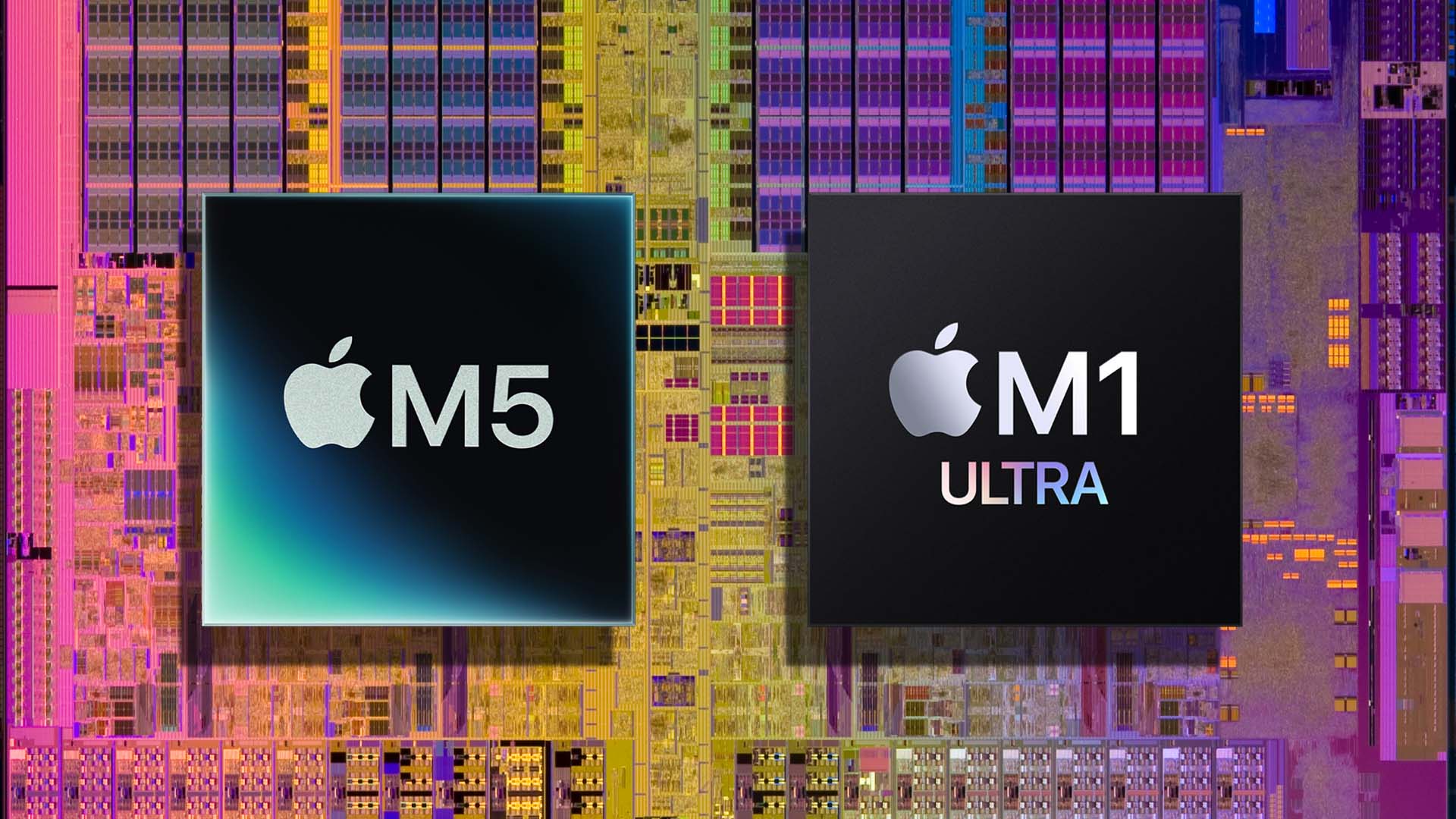
Apple’s silicon roadmap just hit an eye-opening milestone. Three years after the debut of the M1 Ultra, the new M5 is showing how far Apple’s architecture has come. Early Geekbench 6 results indicate that the M5 inside the latest MacBook Pro and iPad Pro nearly matches the multi-core output of the M1 Ultra while using roughly half the CPU cores—and it absolutely races ahead in single-core performance.
Here’s the headline takeaway: despite having only 10 CPU cores (6 performance, 4 efficiency), the M5’s multi-core score lands within a few percentage points of the 20-core M1 Ultra (16 performance, 4 efficiency). Even more impressive, the M5 sets a new high-water mark for single-core performance, underscoring major gains in per-core efficiency and clock speed.
Key comparisons from Geekbench 6
– M5 (MacBook Pro variant at 4.61 GHz)
– Single-core: 4,263
– Multi-core: 17,862
– M1 Ultra (up to 3.22 GHz)
– Single-core: 2,387
– Multi-core: 18,792
That means the M5 delivers a commanding single-threaded lead while trailing by less than 5% in multi-core tests, despite running half as many cores. With more aggressive cooling, that multi-core gap could shrink even further.
Clock speeds differ by device, too. The M5 in the MacBook Pro runs at around 4.61 GHz, while the iPad Pro version is listed at approximately 4.43 GHz. Even so, both variants benefit from architectural improvements, and the MacBook Pro’s higher frequency helps it post the strongest numbers.
Cache changes are part of the story. The M5 is listed with 6MB of L2 cache, a 50% bump over comparable figures cited for earlier Apple Silicon in this class. Previous generations often stuck to 4MB, so this increase likely contributes to the M5’s stronger per-core results and responsiveness in real-world tasks.
What this means for creators and power users is straightforward:
– Single-core performance leads to snappier app launches, faster code compilation per thread, and better responsiveness in everyday workflows.
– Near-Ultra multi-core output with fewer cores suggests a leap in efficiency, which can translate to sustained performance in thinner designs and improved battery life under heavy loads.
– With these gains in the baseline M5, upcoming M5 Pro and M5 Max chips are poised to set new multi-core records if the scaling holds.
In short, Apple’s M5 shows that raw core counts aren’t everything. Higher clocks, smarter architecture, and better caching are letting a 10-core laptop chip nip at the heels of a 20-core desktop-class powerhouse in multi-threaded tasks—while comfortably taking the single-core crown. If this is the foundation, the next wave of M5 variants could redefine what portable pro machines can do.


