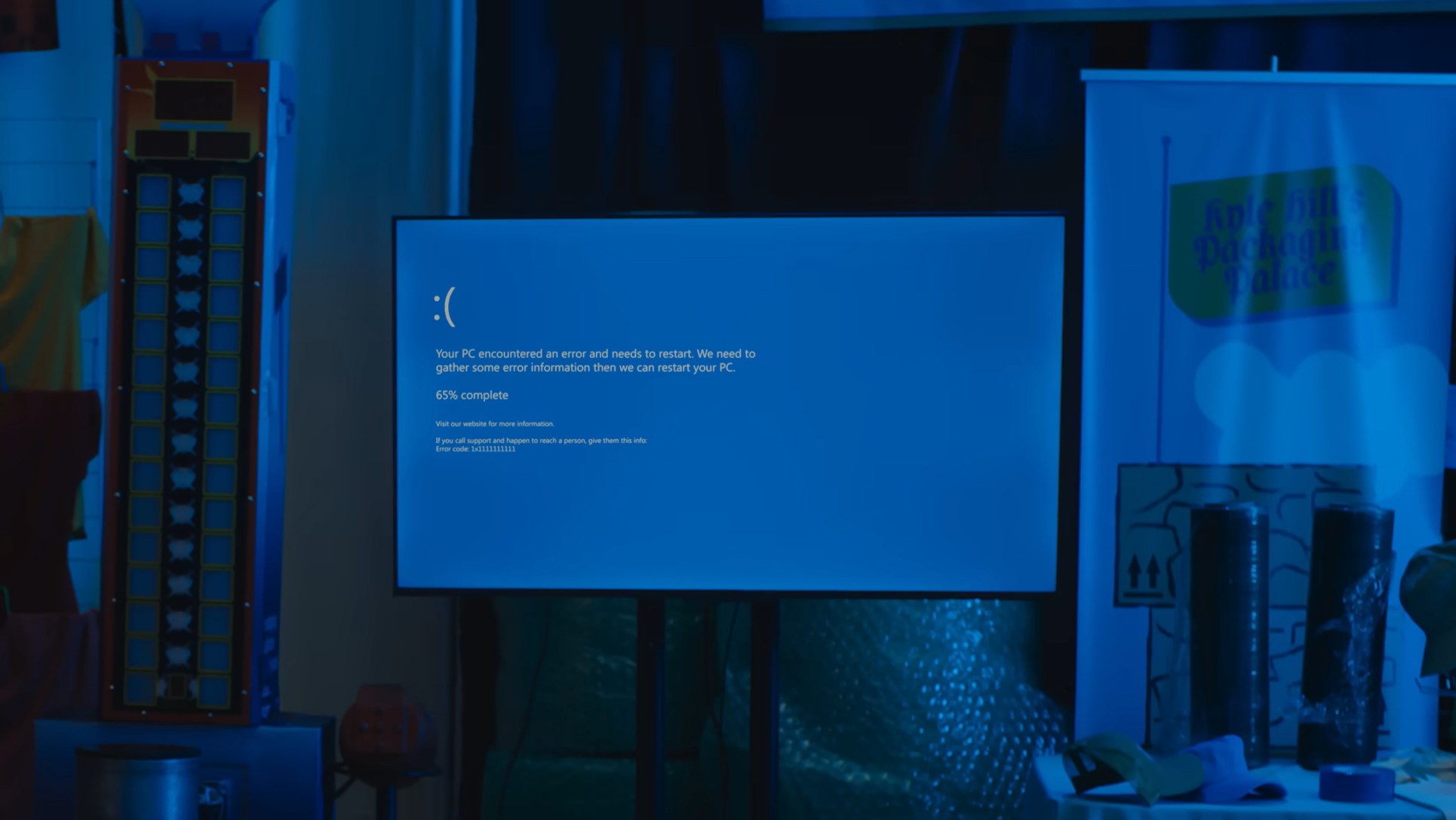
Apple is leaning into the security narrative with a new ad that spotlights a scenario every IT team dreads: a showstopping outage right before a major event. In the spot, a trade show team is knocked offline by a software meltdown on their Windows PCs, and a group of Apple staffers swoops in to get them back up and running by handing out Mac mini units. The ad closes with the line, “There’s no security like Mac security,” a not-so-subtle reminder of where Apple believes its advantage lies.
The message hits harder because it echoes a recent real-world fiasco. During the widely reported CrowdStrike update issue, countless Windows machines ran into the Blue Screen of Death, while Macs stayed largely unaffected. Apple’s pitch is that macOS, with its more restricted low-level access, is less susceptible to cascading failures that can bring entire operations to a halt. In controlled environments where kernel-level changes and driver stacks are tightly managed, the odds of a catastrophic outage are reduced.
This isn’t to say Microsoft hasn’t improved Windows 11 security. It has. But Apple’s ad suggests those efforts don’t fully level the playing field, particularly for businesses that can’t afford downtime. When a single bad driver or misconfiguration can trigger a chain reaction across many Windows devices, the risk calculus changes. That’s the emotional lever the ad pulls, and it does so by showing Macs as the fast, dependable fix in a crisis.
The choice of hardware in the ad is deliberate. The current M4 Mac mini is one of Apple’s strongest price-to-performance plays, offering serious horsepower in a compact form factor that’s easy to deploy at scale. For teams that value quick recovery and consistent performance, it’s an attractive package that’s tough for many Windows-based alternatives to match at the same size, power draw, and cost profile.
Of course, Windows still reigns in areas where flexibility and customization matter most, which can be a double-edged sword. Power users know that tuning a system can unlock huge gains but also introduce instability. Consider a high-end gaming laptop with an Intel Core i9-14900HX and RTX 4090: chasing lower temps or higher performance through undervolting and driver tweaks can trigger persistent BSODs. In one case, it took months to trace crashes back to the need for an Intel microcode update. That kind of troubleshooting showcases both the power and the complexity of the Windows ecosystem—brilliant for tinkerers, less ideal for teams that just need everything to work, all the time.
That’s the heart of Apple’s argument. macOS favors a more locked-down, managed approach; Windows offers vast freedom and support for a broader array of hardware and drivers. Both philosophies have merit. Apple’s marketing simply capitalizes on the reality that when uptime is mission-critical, fewer moving parts and tighter controls can translate into fewer disasters.
The broader takeaway is practical, not tribal. If your priority is rock-solid stability, streamlined management, and fast recovery from unforeseen software issues, Apple’s Mac lineup—headlined by the M4 Mac mini—makes a compelling case. If you need maximum flexibility, cutting-edge gaming support, or specialized hardware configurations, Windows still delivers unmatched choice, albeit with more variables to manage.
Apple’s new ad doesn’t just take a jab; it taps into very recent memory and a genuine business concern. In a world where a single update can take down fleets of machines, companies are reassessing what “secure by design” means. Whether you land on macOS or Windows, the lesson is clear: plan for resilience, minimize low-level risk, and choose platforms that fit your tolerance for tinkering versus predictability.