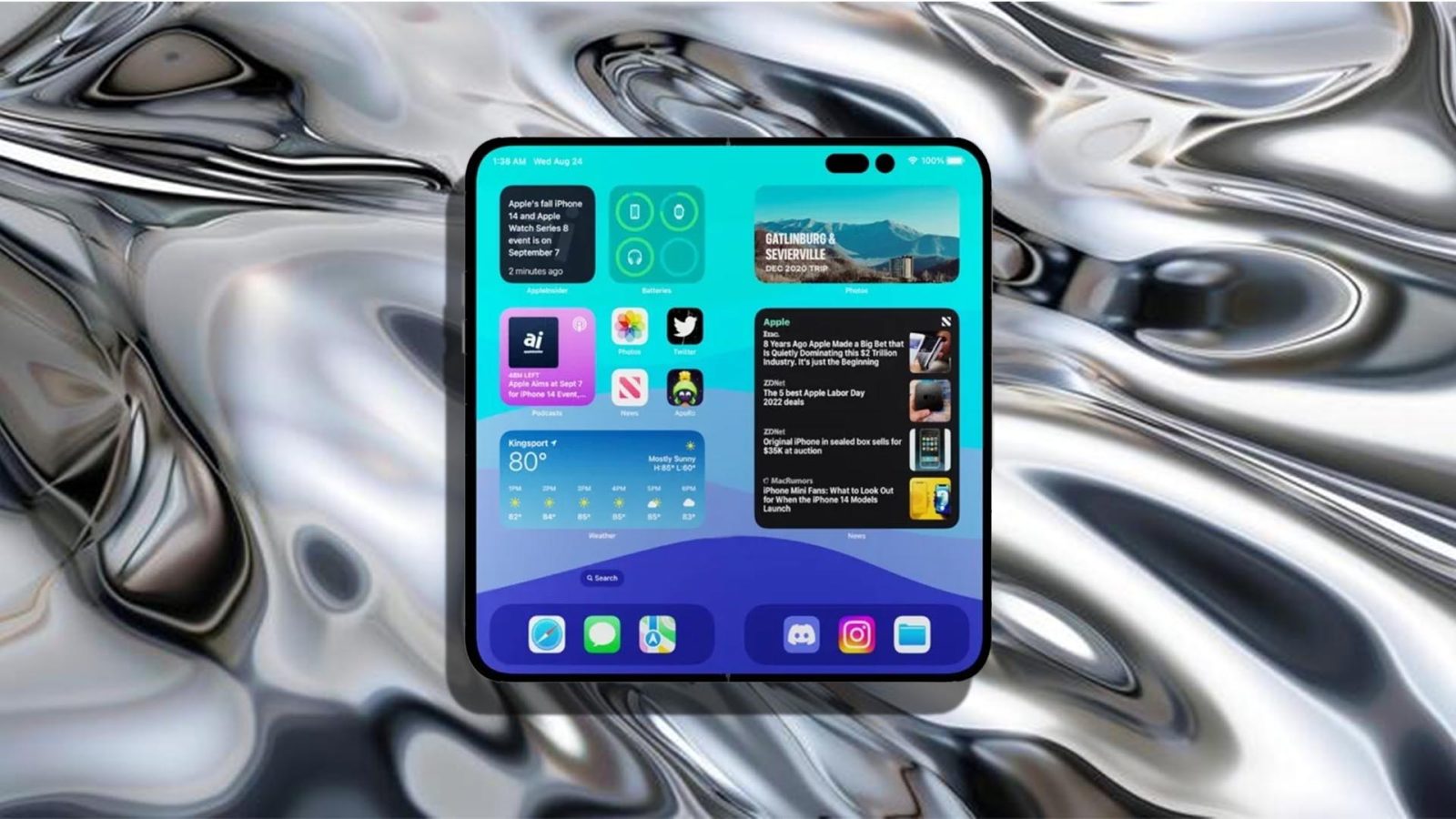
Apple’s first foldable iPhone looks closer than ever, and the timing makes sense. Foldable phones have matured from early experiments into polished devices, with Huawei even debuting a tri‑fold Mate XT and Samsung expected to follow with its own next step. Apple appears ready to enter the category—despite a global audience that remains cautious about the format’s durability, price, and everyday value.
Reports indicate Apple has spoken with suppliers about building a test production line for a foldable iPhone, with mass production targeted for 2026 and a potential manufacturing ramp in India around the 95 million‑unit mark. Internally, Apple is said to be aiming for about 10 percent iPhone shipment growth in 2026, with the new foldable helping to lift those numbers. For context, Apple shipped roughly 232 million iPhones in 2024, and industry projections peg 2025 shipments at around 241 million units. A 10 percent lift from that level would push 2026 shipments in the neighborhood of 265 million units, with the foldable likely contributing a meaningful, albeit smaller, share of the total.
Early whispers about Apple’s foldable design point to a horizontally folding device that feels like a regular iPhone when closed—imagine two iPhone Air units elegantly joined together. An under‑display camera has been floated as a possibility, reinforcing Apple’s tendency to hide complexity behind clean, minimalist surfaces. Expect ultra‑premium pricing; a starting point of at least $2,000 is widely anticipated.
If Apple does launch, it will be entering a foldable market that is still small but evolving quickly. One recent market snapshot showed Huawei capturing about 48 percent of global foldable share in the first half of 2025, even though total foldable shipments remain under 20 million units annually. Consumer sentiment is mixed: in a survey of 5,000 people across Brazil, Mainland China, France, India, and the United States, only 23 percent had purchased or were considering a foldable, while 38 percent actively disliked the form factor. That skepticism generally centers on durability concerns, device thickness, crease visibility, and price.
This is exactly the kind of challenge Apple historically relishes. The company tends to wait until a new category stabilizes, then enters with refinements that address the pain points holding back mainstream adoption. A foldable iPhone that nails durability, minimizes the crease, keeps weight in check, and delivers strong battery life—paired with software that treats the larger canvas as a true productivity and entertainment upgrade—could convert fence‑sitters and expand the category. Apple’s marketing engine and retail footprint would amplify awareness, too.
The stakes are high because the upside is real. Analysts are projecting a sharp 54 percent jump in foldable shipments in 2026. Whether that surge materializes will likely hinge on Apple’s execution—both in design and in how it positions the device for everyday use.
What to watch as rumors build:
– Form factor and hinge durability, especially around the fold and crease
– Weight, thickness, and in‑hand comfort when closed
– Battery life and thermal performance under multitasking
– Under‑display camera quality and display uniformity
– App optimization for multi‑window use and seamless transitions between folded and unfolded modes
– Pricing, trade‑in values, and financing that make a $2,000‑plus device more accessible
– Manufacturing capacity in India and how quickly Apple can scale
If Apple can make its foldable feel like a natural evolution of the iPhone—rather than a fragile, expensive experiment—it could redefine the category and spark the next wave of growth in premium smartphones.