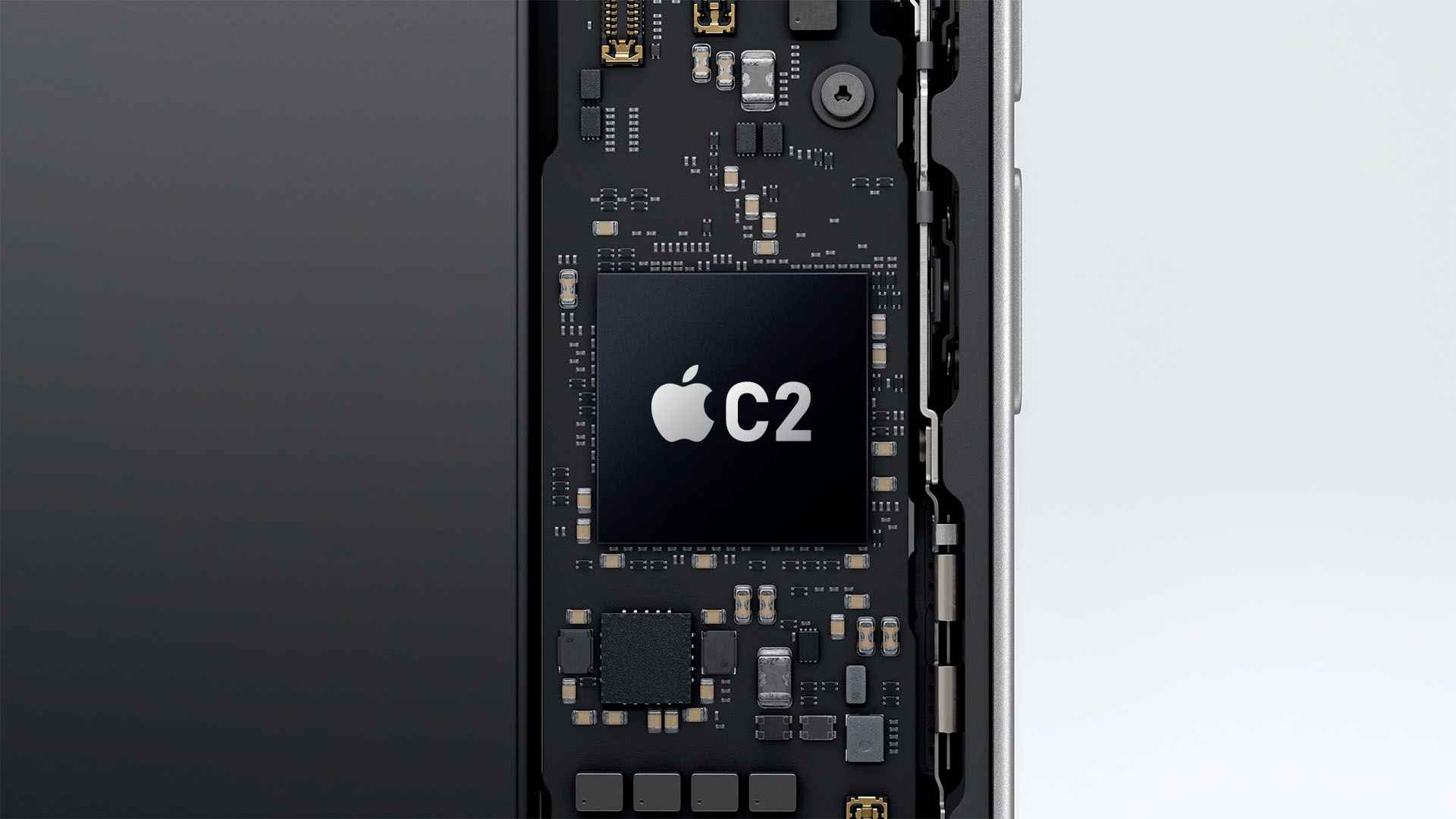
Apple’s next big modem shift is taking shape. According to industry reports, the iPhone 17 family is expected to be the last generation to ship with Qualcomm 5G hardware. Beginning with the iPhone 18 lineup in 2026, Apple is said to roll out its own C2 baseband chip across the range, marking a major step toward full in-house connectivity.
Interestingly, this C2 modem reportedly won’t use the chipmaker’s most advanced manufacturing tech. Despite Apple securing a large portion of TSMC’s initial 2nm capacity for future processors like the A20 series, the C2 is said to be built on TSMC’s 4nm N4 process. That mirrors the approach taken with Apple’s earlier C1 modem, which is also fabricated on 4nm, suggesting the company doesn’t see a strong need to move its baseband to 3nm or 2nm.
There are solid reasons for that strategy. As noted by analysts, cutting-edge modems aren’t typically the biggest power hogs in a smartphone, and shifting a modem to a bleeding-edge node doesn’t automatically translate into faster data speeds. Advanced lithography can improve efficiency, but radio performance hinges on many factors beyond process size, including RF design, carrier aggregation, and network conditions. For a complex component like a 5G baseband, a mature node often brings better yields, lower costs, and faster time to market—advantages that matter when you’re deploying millions of units.
Where Apple does seem to be pushing forward is in capabilities. The C2 is reported to support both mmWave and sub-6GHz 5G, which could deliver meaningful real-world speed and coverage improvements over previous in-house iterations such as the C1 and C1X, depending on region and carrier. If accurate, the entire iPhone 18 series—including a rumored foldable model—could benefit from that expanded 5G compatibility.
For context, TSMC’s N4 node offers around a 5 percent performance uplift and roughly a 6 percent transistor density gain over N5, but the choice here appears less about raw benchmarks and more about balancing maturity, efficiency, and scale. That aligns with the notion that Apple’s highest-performance chips—like next-generation application processors—are the best fit for 2nm, while the modem can stay on 4nm without compromising the user experience.
Bottom line: Apple’s modem roadmap points to independence from Qualcomm starting with iPhone 18 in 2026, using a 4nm C2 baseband that prioritizes robust 5G performance and broad network support over chasing the smallest possible node. If these reports hold, expect improved connectivity, stable power efficiency, and a smoother transition to Apple-designed cellular hardware across the lineup.