iPhone 18 Pro Shows a Major Leap in On-Device AI Performance With A20 Pro Chip
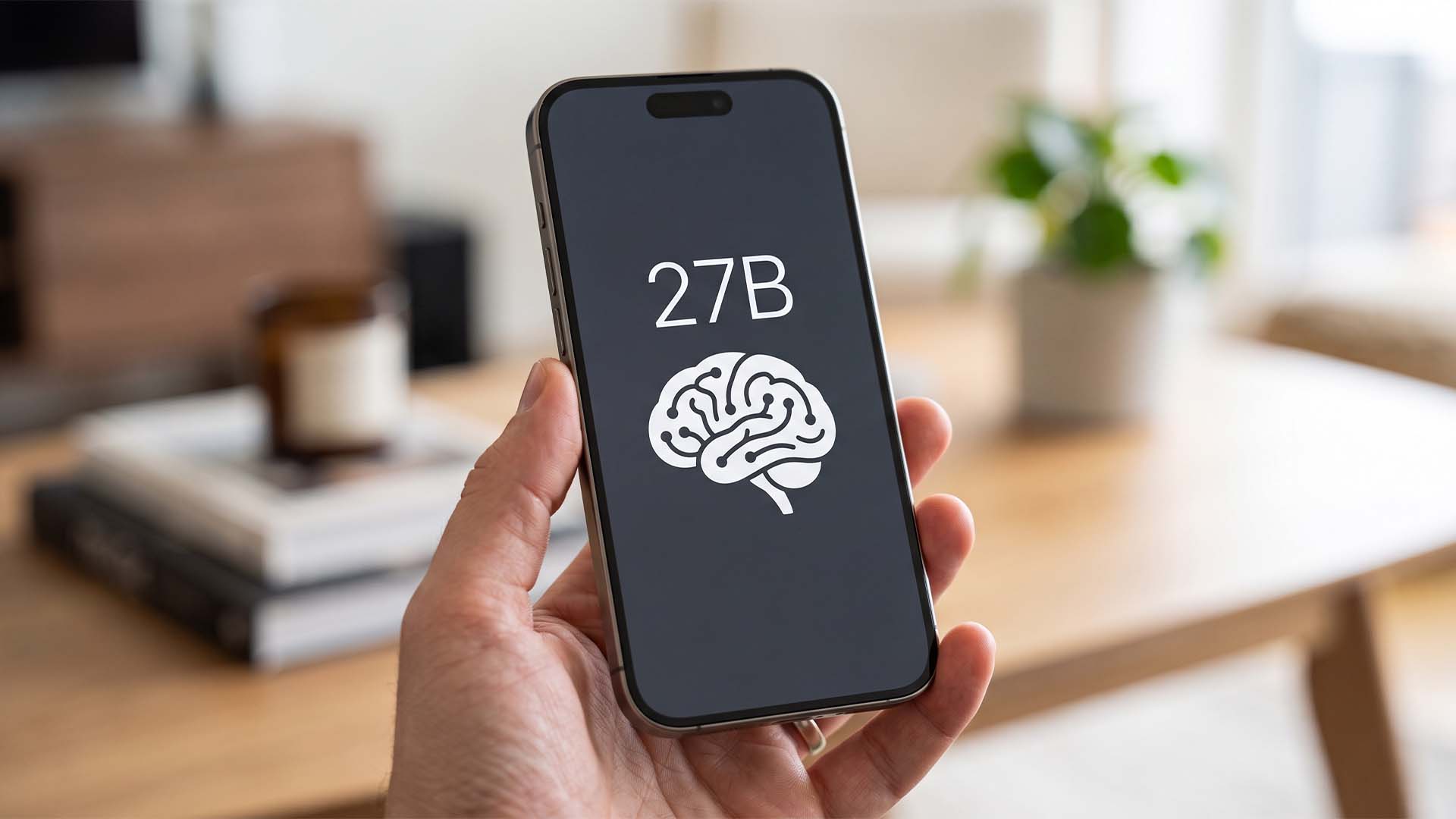
Apple’s next major step in mobile AI appears to be happening directly on the iPhone. A recent demonstration shows the iPhone 18 Pro running a 27-billion-parameter AI model at roughly twice the speed of the iPhone 17 Pro, highlighting just how much the new A20 Pro chip could change on-device artificial intelligence performance.
At the center of this improvement is the A20 Pro’s upgraded Neural Engine. For the first time in Apple Silicon for iPhone, the chip is said to feature a dual-16-core Neural Engine, a major upgrade designed specifically to handle demanding AI workloads without relying on cloud processing. That matters because more users are beginning to expect private, fast, offline AI features directly on their smartphones.
The demo, shared by Adrien Grondin, shows Bonsai 27B running on an iPhone 18 Pro with noticeably faster token generation compared with the previous-generation iPhone 17 Pro. In simple terms, the model responds faster, processes text more quickly, and demonstrates the kind of performance jump that could make local AI far more practical on a smartphone.
The iPhone 18 Pro and iPhone 18 Pro Max are said to come with 12GB of 96-bit LPDDR5X memory. That memory is not only larger than previous configurations but also significantly faster. Combined with the A20 Pro and its enhanced Neural Engine, the device appears far better prepared for large language models and other demanding AI tasks.
Memory bandwidth also plays a key role. The iPhone 18 Pro reportedly offers unified memory bandwidth of 115.2GB/s, giving the chip faster access to data when running complex AI workloads. For on-device AI, this is just as important as raw processing power. A powerful Neural Engine can only perform at its best when it has enough fast memory to feed it.
However, the demonstration also shows that smartphones still face real limits when it comes to running large AI models locally. While Bonsai 27B performs impressively on the iPhone 18 Pro, newer and larger model variants are still difficult to fit within the available memory. Bonsai 2 with 2-bit quantization, for example, is described as too large to run smoothly on the iPhone 18 Pro, leading to performance issues.
This is where quantization becomes important. Bonsai is a 1-bit quantized AI model, which makes it much smaller and easier to run on mobile hardware. Because of this compression, it can operate on devices with as little as 4GB of RAM, while phones with 8GB or 12GB of RAM can deliver much faster performance. On the iPhone 18 Pro, the combination of 12GB RAM, high memory bandwidth, and the upgraded Neural Engine allows Bonsai 27B to run with impressive speed.
The dual-16-core Neural Engine also appears to outperform the A20 Pro’s 7-core GPU in workloads specifically designed for the NPU. That is an important shift. Instead of relying primarily on the GPU for AI tasks, Apple seems to be pushing more AI processing toward dedicated neural hardware, which can be more efficient and better optimized for machine learning workloads.
For everyday users, this could eventually mean faster AI writing tools, smarter personal assistants, real-time translation, improved image editing, better voice recognition, and more advanced privacy-focused AI features that do not need to send data to external servers. Running AI locally also helps reduce latency, meaning responses can feel more instant.
Still, the biggest barrier remains memory. Even with 12GB of RAM, the iPhone 18 Pro cannot run every advanced model locally. Larger and denser AI models will likely require future iPhones with more memory and even higher bandwidth. If Apple continues increasing RAM capacity in upcoming Pro models, support for more advanced on-device AI models could become far more realistic.
The iPhone 18 Pro’s A20 Pro chip appears to be a major step forward for mobile AI. The ability to run a 27B parameter model at double the speed of the iPhone 17 Pro shows that Apple’s focus on dedicated AI hardware is beginning to deliver visible results. While there are still limits, especially with larger models, this demonstration suggests that the future of smartphone AI may be far more local, private, and powerful than many expected.