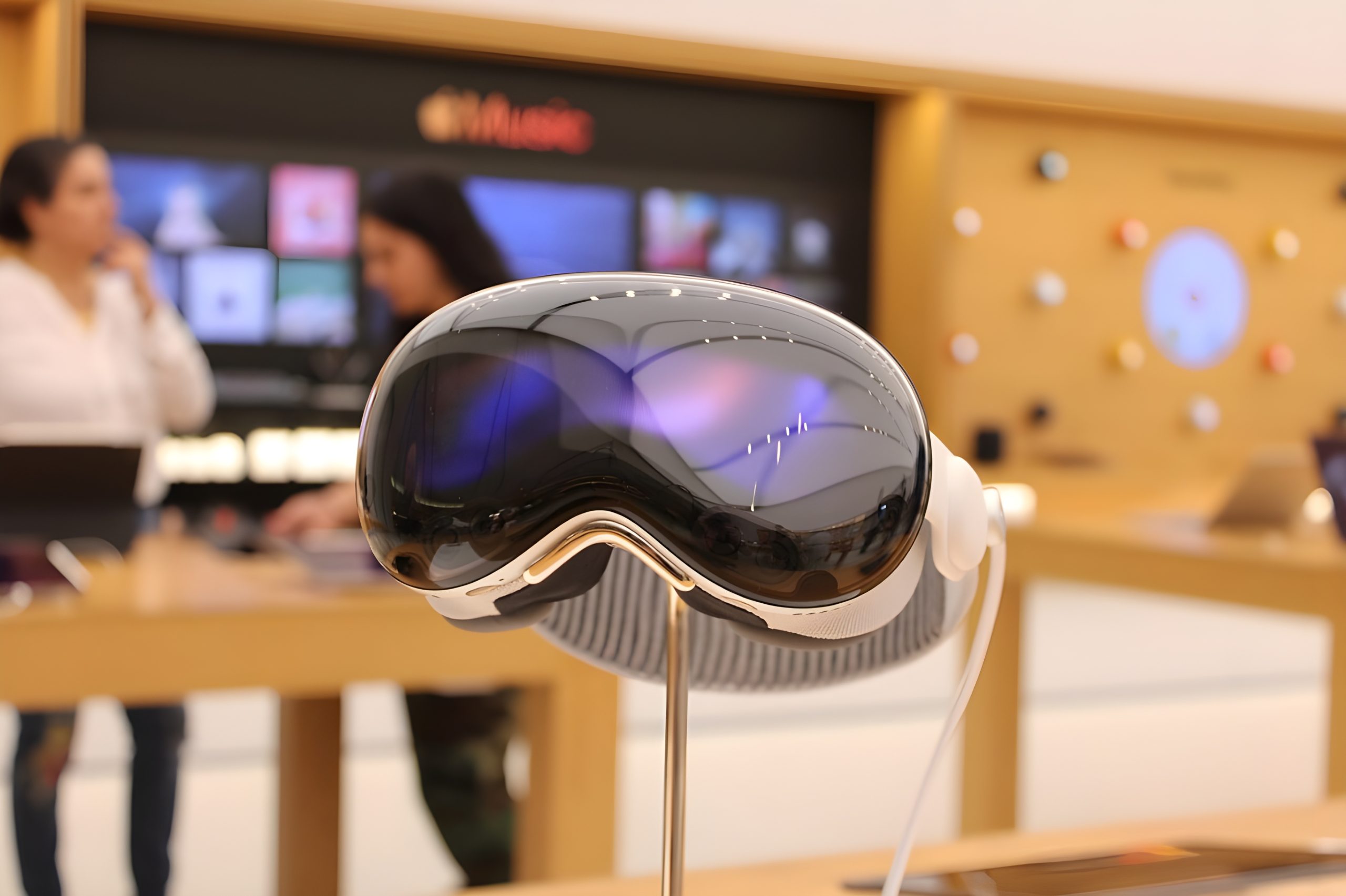
Apple is reportedly reshaping its wearable roadmap, pausing a high-end Vision Pro successor to prioritize AI-powered smart glasses aimed at a broader audience. The shift, outlined by Bloomberg’s Mark Gurman, signals a strategy to deliver AI features with mainstream appeal and to more directly counter momentum in the smart glasses market.
According to the report, Apple has halted development of the premium Vision Pro follow-up, internally codenamed N100 and once expected around 2027. Work continues, however, on a more affordable Vision Pro variant under the codename N109. A recent FCC filing referencing a “Head Mounted Device” with model number A3416 likely points to this lower-cost headset, suggesting it’s moving through the approval pipeline.
The bigger near-term play appears to be Apple’s AI smart glasses, targeting a 2026 debut. These glasses are said to include integrated cameras, microphones, and speakers, enabling hands-free interaction with an upgraded version of Siri. Expected capabilities include proactive notifications, real-time AI assistance, and on-the-go translations. Crucially, these glasses are not anticipated to feature a built-in AR display, a choice that could help keep weight, complexity, and price in check while maximizing comfort and battery life.
That approach puts Apple on a collision course with one of the most popular wearable AI categories: camera-equipped, display-free smart glasses. The leading reference point is Meta’s Ray-Ban smart glasses, which offer up to eight hours of mixed use, around two hours of continuous live AI support, 3K ultra HD video recording, and an enhanced noise-cancellation mode called conversation focus. Meta has also unveiled Ray-Ban Display smart glasses featuring an onboard display with 42 pixels per degree, brightness up to 5,000 nits, and a price of $799. Paired with the Meta Neural Band, users can navigate via hand gestures using electromyography to detect signals traveling between the brain and hand.
Gurman’s reporting suggests Apple is not chasing the display-equipped approach for now. Instead, the company is doubling down on the display-free form factor, aiming for seamless, voice-forward AI that fits into daily life without the bulk or distractions of a screen in your eyeline.
What this means for consumers is a clearer picture of Apple’s near-term wearable strategy: a more accessible Vision Pro model moving toward market readiness, and AI smart glasses focused on practical, everyday utility. If timelines hold, Apple’s glasses could arrive in 2026, with the premium Vision Pro successor no longer on the immediate horizon. Expect continued signals in regulatory filings, supply chain activity, and upcoming Siri advancements as Apple prepares its next wave of AI-first wearables.