Apple Silicon Pushes Local AI Forward, With Macs Targeting Models Up to 1.6 Trillion Parameters
Apple’s latest hardware roadmap is making one thing clear: the company wants more AI processing to happen directly on your device. With faster unified memory, higher memory bandwidth, and more powerful Neural Engines, iPhones, iPads, and Macs are becoming increasingly capable of running large language models locally without relying entirely on cloud-based AI services.
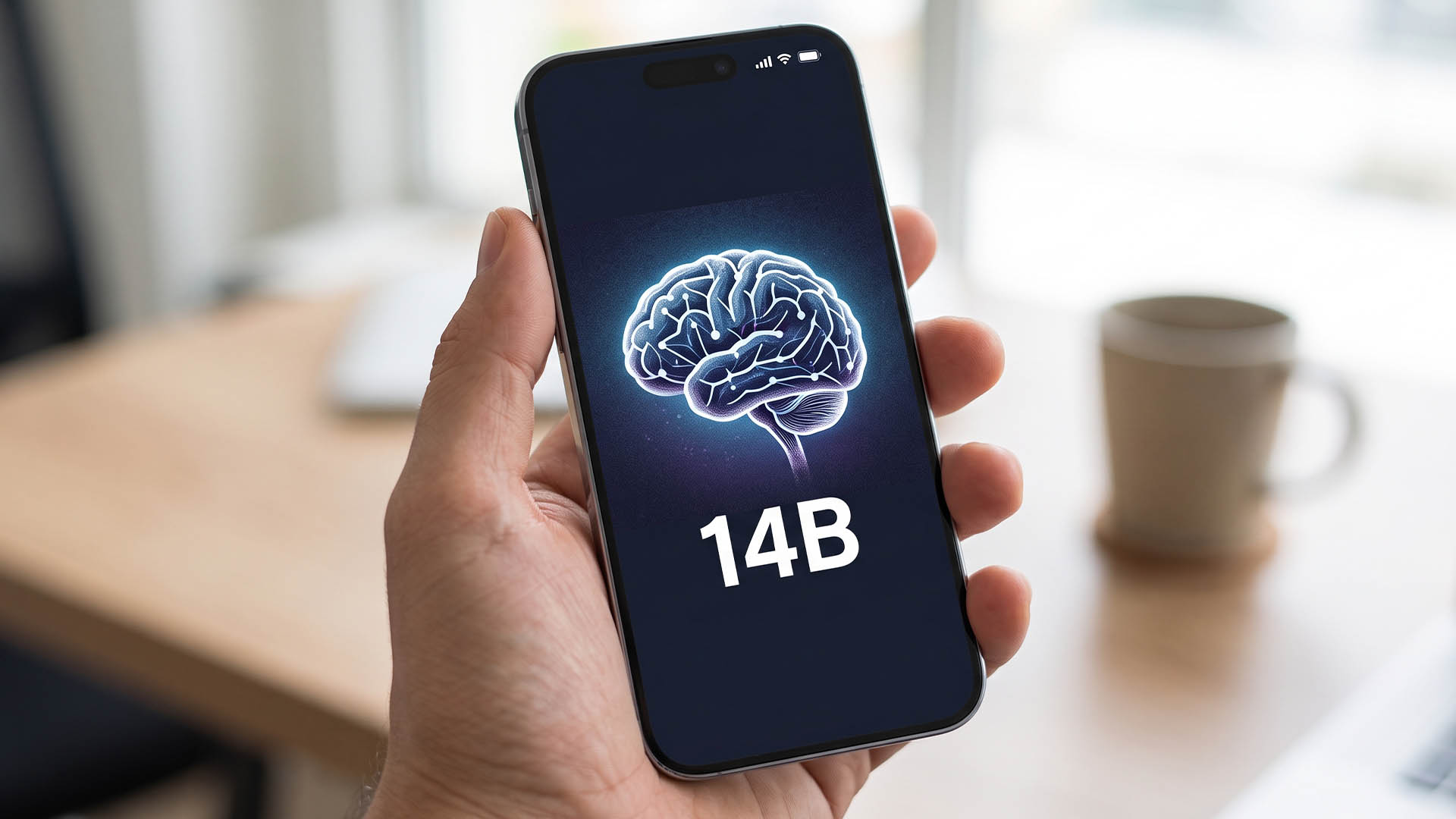
According to Apple’s own device guidance, even mobile devices are now being positioned for serious on-device AI inference. The company indicates that an iPhone or iPad with 16GB of unified memory can handle AI models with up to 14 billion active parameters. That is a notable step forward for local AI performance, especially for users who want faster responses, improved privacy, and reduced dependence on internet-connected AI tools.
Apple also lists a recommended memory bandwidth of 76GB/s for this level of local AI inference. Interestingly, newer high-end Apple mobile chips already exceed that figure, with the A20 Pro reportedly reaching 115.2GB/s of memory bandwidth. That extra bandwidth could help improve responsiveness when running compact but capable AI models directly on an iPhone or iPad.
Macs, however, are where Apple’s local AI ambitions become much more aggressive. The MacBook Air and Mac mini, when configured with up to 64GB of unified memory and up to 307GB/s of memory bandwidth, are listed as capable of running large language models with up to 70 billion active parameters. That makes these machines attractive for developers, researchers, and AI enthusiasts who want to experiment with more advanced open-weight models on local hardware.
The higher-end MacBook Pro models go even further. With support for up to 128GB of unified memory, Apple says these notebooks can run AI models with up to 120 billion active parameters. While these configurations are expensive, they bring desktop-class local AI performance into a portable machine, making them useful for professionals who need powerful AI workflows without always depending on remote servers.
The Mac Studio is where Apple’s AI hardware story becomes especially impressive. With the M5 Ultra configuration, the system can support up to 512GB of unified memory and deliver up to 1.2TB/s of memory bandwidth. Apple’s chart suggests that this level of hardware can comfortably handle models approaching 480 billion parameters.
For users who want to run advanced AI models locally instead of paying for ongoing AI subscriptions, a high-end Mac Studio could be a powerful option. It offers strong privacy benefits, predictable performance, and the ability to keep AI workloads on-device. However, the cost quickly becomes a major factor.
A single Mac Studio with an M5 Ultra chip, 36-core CPU, 80-core GPU, 32-core Neural Engine, 1TB SSD, and 256GB of unified memory is listed at around $10,700. Building a four-system cluster would raise the price to roughly $43,196, and even that setup would not necessarily provide the full 1TB of unified memory some users may expect.
Apple’s chart also suggests that a four-cluster Mac Studio setup with up to 2TB of total unified memory could run AI models around 1.6 trillion parameters. For even larger workloads, such as 1 trillion-parameter models in certain configurations, an eight-cluster setup may be required, pushing the estimated cost to about $86,392.
That makes the Mac Studio cluster approach powerful, but far from affordable for most users. While it may appeal to AI labs, developers, and businesses that need local inference at scale, it is not the most practical route for everyday users who simply want access to high-quality AI tools.
Availability may also be a challenge. At the time referenced, Apple’s online store appeared to offer only the 256GB unified memory version in certain configurations, with shipping estimates stretching as long as 15 to 17 weeks depending on location. That could make it difficult for buyers to quickly build out the high-memory systems required for the largest local AI models.
Apple’s guidance is still useful because it gives users a clearer idea of which devices are suited for different levels of AI workload. An iPhone or iPad can handle smaller local models, a MacBook Air or Mac mini can move into mid-sized AI territory, a MacBook Pro can support more serious development, and the Mac Studio can scale into extremely large model deployments.
One important detail is still missing, though: Apple does not provide specific examples of which large language models were tested or what level of quantization was used. Quantization can dramatically reduce memory requirements, allowing larger models to run on less powerful hardware, but it may also affect accuracy and output quality. Without that information, it is difficult to know exactly how these performance claims will translate into real-world AI workloads.
Even with those unanswered questions, Apple’s direction is clear. The company is preparing its ecosystem for a future where local AI inference becomes a major selling point across iPhone, iPad, MacBook, Mac mini, and Mac Studio devices. For users who care about privacy, speed, and offline AI access, Apple Silicon is becoming an increasingly compelling platform for running large language models on-device.


