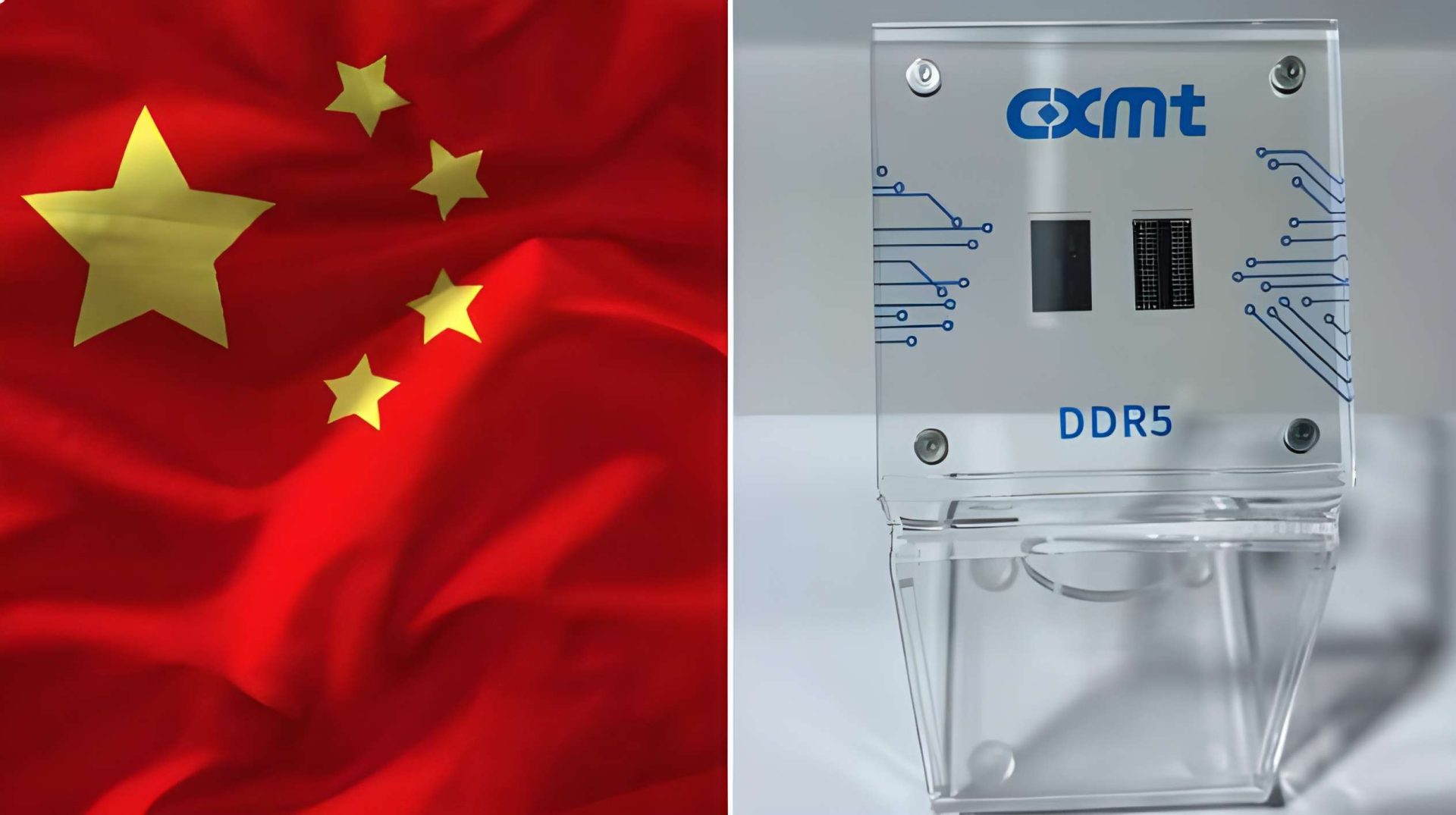
Apple’s reported interest in buying DRAM from China’s CXMT has raised plenty of questions, mainly because the move does not appear to make much practical sense at first glance. CXMT’s memory chips are not widely viewed as a natural fit for Apple’s premium hardware, and their use would likely be limited to devices sold inside China. But a new interpretation from Bank of America suggests Apple may have a different goal in mind: strengthening its position in future DRAM price negotiations.
Recent reports have claimed that Apple has been seeking approval from the Trump administration to purchase DRAM from CXMT, a Chinese memory manufacturer that remains under scrutiny in the United States due to alleged ties to China’s military. Apple is also said to be working to reduce potential political backlash in Washington if it uses memory components from Chinese suppliers for products sold in the Chinese market.
On the surface, the strategy looks complicated and risky. CXMT’s DRAM is not believed to match the highest performance and efficiency standards Apple typically demands for its flagship devices. In addition, much of CXMT’s current production capacity is reportedly tied up in long-term agreements, while its stronger focus on AI-related DDR memory does not align closely with Apple’s immediate mobile memory needs.
The more relevant product for Apple would be LPDDR5X memory, but even there, CXMT appears to face limitations. Bank of America argues that Apple is unlikely to adopt CXMT DRAM in meaningful volumes for three major reasons: U.S. restrictions on Chinese semiconductor firms, technical challenges in meeting Apple’s strict requirements, and potential intellectual property disputes involving established memory makers.
Apple’s requirements for LPDDR5X memory are demanding. The company is said to need chips capable of speeds above 10Gbps, low power consumption around 1.1V, and advanced reliability features such as ECC functionality. CXMT’s LPDDR5X is reportedly close in raw speed, with a maximum around 10.667Gbps, but Bank of America notes that older manufacturing technology may lead to disadvantages such as higher current leakage and greater parasitic capacitance. These issues can affect efficiency and performance, both of which are critical for iPhones and other Apple devices.
Another major risk involves patents. Samsung, SK hynix, and Micron hold significant DRAM-related intellectual property. If Apple were to source DRAM from CXMT at scale, it could face legal pressure or become entangled in patent disputes brought by the leading Korean and U.S. memory suppliers.
Because of these obstacles, Bank of America does not expect Apple to rely heavily on CXMT. Instead, CXMT memory could be used only in limited quantities, possibly in lower-end products such as a future iPhone 18e model. Even then, the volume may remain small because budget iPhones do not dominate Apple’s sales in China.
That leads to the bigger point: Apple may not be planning a major supplier shift at all. Instead, it may be using CXMT as a bargaining tool.
Apple buys huge volumes of memory, and DRAM pricing is a critical part of its hardware cost structure. By showing that it is willing to explore alternative suppliers, even ones with major limitations, Apple may be trying to increase pressure on Samsung, SK hynix, and Micron during upcoming contract price negotiations for the second half of the year and 2027.
In other words, CXMT may serve less as a true replacement and more as negotiating leverage. Apple does not need to move large volumes to make the message clear. The possibility of adding a Chinese supplier, even in a restricted and limited way, could help Apple push for better pricing from its existing DRAM partners.
The strategy is not without risk. Any move involving Chinese semiconductor suppliers could attract attention from U.S. regulators, especially during a period of heightened tension over advanced chips, supply chains, and national security. Apple would need to balance any potential cost benefits against political, legal, and technical complications.
Still, the Bank of America view gives Apple’s reported CXMT interest a more logical explanation. The company may not be preparing to meaningfully replace Samsung, SK hynix, or Micron. Instead, it may be signaling that it has options, however limited, as it heads into high-stakes DRAM pricing talks.
For Apple, even a small improvement in memory contract pricing could matter. With millions of iPhones, iPads, Macs, and other devices shipping each year, component cost savings can quickly add up. If CXMT helps Apple gain leverage without becoming a major supplier, the move may be less about China-only iPhones and more about global supply chain strategy.