Apple’s ecosystem has long been praised by developers for its stability, polished hardware-software integration, and the way its devices “just work” in day-to-day production. But there has always been a major sticking point for many AI and machine learning builders: NVIDIA CUDA. CUDA is a dominant parallel computing platform that lets developers tap NVIDIA GPUs for general-purpose acceleration, and it has effectively acted like a moat around many GPU-accelerated workflows.
That’s why a new, very practical breakthrough is turning heads in the developer community and driving fresh interest in Apple’s Mac mini—particularly among programmers experimenting with modern “vibe coding” and agentic coding tools.
A rapid CUDA-to-ROCm port in about 30 minutes changes the conversation
According to the post’s details, a Reddit user reportedly ported an entire CUDA backend to AMD’s ROCm using Claude Code’s Clawdbot in roughly 30 minutes. The key point isn’t only speed—it’s that an agentic workflow can handle large-scale keyword and kernel translation while preserving the logic of the underlying compute kernels, without relying on heavier translation setups such as Hipify.
In plain terms, this suggests the CUDA lock-in may be less absolute than it once seemed, especially for teams willing to move workloads to alternatives like ROCm where it makes sense. For developers who have been hesitant to adopt Apple hardware due to CUDA dependency—particularly for specific AI tasks like image processing—this could meaningfully reduce friction.
Why the Mac mini is suddenly getting more attention from coders
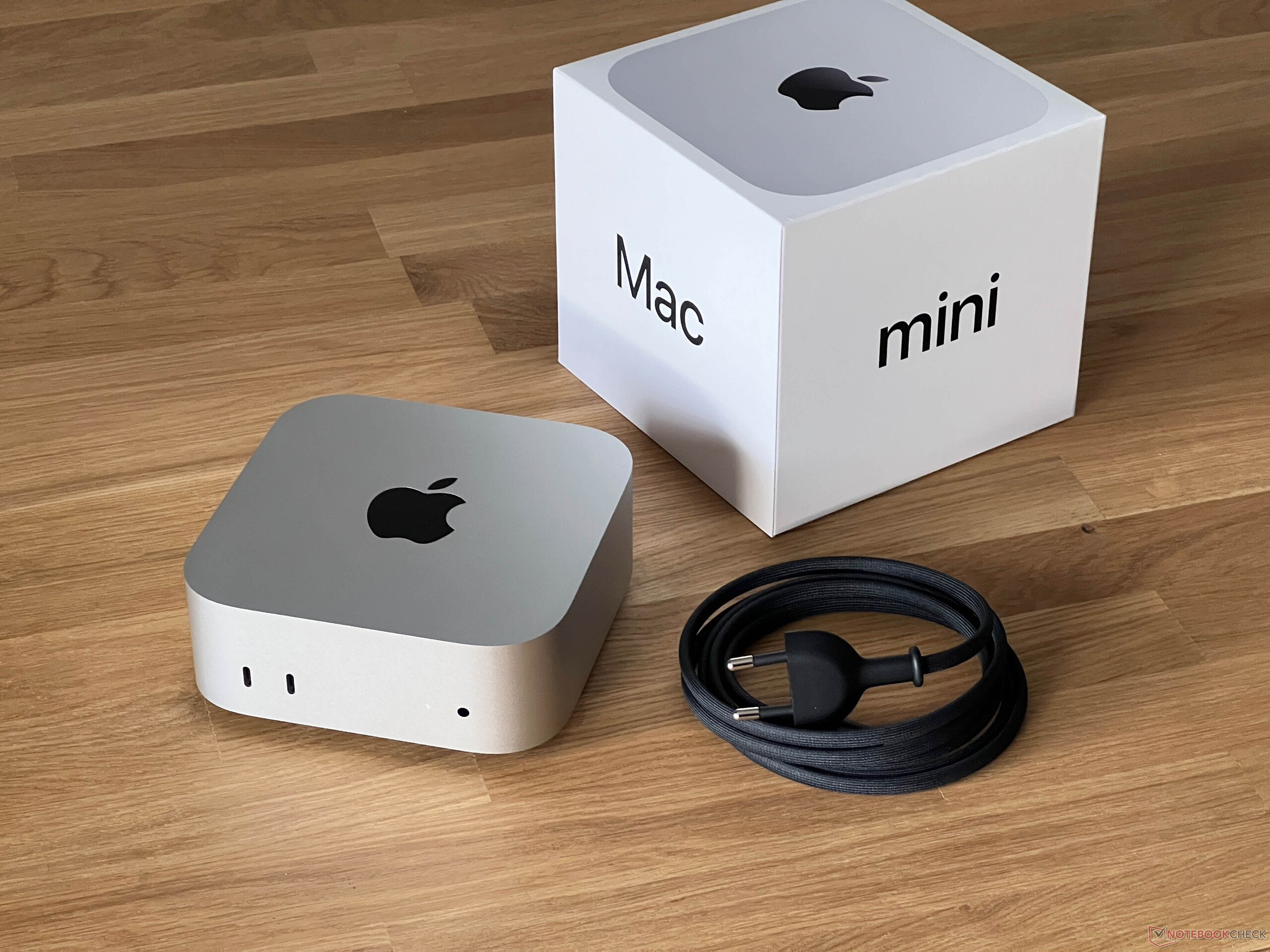
With CUDA barriers starting to look more negotiable for some workflows, developers are re-evaluating what Apple silicon brings to the table. The Mac mini in particular is being talked about as a compact, reliable machine that’s easy to integrate into a personal development setup.
One of Apple silicon’s biggest advantages for certain ML and AI tasks is unified memory architecture. Instead of separating system RAM and GPU VRAM, the CPU and GPU share a unified memory pool. The example highlighted in the post is the M4 Pro Mac mini offering up to 64GB of unified memory, compared to 24GB on an NVIDIA RTX 4090. That extra headroom can matter in real workloads—especially when models, intermediate tensors, and large datasets need to coexist without constantly shuffling data between memory pools.
The result is a growing perception that for less complex machine learning and AI workloads, dedicated Apple silicon can be a cost-effective and convenient alternative.
Apple is also reinforcing its machine learning stack
Apple appears to be leaning into this momentum by continuing to strengthen its ML tooling on macOS. The post notes that macOS Tahoe 26.2 introduced a new driver for MLX, Apple’s machine learning platform, with Thunderbolt 5 support. Thunderbolt 5’s bandwidth ceiling (up to 80Gb/s, as stated) is positioned as a notable jump over typical Ethernet-based setups used in many small clusters—potentially making high-speed local workflows and external connectivity more attractive for creators and developers.
On the acceleration side, Apple silicon commonly uses Metal Performance Shaders (MPS) to accelerate ML frameworks such as PyTorch or TensorFlow on Apple hardware. For many developers, this is already “good enough” for prototyping, experimentation, and a range of production-adjacent tasks—especially when unified memory reduces bottlenecks in certain scenarios.
The emerging “tool gap” and why it matters for developers
The post also frames this moment as part of a bigger shift: the advantage is increasingly going to people who know how to leverage agentic tools effectively. If utilities like Clawdbot can compress hours or weeks of manual engineering work into minutes for certain kinds of code migration, then awareness becomes a competitive edge. That kind of dynamic tends to spread quickly in developer circles—and when it does, it often reshapes buying decisions.
Put all this together and it’s easier to see why the Mac mini is reportedly gaining momentum: a compact Apple silicon machine with unified memory benefits, improving ML tooling, and a growing sense that CUDA lock-in might be more avoidable than before—especially with agentic coding frameworks making ports and migrations less painful.
If this trend continues, the Mac mini’s appeal may expand beyond traditional Apple enthusiasts into a wider slice of AI and ML developers looking for practical performance, dependable hardware, and smoother workflows without being boxed in by a single GPU ecosystem.