Apple Liquid Damage Dispute Raises Questions Over MacBook Air Warranty Repairs
A recent MacBook Air repair dispute is drawing attention to how Apple determines liquid damage, especially when a customer insists no spill ever happened.
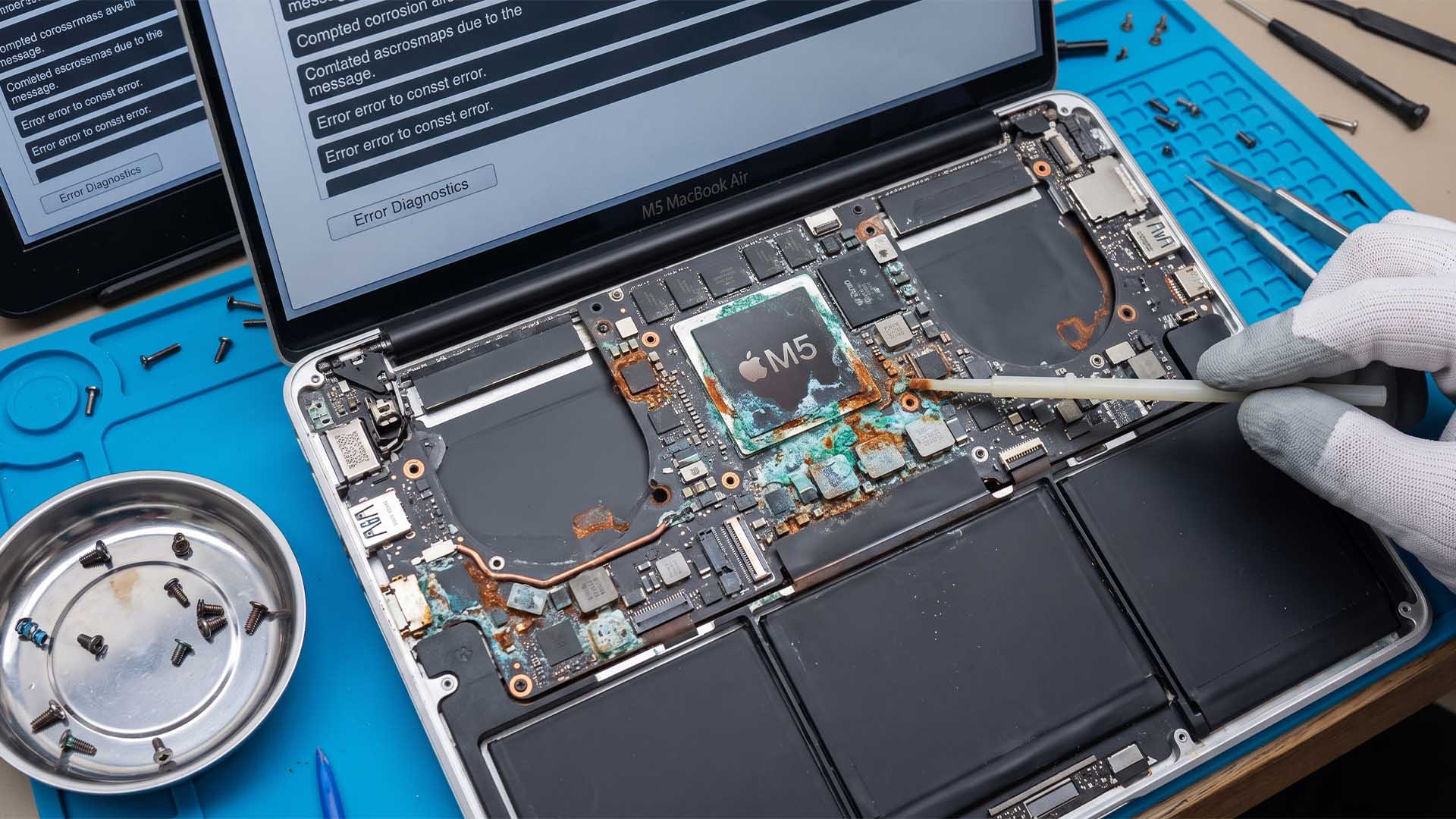
According to a Reddit user known as “No-Wishbone2585,” his 13-inch M5 MacBook Air, which was only around three months old, was taken to an Apple authorized service center after developing a hardware issue. Two days later, the service center reportedly concluded that the laptop had suffered liquid damage. The alleged damage was said to have caused corrosion on the display flex cable, leading to the device failure.
The MacBook owner strongly denies spilling water or any other liquid on the device. He claims he has diagnostic evidence related to the case, although he had not shared those documents publicly at the time of the discussion.
The situation has sparked debate because Apple uses Liquid Contact Indicators, often called LCIs, inside products such as iPhones and MacBooks. These indicators are designed to change color when exposed to liquid, helping technicians determine whether a device may have come into contact with water or another fluid. If liquid damage is detected, Apple typically does not cover the repair under its standard warranty.
However, some users in the discussion pointed out that liquid indicators may not always tell the full story. In certain cases, high humidity or moisture-heavy environments could potentially affect these indicators, even without a direct spill. This has raised questions about whether a MacBook can be incorrectly flagged for liquid exposure under specific environmental conditions.
When asked about the climate where he lives, the MacBook Air owner said temperatures and conditions were normal, suggesting that extreme humidity was unlikely to be the cause. Still, without clear proof, the service center’s liquid damage finding could leave him responsible for the repair cost.
Apple’s warranty policy is clear: liquid damage is not covered. The company uses internal indicators as part of its repair assessment process to prevent warranty misuse and identify devices that may have been exposed to moisture. For customers, though, cases like this can feel frustrating, especially when they believe their device was never exposed to liquid in the first place.
At this stage, the owner’s best option appears to be escalating the case directly with Apple and asking for a more detailed review. If Apple maintains the liquid damage assessment and the customer cannot provide evidence proving otherwise, he may have to pay for the repair out of pocket.
The incident highlights an important concern for MacBook owners: even premium laptops can face warranty disputes when liquid damage indicators are involved. It also serves as a reminder to keep devices away from humid environments, avoid using them near drinks, and document any repair interactions carefully in case a warranty claim is challenged.