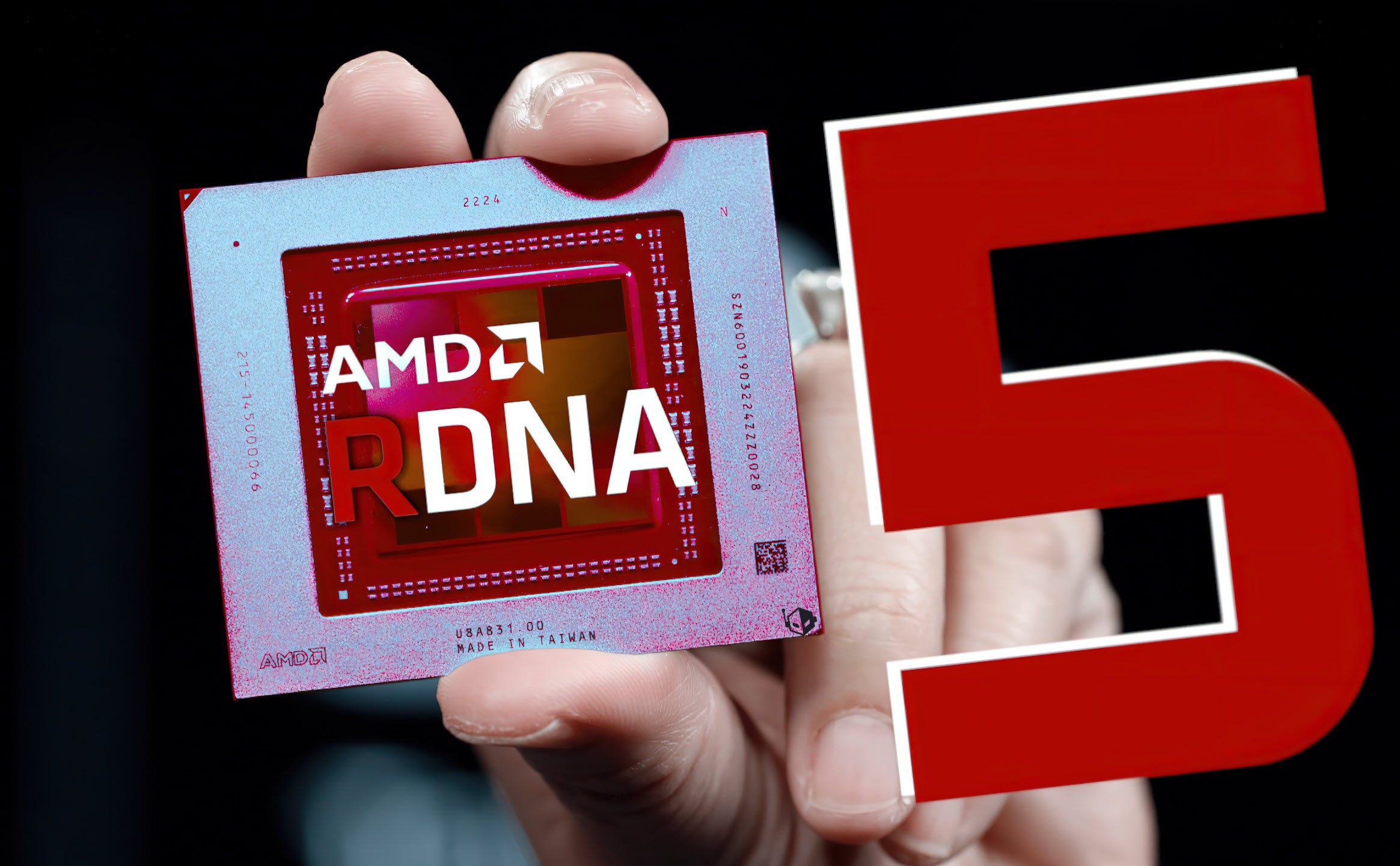
AMD is poised for a significant transformation in graphics processing with its upcoming RDNA 5 GPUs, which are expected to represent a revolutionary leap forward. Drawing parallels to the seminal “Zen” moment experienced by their CPU division, AMD’s innovation with RDNA 5 mirrors a similar ambition for its Radeon products.
The anticipated RDNA 5 GPUs stand as a paradigm shift and are engineered entirely from scratch. This fresh start suggests that AMD is not simply looking to iterate on existing technology, but rather to establish new benchmarks in GPU performance and efficiency. The leap to RDNA 5 is set to underscore AMD’s dedication to pioneering developments in the graphics arena.
The pursuit of RDNA 5 comes amid speculation that the intervening RDNA 4 lineup may serve as a stepping stone rather than a transformative offering. Rumors hint that RDNA 4 could present an evolutionary improvement over the current RDNA 3 GPUs. This next installment is expected to refine AMD’s GPU architecture, enhancing features such as ray tracing capabilities. This focus aligns with industry whispers that RDNA 4 architecture will also underpin the graphics component in the rumored Sony PS5 Pro console.
RDNA 4 GPUs are projected to cater to mainstream and entry-level markets, much like the earlier RDNA GPUs. Skewing toward cost-effective and efficient designs, RDNA 4 aims to fulfill the needs of mid-tier consumers while setting the stage for the impending RDNA 5 breakthrough.
Developments in AI capabilities are also on the horizon for AMD’s GPU division, with rumors of Xilinx’s involvement indicating a focus on integrating AI features into future Radeon products. This advancement is seen as AMD’s answer to their competitor’s AI-integrated PC platforms, signaling a continued arms race in GPU technology.
It’s important to note that AMD’s high-performance RDNA 3+ integrated into their next-generational Ryzen APUs, such as Strix Point and Strix Halo, signifies their ongoing commitment to integrated and discrete GPU innovation.
Looking closely at the trajectory of AMD’s GPU roadmap, RDNA 5 emerges as a pivotal generation, possibly redefining the sector late into 2025 or 2026. Undoubtedly, this forthcoming architecture spurs curiosity and anticipation about whether it will fulfill the promise of being AMD Radeon’s “Zen” era.
The evolution of the AMD RDNA generational GPU lineup has displayed a steady progression through technologies and process nodes. From the 7nm process of RDNA 1 and RDNA 2 architectures, the migration to 5nm with RDNA 3, and perhaps beyond, cements the company’s relentless pursuit of next-gen innovation and performance.
The journey through the RDNA architectures reflects an ongoing quest for cutting-edge technology. As we anticipate the release of RDNA 5, the gaze of the industry, developers, and consumers alike rests on AMD, eager to witness the next vanguard of graphic processing power.