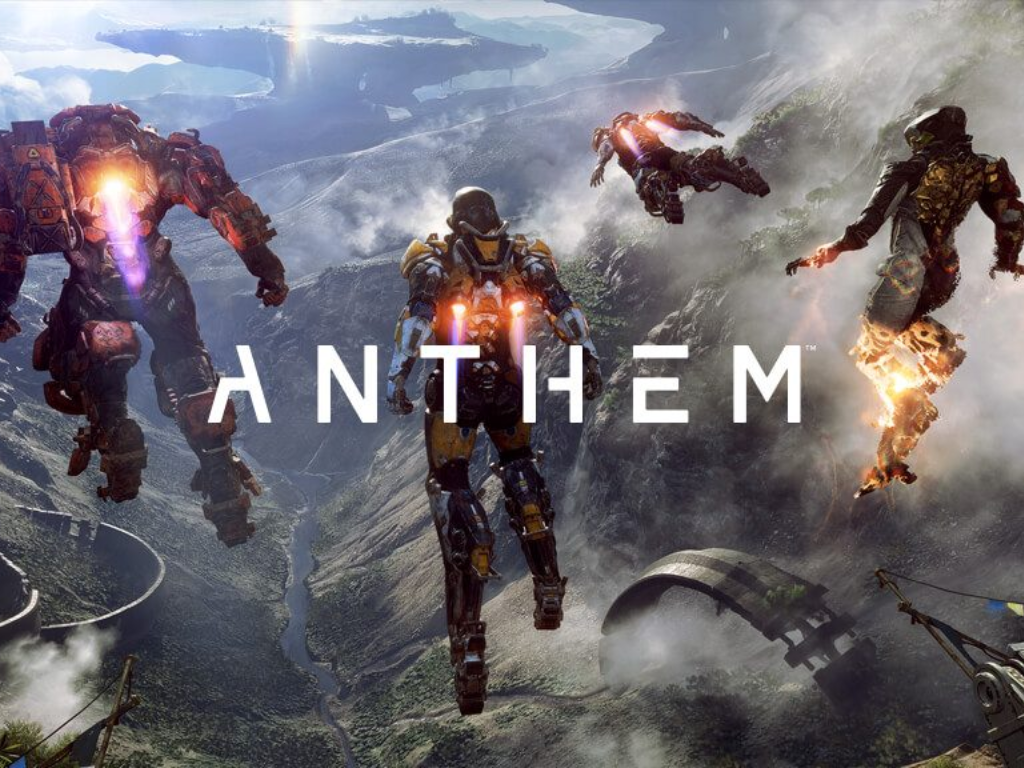
Former BioWare executive producer Mike Darrah is pushing back on the familiar criticism that the studio “should have known better” than to make Anthem. In a recent interview reflecting on the game’s long journey and its newly finalized shutdown, Darrah framed Anthem as a bold experiment by a studio that has always evolved—even when that evolution involved major risks.
Darrah, who served as Anthem’s executive producer, spoke out shortly after the game’s servers were turned off in January 2026. That shutdown arrived roughly seven years after Anthem launched in 2019, closing the door on an online-only experience that relied on live servers to function. For the remaining fans who stuck with the game through its ups and downs, the closure effectively makes Anthem unplayable.
In the conversation, Darrah addressed a narrative that resurges whenever a studio stumbles: the idea that BioWare should have stayed in its “lane” and focused exclusively on single-player RPGs. He argued that this take ignores the studio’s long history of changing formats, shifting gameplay styles, and taking chances on new types of games.
He also noted that, while it’s easy to place all responsibility on the publisher, the reality is more complicated. Darrah acknowledged that there’s plenty of blame to go around, but he emphasized that not every failure can be simplified into a single cause or pinned entirely on one party.
Most pointedly, Darrah challenged the “see, I told you so” crowd who claimed BioWare had no business attempting a multiplayer-focused title. In his view, that logic falls apart when you look at the company’s past. He cited how BioWare previously made big leaps from earlier RPG styles into projects that later became celebrated. By that reasoning, he suggested, the studio would never have taken the steps that led to major franchise-defining games in the first place.
At the same time, Darrah didn’t pretend Anthem wasn’t a stretch. He described it as a project that was, ultimately, too big of a reach. But he also raised a key point about creative risk: it’s not always obvious upfront which ambitious ideas will succeed and which will collapse under their own weight. Studios often don’t get that clarity until a game is deep into development—or already in players’ hands.
Anthem arrived as an online multiplayer action game from a developer best known for story-driven series like Dragon Age and Mass Effect. While the concept drew attention, the release was met with mixed reviews and widespread criticism tied to technical issues and the game’s overall execution. Not long after launch, support slowed, and updates were halted in 2021, signaling that the game’s planned long-term future wasn’t going to materialize.
Now, with Anthem’s servers officially shut down in early 2026, the game’s story ends not with a revival, but with a hard stop—serving as a reminder of how difficult it is to reinvent a studio’s formula in the live-service space, even for developers with a strong legacy. Darrah’s message, however, is clear: experimentation is part of how studios grow, and while Anthem didn’t meet expectations, the attempt wasn’t inherently wrong—just overambitious.