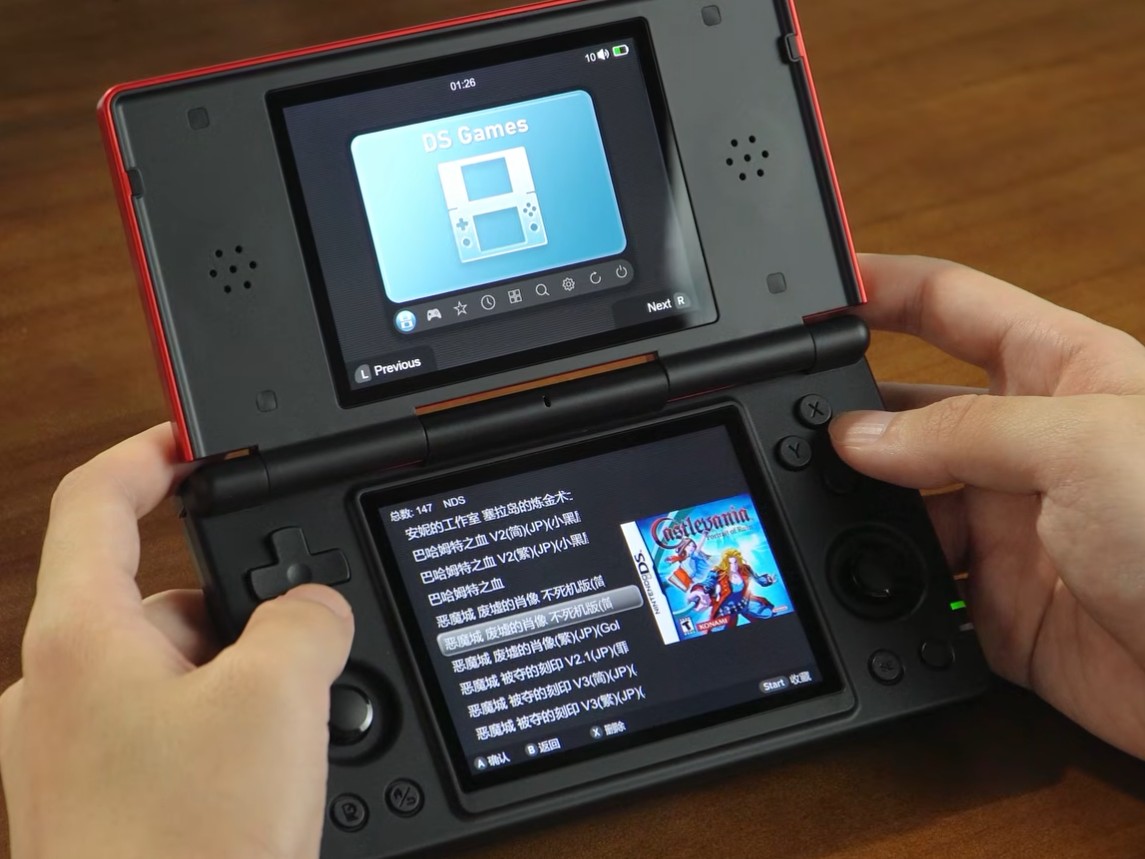
Anbernic RG DS gets a new Linux OS that runs from a microSD card
Anbernic has rolled out a new Linux-based operating system for the Anbernic RG DS, giving owners of the dual-screen retro handheld a fresh alternative to the Android 14 software that comes preinstalled on the device.
What makes this release especially useful is that users do not need to erase Android or permanently modify the handheld’s internal storage. Instead, the Linux OS can be installed directly onto a microSD card. Once the card is inserted into the RG DS, the device can boot into Linux. Remove the card, restart the handheld, and it goes back to Android.
That makes the update a flexible option for players who want to experiment with a different interface, improved usability, or a more console-like experience without giving up the original Android system.
The Anbernic RG DS originally launched with Android 14, but many users have found the stock software experience less polished than expected. Some players have turned to custom firmware to improve performance, navigation, and general usability. With this official Linux release, Anbernic is now offering another route for users who prefer a simpler and more focused handheld gaming environment.
To use the new Linux OS, owners need a microSD card with at least 64GB of storage. The operating system is flashed onto the card using the included flashing software. After that, the card can be inserted into the RG DS, allowing the handheld to start up in Linux instead of Android.
Switching back is simple. Power off the device, remove the microSD card, and turn it on again. The RG DS will then boot into its original Android system as usual.
The new Linux OS also introduces several features designed specifically for the dual-screen layout of the Anbernic RG DS. Users can choose from three visual themes: DS Dark, DS Light, and Classic. These themes give players more control over the look and feel of the system interface.
Another useful addition is independent brightness control for each display. Since the RG DS uses two screens, being able to adjust them separately can help improve comfort during longer gaming sessions, especially when playing in different lighting conditions.
The operating system also supports screen swapping, allowing users to move content between the top and bottom displays. This can be particularly helpful for games or emulators that benefit from a different screen arrangement.
Anbernic has also added custom font support and a redesigned button test interface, making it easier for users to check whether all controls are working correctly.
One of the more interesting touches appears when playing single-screen games. Instead of leaving the second display unused, the RG DS can show a platform-related icon. For example, PlayStation games may display a PlayStation-style controller icon, while Game Boy Advance titles can show a GBA-themed image. It is a small feature, but it helps make better use of the handheld’s dual-screen design.
The release of a Linux OS for the Anbernic RG DS is a notable move because the device did not originally ship with Linux. While Anbernic has released handhelds with Android, Linux, or dual-system setups in the past, adding a separate operating system after launch gives RG DS owners more choice and extends the device’s appeal.
For retro gaming fans, this update could make the Anbernic RG DS more attractive, especially for those who prefer a dedicated Linux gaming interface over Android. Since the installation does not remove the original system, it is a low-risk way to try a new experience on the handheld.
With dual-screen support, multiple themes, screen-swapping features, and easy microSD card installation, the new Linux OS gives the Anbernic RG DS a welcome upgrade and may help the device stand out further in the growing retro handheld market.