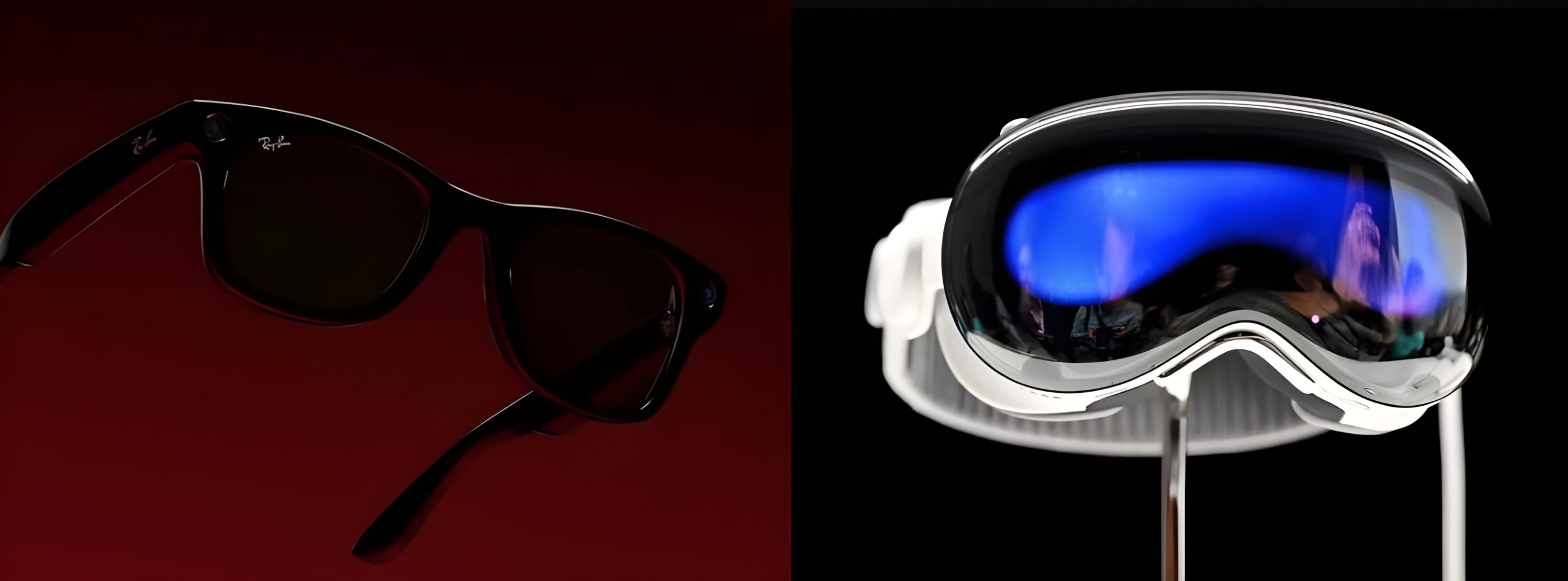
Meta’s latest wave of smart glasses has turned the wearable tech spotlight squarely in its direction, and for good reason. At Connect 2025, the company unveiled a trio of products that push everyday augmented experiences closer to reality—while reigniting the debate about whether Apple can keep pace in this category.
The headline act is the Ray-Ban Display smart glasses, a sleek pair with a built-in display that’s large enough to read text, follow turn-by-turn directions, watch short videos, and even view live translations. With 42 pixels per degree, the clarity surpasses Meta’s current consumer VR headsets. A custom light engine and reflective waveguide deliver up to 5,000 nits of brightness, designed to remain visible indoors and in full sunlight. The glasses go on sale September 30 for $799 and ship with the Meta Neural Band, which uses electromyography (EMG) to interpret signals between your brain and hand, letting you control apps with subtle gestures.
Alongside the display model, Meta introduced the second generation of its Ray-Ban smart glasses without an integrated display. The refresh focuses on practical upgrades: double the battery life for up to eight hours of mixed use, roughly two hours of continuous “live AI” functionality, and Ultra HD 3K video recording. A new noise-cancellation feature called conversation focus is also on the way.
For athletes and outdoor enthusiasts, the Oakley Meta Vanguard puts performance front and center. These AI-enabled glasses connect with Garmin smartwatches and cycling computers to surface real-time stats and alerts mid-ride or workout. They also capture 3K UHD video through a 12 MP camera.
Not everyone is ready to crown Meta the undisputed winner, though. In a recent note, Oppenheimer analyst Martin Yang argued that the current smart glasses lineup doesn’t yet threaten Apple’s iPhone–AirPods–Watch ecosystem. The reasoning is straightforward: Meta’s Ray-Ban Display reportedly lacks a full SDK for third-party developers, limiting dedicated apps for now. Instead, the device leans on a paired smartphone—running Meta’s own apps and presenting information from popular third-party services like music and messaging. Yang also points out that Ray-Ban Display is less advanced than the Orion prototype showcased last year, which promised eye tracking and true AR lenses—ambitions that may still be years away from commercial readiness.
Under the hood, the Ray-Ban Display is said to rely on less proprietary parts than Orion, including an Omnivision LCoS microdisplay and a reflective waveguide from Lumus. While that can help speed up production, it also underscores how different this product is from Meta’s longer-term AR vision. Weight could be another sticking point: at around 67 grams, some users may find extended wear uncomfortable. As a result, Yang estimates sales of 150,000 to 200,000 units over the next two years—respectable numbers for an emerging category, but not yet mainstream.
Here’s where the debate gets interesting. While the analyst downplays the competitive threat to Apple, recent history suggests Apple has pulled back on some of its near-term AR hardware ambitions. Reports indicate the company shelved a Mac-connected AR glasses project after Meta’s Orion reveal. Meanwhile, Apple’s current flagship headset faces headwinds of its own. With a $3,499 price tag, the Vision Pro has struggled to win over a wide audience, reportedly selling about 500,000 units by early 2025. Beyond price, adoption has been slowed by a limited app ecosystem, a bulky design, and reliance on an external battery pack—pain points that contrast sharply with the lighter, more casual glasses-first approach Meta is championing.
All of this sets the stage for a pivotal year in wearable computing. Meta is executing quickly with products people can actually wear in public, capturing moments hands-free, tapping AI on demand, and gradually layering in useful on-glance information. Apple’s ecosystem advantage is undeniable, but momentum matters—and right now, Meta’s steady encroachment is hard to ignore.
Bottom line: despite cautious analyst takes, Apple’s position in spatial and wearable computing is very much in play. With practical designs, competitive pricing, and clear use cases, Meta’s smart glasses lineup is positioning the company as the pace-setter—and that puts real pressure on Apple to respond.