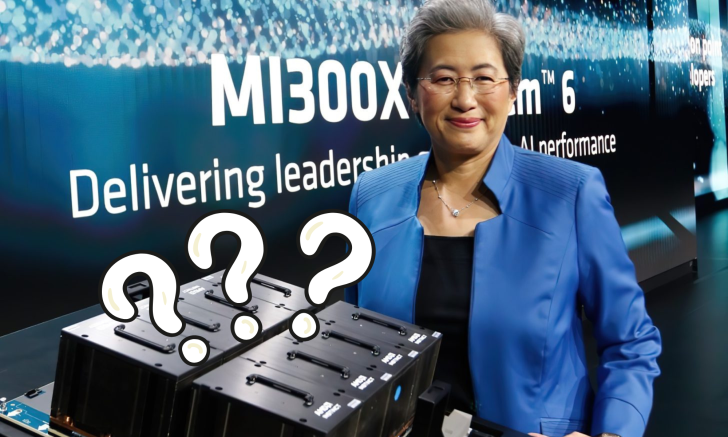
Advanced Micro Devices (AMD) has been navigating the peaks and valleys of the AI market with ambitions for recognition and breakthroughs. Despite possessing a strong product offering in their AI accelerator lineup, AMD has yet to make waves comparable to industry giant NVIDIA and seems to be performing more solidly than Intel to some extent. Amidst this competitive backdrop, a peculiar situation involving AI startup Tiny Corp has thrown light on AMD’s seemingly cautious stance on publicizing its AI accelerator’s capabilities.
Tiny Corp’s proposition to AMD to feature the Instinct MI300X AI accelerators on the distinguished MLPerf benchmarks has been met with an unexpected response. For the uninitiated, MLPerf benchmarks serve as a respected barometer for evaluating the prowess of AI accelerators, with transparency and industry acceptance akin to how 3DMark is perceived for PC hardware.
NVIDIA’s AI accelerators currently lead the performance charts on MLPerf, with Intel’s Gaudi chips offering the only alternative insight into competitor performance. The fact that neither Intel nor NVIDIA is known for shying away from such benchmarks makes AMD’s hesitation even more noticeable.
Tiny Corp took the initiative to extend an offer to AMD, suggesting they could help get the Instinct MI300X on the next MLPerf benchmarking round for $1 million plus two units of the AI GPUs. This move aimed to bring the Instinct MI300X into the limelight, potentially showcasing its prowess against competing products.
However, AMD’s response to Tiny Corp’s offer further fuels speculation. Rather than a straightforward decision, AMD’s communication appeared evasive, with mentions of “partnership” and “collaboration” and suggestions of discussions over phone calls. This noncommittal stance has puzzled observers and raised questions about what AMD might be holding back.
Public benchmarking can often be a crucial point of evaluation for customers in the AI space, making AMD’s reluctance all the more intriguing. The lack of MLPerf benchmark data for the Instinct MI300X from AMD could cast doubts on the accelerator’s performance claims when compared to its competitors, or it might indicate AMD’s strategy of keeping certain details under wraps for the time being.
Amidst these developments, Forrest Norrod, AMD’s Executive VP & GM of Data Center Solutions Business Group, acknowledged a strategic pivot in AMD’s AI roadmap in response to NVIDIA’s surge in hardware acceleration. This suggests AMD is currently more inclined toward solidifying its hardware offerings rather than establishing a comprehensive ecosystem, an area where NVIDIA has seen considerable success.
As the AI technology field continues to evolve, the direction AMD will take remains a subject of speculation and anticipation. Recent statements from the company signal optimism about the progress they are making, leaving industry watchers and potential clients looking forward to what AMD may reveal next in this dynamic and highly competitive market.