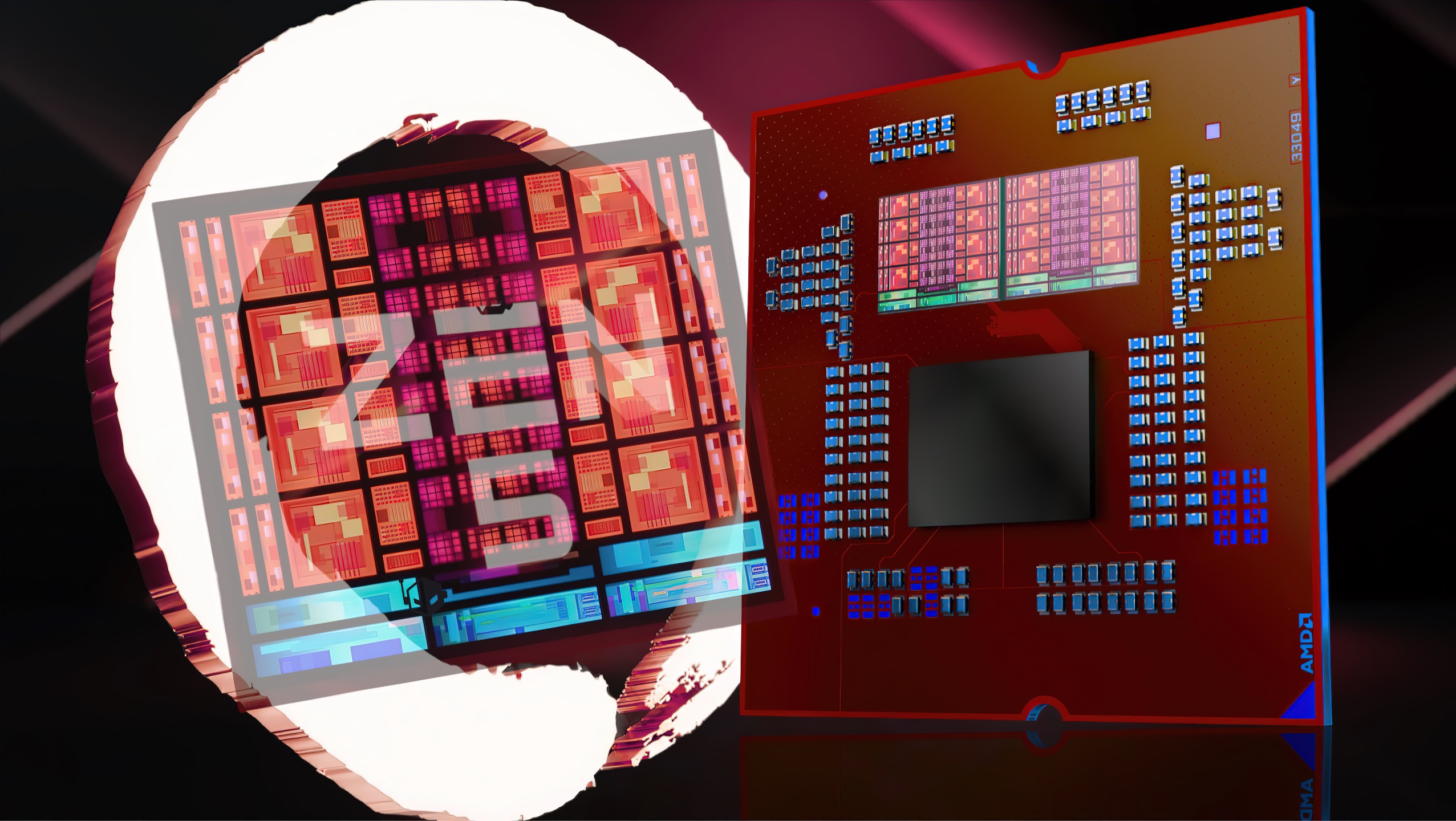
AMD is reportedly developing a new BIOS patch aimed at improving inter-core latency on its Ryzen 9000 “Zen 5” desktop CPUs. The Zen 5-based Ryzen 9000 series, which includes models like the Ryzen 9 9950X, has not delivered the performance boost anticipated by many. Several factors have contributed to this, including suboptimal optimizations for Windows 11 and unoptimized Core Parking, all stemming from unfinished software and BIOS support.
An analysis revealed that the Zen 5 CPUs have significantly higher inter-CCD (Core Complex Die) latency compared to their predecessors, even though both generations share similar I/O die and infinity fabric designs. This higher latency affects multi-threaded performance, particularly in workloads that utilize more than the 8 cores present in each CCD of CPUs like the Ryzen 9 9950X and Ryzen 9 9900X.
The elevated inter-CCD latency, which averages around 180 nanoseconds for Zen 5 compared to 76 nanoseconds for its predecessor, the Ryzen 9 7950X, is not due to die design. Instead, it results from unfinished optimizations within the BIOS and chipset software stack. According to reports, AMD plans to address this issue with an upcoming BIOS update that should be released in the coming months. Although specific details about the release date are unavailable, this update is expected to enhance performance in multi-threaded applications that exceed 8 cores.
Additionally, AMD recently announced branch prediction optimizations for Windows 11 23H2, which are expected to bring performance improvements akin to those seen in Windows 11 24H2. This suggests that AMD may have rushed the launch of the Ryzen 9000 series, leading to the need for further optimization to achieve the desired generational performance gains.