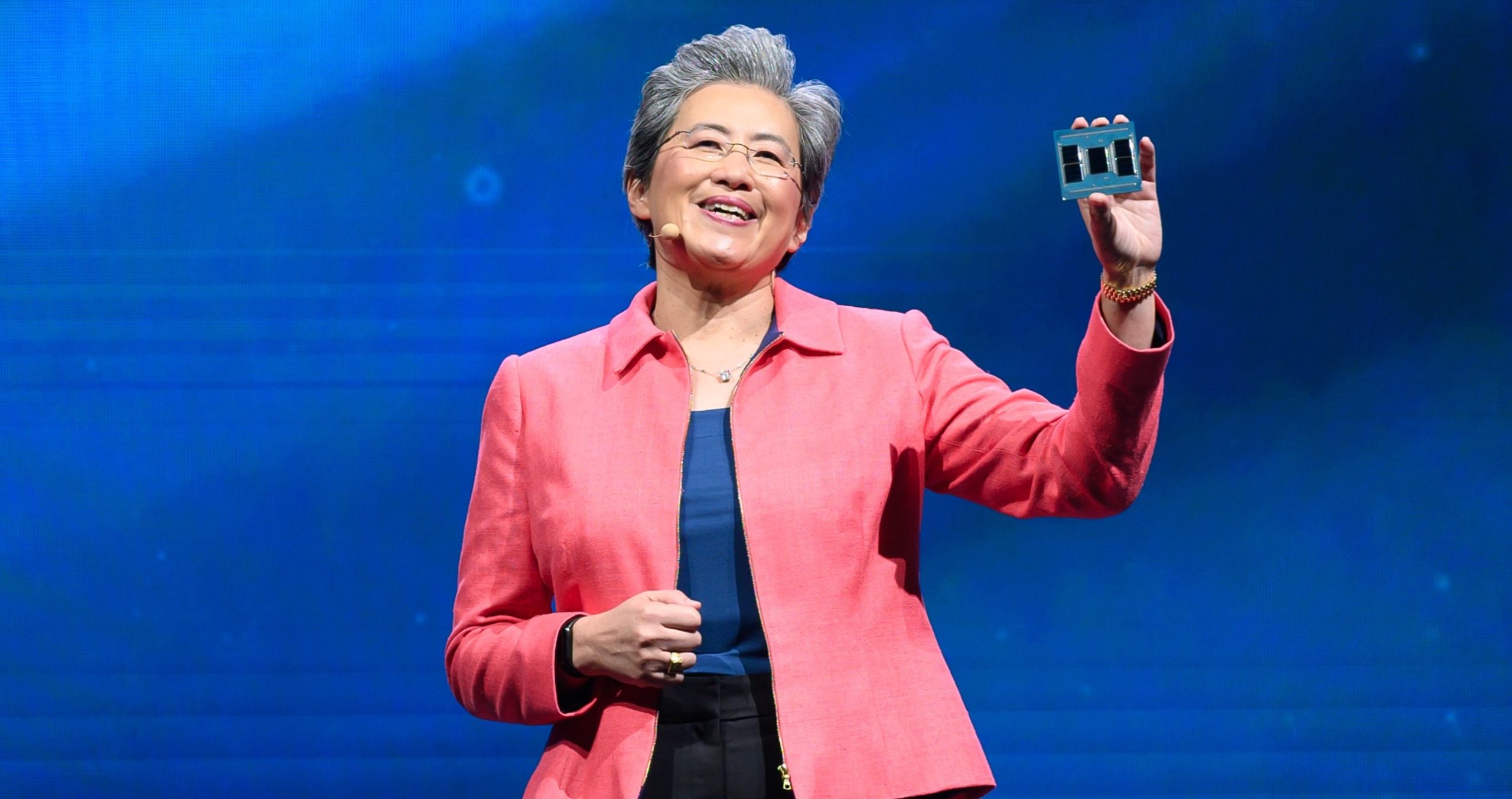
During Computex 2024, AMD showcased their advanced computing solutions, heralding a wave of exciting technological progress. In the spotlight were the latest Ryzen 9000 series CPUs, Strix APUs, and a glimpse into the future of their EPYC and AI technologies.
Introducing the Ryzen 9000 Desktop CPUs with Zen 5 Architecture
AMD unveiled the eagerly awaited Ryzen 9000 series CPUs boasting the state-of-the-art Zen 5 architecture. These processors offer significant enhancements, including:
– Increased performance with improved branch prediction, higher throughput, and greater parallelism capabilities
– A switch to TSMC’s 4nm process for CCDs and 6nm for the IOD, leading to a doubling of instruction and data bandwidth and improved AI performance
The flagship Ryzen 9 9950X, along with other models in the series, marks a leap in processor technology with up to 16 cores and 32 threads. An IPC uplift of 15-35% is notable, signaling substantial performance gains. Consumers can expect these powerhouses to hit the shelves by July, with the Ryzen 9000 series promising stiff competition in the market.
AMD’s Continued Support for the AM4 Platform
AMD also surprised many with new AM4-based processors, demonstrating their commitment to the longevity of this platform. The Ryzen 9 5900XT and Ryzen 7 5800XT enhance the AM4 platform’s performance with increased core counts, cache, and clock speeds. They even stand toe-to-toe with Intel’s 13th-generation offerings, often outperforming them in benchmarks.
Leaping into AI: The Strix ‘Ryzen AI 300’ Series APUs
Diving into the burgeoning AI market, AMD introduced the Strix APU family, specifically targeting enhanced AI and compute performance for mobile platforms. The ‘Ryzen AI 300’ series integrates Zen 5 cores with RDNA 3.5 graphics and the new XDNA 2 AI engine. The latter is set to deliver up to 50 TOPS of AI power, positioning AMD to potentially lead in this segment.
The Ryzen AI 9 HX 370 and Ryzen AI 9 365 APUs were revealed, flaunting remarkable computing capabilities set to take on competitors in performance. These APUs will be integrated into Microsoft’s Copilot+ AI PCs, with availability slated for July 2024 across over 100 platforms from top manufacturers.
Advancing Workstations with 5th Gen EPYC ‘Turin’ CPUs and Radeon PRO W7900 GPU
AMD’s workstation segment sees the integration of Zen 5 through the 5th Gen EPYC ‘Turin’ series. These CPUs are tailored for diverse applications, from cloud computing to telecommunications. While specifics are not yet shared in full, AMD’s benchmarks reportedly show a 2.5x to 5.4x performance increase over comparable Intel processors, positioning AMD for significant market advantages in enterprise and data center markets.
Looking Ahead with AMD’s Latest Innovations
AMD’s announcements at Computex 2024 underscore its dedication to innovation and performance. From powerful desktop CPUs to AI-focused APUs and robust EPYC processors, the company is making waves across various sectors. With these new products, AMD is not just intent on maintaining relevance but also setting industry standards in performance and AI capabilities. As these solutions become available, they’re expected to transform the computing landscape, offering both enthusiasts and professionals new levels of power and efficiency.In the dynamic world of technology, AMD has made some attention-grabbing announcements that are set to redefine their position in the server and AI industry. Among these announcements, the anticipated launch of the AMD EPYC Turin “5th Gen” server processors is generating considerable buzz. These processors are expected to be a part of AMD’s formidable lineup following the official release of the Zen 5 and Zen 5C architectures targeted at desktops and client PCs, including models such as Granite Ridge and Strix Point.
AMD’s foray into the workstation segment takes a significant leap with the introduction of the Radeon PRO W7900 graphics card. This robust workhorse boasts a 2-slot compact design and harnesses the Navi 31 GPU with 96 Compute Units and a substantial 6144 cores that leverage the RDNA 3 GPU architecture. At a price point of $3,499 US, the Radeon PRO W7900 is poised to hit the market by June 19th, presenting a strong competitive edge against NVIDIA’s Ada 6000 GPUs in terms of performance per dollar in workstation-oriented tasks.
Expanding its presence in the AI industry, AMD has revamped its Instinct accelerator lineup, underscoring a strategic move to announce either a new AI accelerator or an updated model each year. This decision closely mirrors NVIDIA’s approach and demonstrates AMD’s commitment to staying relevant in this rapidly growing sector. The Computex keynote shed light on the refreshed Instinct MI325X AI accelerator, which continues to utilize the CDNA 3 architecture while significantly boosting specs with 288 GB of HBM3E memory and an impressive memory bandwidth of 6 TB/s. It flaunts 1.3 PFLOPs of FP16 and 2.6 PFLOPs of FP8 compute performance, a notable improvement in AI-focused processing.
Looking to the horizon, AMD teased the “MI350” series, boasting an edge with a 3nm process node and next-gen CDNA 4 architecture. Additionally, AMD has unveiled its plans for the Instinct MI400 AI accelerators, which are expected to incorporate a future, yet-to-be-announced CDNA architecture.
Finally, AMD shed light on the UALink platform – a groundbreaking AI interconnect infrastructure aimed at high performance, scalability, and openness. This initiative is a collaborative effort among industry leaders and represents a commitment by AMD to solidify its foothold in the AI market.
These strategic advancements by AMD at this year’s Computex are illustrative of their determination to innovate and adapt to the evolving demands of the technology market. It showcases AMD’s adeptness in revolutionizing different market segments with its forward-thinking and capable product offerings. The tech community and industry observers are eager to witness how these novel technologies will enhance efficiency and inspire further advancements in the server and AI domains.