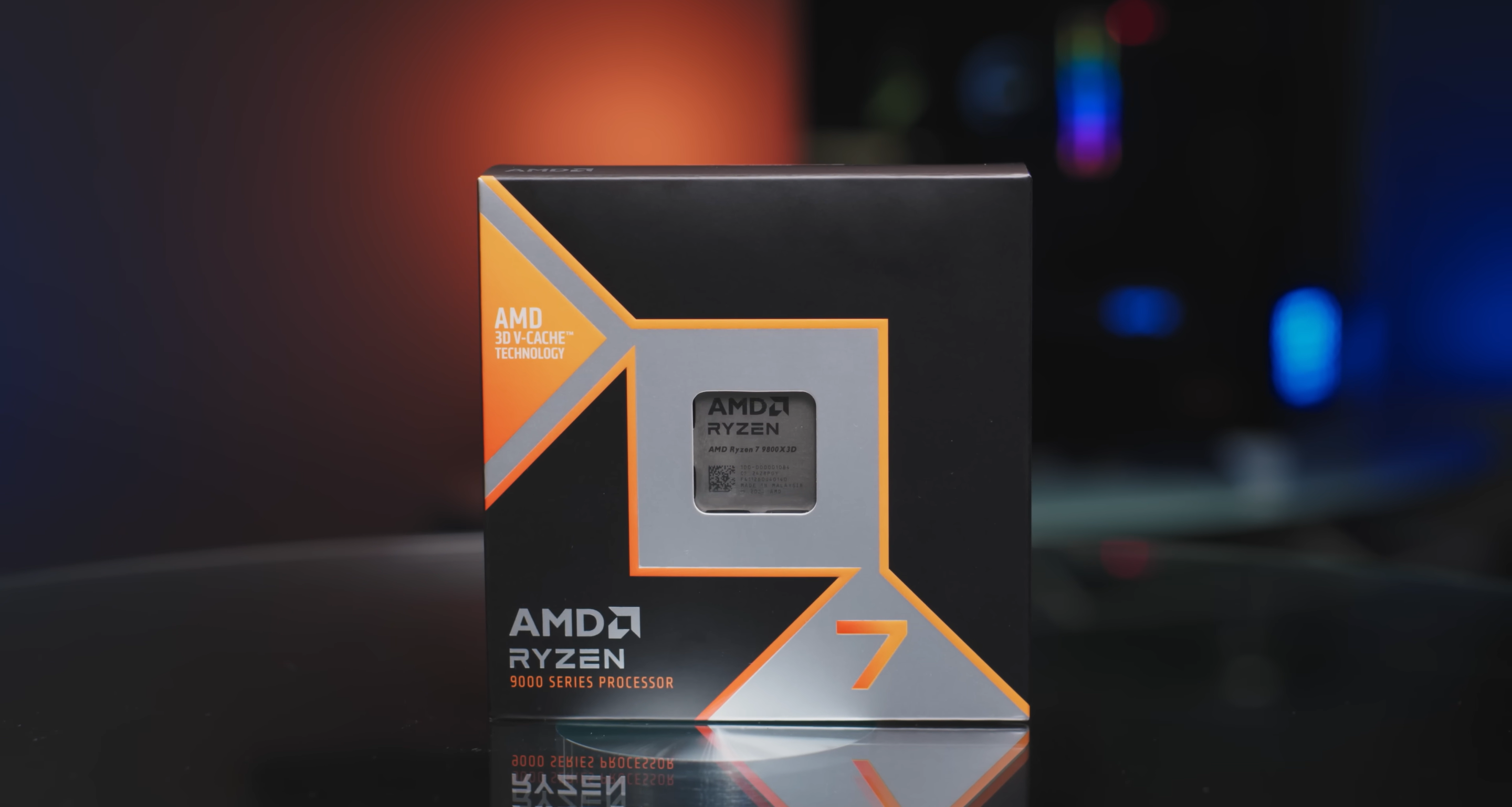
AMD thinks the four-digit frame rate barrier in esports is ready to fall. According to the company, pairing a top-tier graphics card with its new Ryzen 9000X3D processors can push popular competitive games to a staggering 1000 frames per second.
If that sounds outrageous, remember we’ve already seen CS2 and Valorant flirt with 600–700 FPS on high-end rigs. A few years back, an extreme, liquid-nitrogen-cooled Core i9 setup even cracked 1000 FPS in CS2 alongside an RTX 4090—proof that raw CPU power is critical when you’re chasing ultra-high refresh gaming. AMD’s pitch is that its latest X3D chips make that kind of performance more attainable, no exotic cooling required.
In internal testing shared through marketing materials, AMD claims three chips can do it: the Ryzen 7 9800X3D, Ryzen 9 9950X3D, and the mobile Ryzen 9 9955HX3D. With specific performance-focused settings, the company says it hit 1000 FPS across six esports titles, including CS2, Valorant, League of Legends, PUBG, and Naraka: Bladepoint, when paired with GPUs like the GeForce RTX 5080 and GeForce RTX 5090D. Memory was tuned to 6000 MT/s at CL30, the resolution was set to 1080p, and the system ran Windows 11 version 24H2.
Here’s the environment AMD highlights for its 1000 FPS results:
– Windows 11 24H2
– Virtualization-Based Security disabled
– AMD Smart Access Memory disabled
– DDR5 at 6000 MT/s, CL30
– 1080p resolution
– High-end GPUs such as GeForce RTX 5080 or RTX 5090D
There’s a catch, of course. While many reviews show the Ryzen 9800X3D and 9950X3D delivering 600–700 FPS with top-tier GPUs, consistently hitting 1000 FPS still looks highly dependent on ideal tuning and very specific game scenarios. AMD also notes that with a Radeon RX 9070 XT, only two of the tested titles reached 1000 FPS, which is impressive but underscores how GPU choice and settings matter. And the mobile Ryzen 9 9955HX3D hasn’t been publicly demoed at that level yet, making laptop results more theoretical—especially since ultra-high-refresh notebook displays are rare.
Then there’s the practicality question. Monitors that can take advantage of 1000 FPS don’t exist yet. The fastest panel we’ve heard about targets 750 Hz, and even that’s cutting-edge. Still, for competitive players chasing the lowest possible input latency and the smoothest motion, more frames can translate into a small but meaningful edge, even on 360–500 Hz displays.
Bottom line: AMD’s claim sets an aggressive new target for esports performance. With a Ryzen 9000X3D CPU, a next-gen flagship GPU, and the right system tweaks, four-digit frame rates look less like a lab stunt and more like a peak most enthusiasts can aspire to—provided independent testing backs it up.