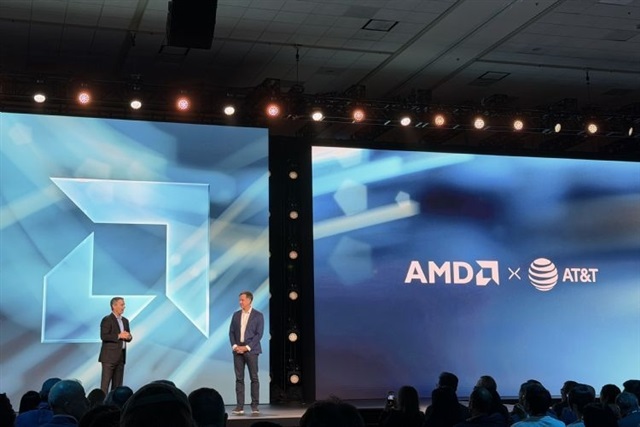
AMD has introduced OTel 2.0, a next-generation open-source telecom large language model developed in collaboration with AT&T and Microsoft. The announcement was made during AMD’s Advancing AI 2026 event, where the company highlighted how artificial intelligence is becoming increasingly important for modern telecom networks.
OTel 2.0 is designed specifically for the telecommunications industry, where AI can help improve network operations, automate complex workflows, enhance service reliability, and support faster decision-making. Unlike general-purpose AI models, this telecom-focused LLM is built to understand industry-specific data, terminology, and operational challenges.
According to AMD, the model was developed through a large-scale training effort involving more than 1 trillion tokens. This massive training pipeline helps OTel 2.0 better handle telecom-related tasks, making it more useful for network engineers, operators, and companies working on next-generation connectivity infrastructure.
AT&T used AMD Instinct GPUs as part of the AI training process, showing how AMD’s data center hardware is being positioned for demanding enterprise AI workloads. Microsoft also played a key role in the project, supporting the broader AI infrastructure needed to train and deploy the model at scale.
The launch of OTel 2.0 reflects a growing push toward open-source AI in telecommunications. By making the model open, AMD, AT&T, and Microsoft aim to encourage collaboration across the industry and help telecom providers adopt AI tools more efficiently. This could accelerate innovation in areas such as network optimization, predictive maintenance, customer support automation, and real-time service management.
For AMD, the announcement strengthens its role in the AI infrastructure market. The company continues to promote its Instinct GPU platform as a powerful option for training and running large AI models, especially as businesses look for alternatives in the fast-growing AI computing space.
OTel 2.0 also signals how telecom companies are moving beyond traditional automation. With AI models trained on industry-relevant data, operators may be able to manage networks more intelligently, reduce downtime, and respond faster to performance issues.
As demand for faster connectivity, 5G expansion, edge computing, and AI-powered services continues to rise, telecom-focused language models like OTel 2.0 could become an important part of the industry’s future. AMD’s collaboration with AT&T and Microsoft suggests that specialized AI models may play a major role in shaping the next generation of telecom operations.