AMD is sounding the alarm for PC gamers: the buying pace for gaming PCs and related hardware could cool noticeably in the remaining quarters of 2026. During its Q1 2026 earnings call on Tuesday, May 5, the company pointed to rising memory and component prices as the main pressure point, saying these cost increases are being driven in large part by booming AI demand. The concern is simple: as key parts get more expensive, fewer shoppers will be willing or able to upgrade, and overall shipments may slow across both desktop and laptop gaming categories in the second half of 2026.
That warning comes even as AMD’s latest quarter shows plenty of strength on paper. For Q1 2026, AMD reported revenue of $10.3 billion, highlighting solid momentum in several areas of the business. But when the conversation shifted to consumer PCs and gaming hardware, the company’s tone became more cautious, suggesting that today’s strong demand may be harder to maintain as the year progresses.
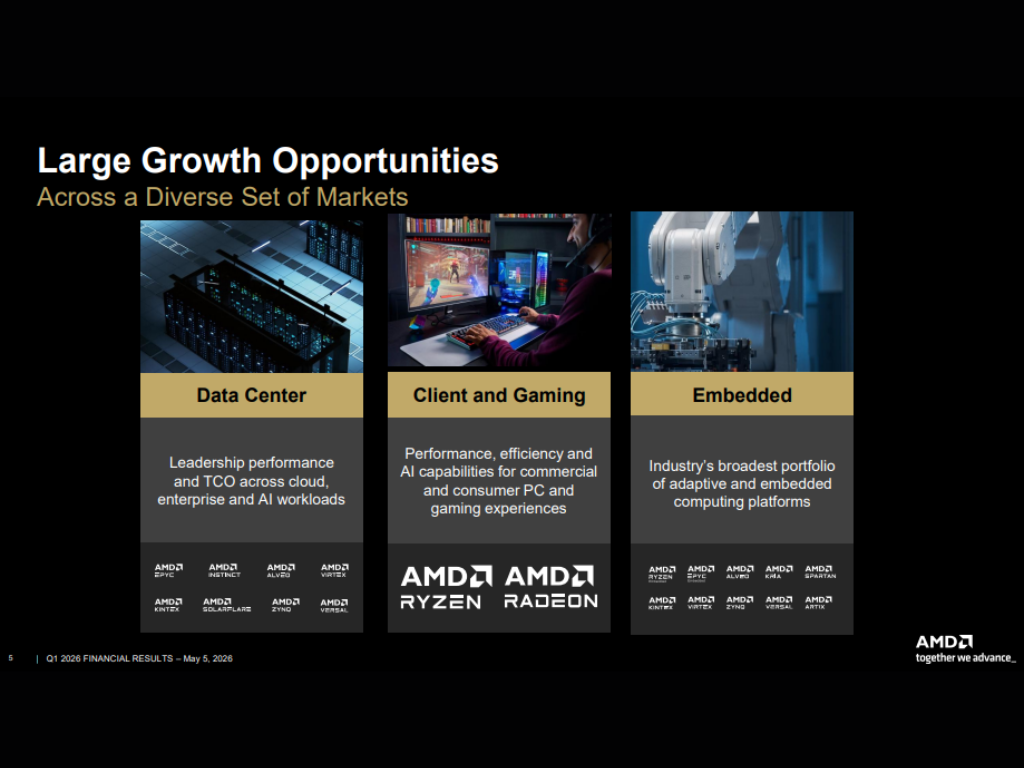
In its Client and Gaming segment, AMD posted year-over-year growth of 23%, reaching roughly $3.6 billion. The company credited that performance to continued Ryzen CPU sales and ongoing demand for Radeon RX graphics cards, two product lines that have been central to AMD’s push in the gaming PC market.
Still, AMD leadership made it clear that the road ahead could get bumpier. CEO Dr. Lisa Su explained that while demand for Ryzen processors is expected to remain solid in the second quarter, the company is planning for lower PC shipments in the second half due to the higher cost of memory and other components. Even with that expected slowdown, she said AMD believes it can still grow client revenue year over year and outperform the broader market, supported by the depth of the Ryzen lineup and increasing commercial adoption.
The gaming side faces similar headwinds. Su noted that the company expects second-half gaming demand to be affected by the same cost pressures, and AMD is adjusting plans accordingly.
CFO Jean Hu echoed that outlook and provided more concrete guidance. She said gaming revenue fell 15% sequentially, in line with expectations, and added that AMD now anticipates second-half gaming revenue will decline by more than 20% compared to the first half. For gamers watching GPU prices, PC component costs, and upgrade timing, that projection underscores how significant AMD believes these external pressures could be.
Even so, AMD isn’t stepping away from the fight for gaming performance leadership. The company’s recently released Ryzen 7 9850X3D is part of its broader strategy to stay competitive in a market where Intel has been pushing back with renewed focus on value and optimization, aiming to make its latest Core Ultra “Plus” series a more compelling choice for buyers.
The takeaway for 2026 is clear: despite a strong start to the year, AMD expects higher memory and component costs to weigh on PC and gaming hardware demand later in the year. For consumers, that could mean a more cautious upgrade cycle and potentially more price sensitivity across the gaming PC market as 2026 continues.