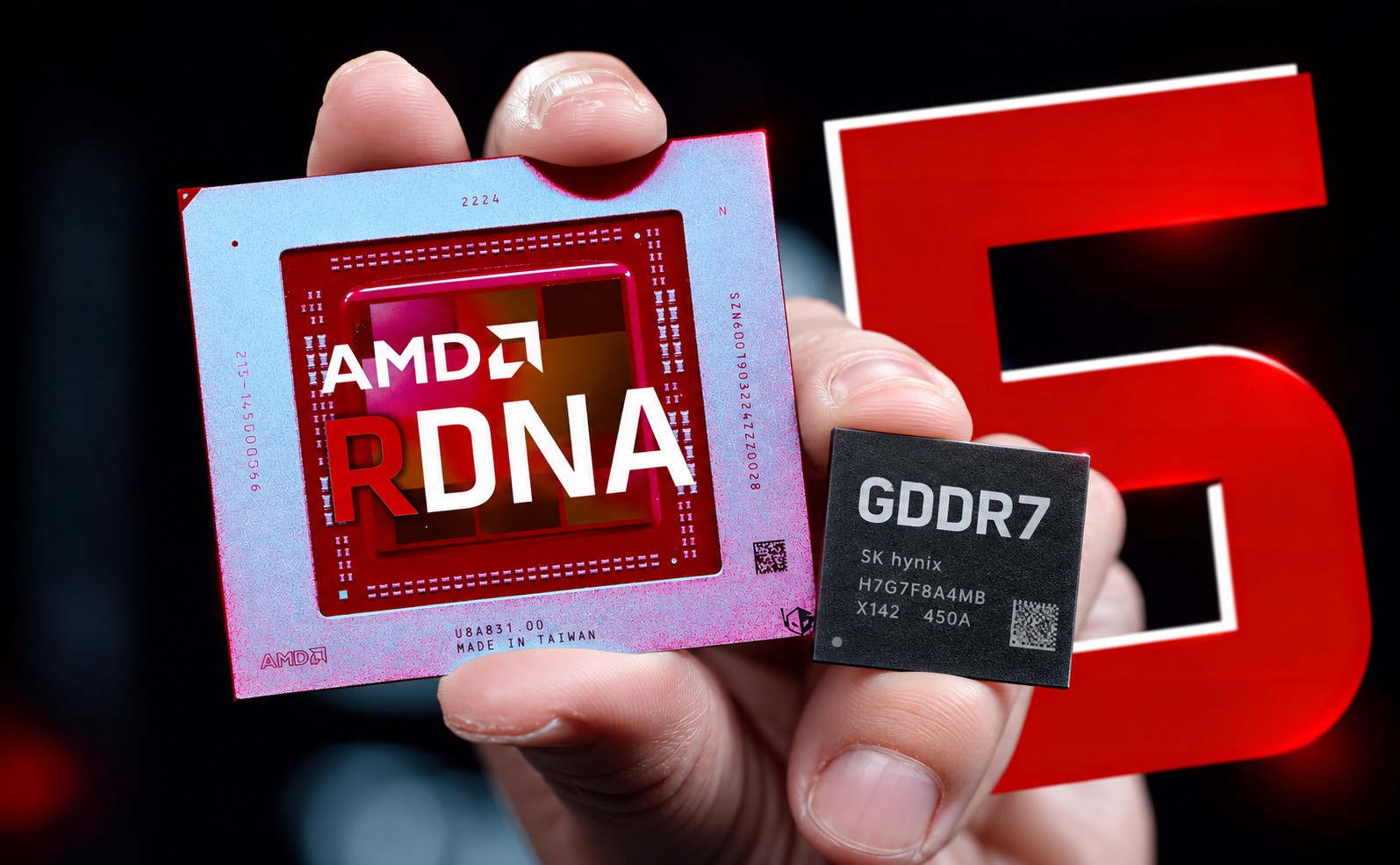
AMD Linux Driver Update Hints at GDDR7 Support for Future Radeon GPUs
AMD appears to be laying the groundwork for next-generation Radeon graphics cards with faster GDDR7 memory, according to recent updates found in its open-source Linux graphics driver.
The latest AMDGPU kernel patches now include GDDR7 as a recognized video memory type. While this does not officially confirm the memory configuration of AMD’s future GPUs, it strongly suggests that the company is preparing its driver stack for upcoming graphics hardware that may move beyond GDDR6.
For several Radeon generations, AMD has relied on GDDR6 memory. A shift to GDDR7 would mark a major upgrade, offering higher bandwidth and better efficiency for gaming, content creation, AI workloads, and other graphics-heavy applications. As modern GPUs become more demanding, memory speed is becoming increasingly important for overall performance.
The timing of this update is especially interesting because AMD has also been adding support for new graphics IP blocks that may be tied to its future RDNA 5 architecture. RDNA 5 has previously been associated with the GFX13 codename, and recent Linux kernel work has included multiple changes that appear to prepare for upcoming GPU designs.
Among the latest additions are support for IH 8.0 and NBIF 7.10. IH refers to AMD’s interrupt handling hardware, while NBIF stands for New Bus Interface, a key component related to communication within the GPU platform. These updates indicate that AMD is not only preparing for a new memory standard but also building out broader infrastructure for future Radeon products.
GDDR7 is expected to deliver a significant jump over GDDR6, with much higher data transfer rates. That could help future AMD Radeon graphics cards compete more aggressively in high-end gaming and workstation performance, especially as next-generation games and professional applications continue to demand more memory bandwidth.
Still, the appearance of GDDR7 support in AMD’s Linux driver should not be treated as official confirmation of RDNA 5 specifications. Driver updates often arrive long before products are announced, and companies frequently prepare support for hardware well ahead of launch.
Even so, these patches are an important sign of progress. AMD seems to be steadily building the foundation for its next major Radeon GPU family, with early software support arriving well before the hardware reaches consumers.
Based on current development patterns, AMD’s broader RDNA 5 lineup may still be some time away, with a possible arrival around early 2028. However, there are indications that at least one future GPU could appear sooner, potentially sometime next year.
For now, the key takeaway is clear: AMD is preparing its Linux graphics driver for GDDR7 memory, and that could play a major role in the company’s next generation of Radeon graphics cards.