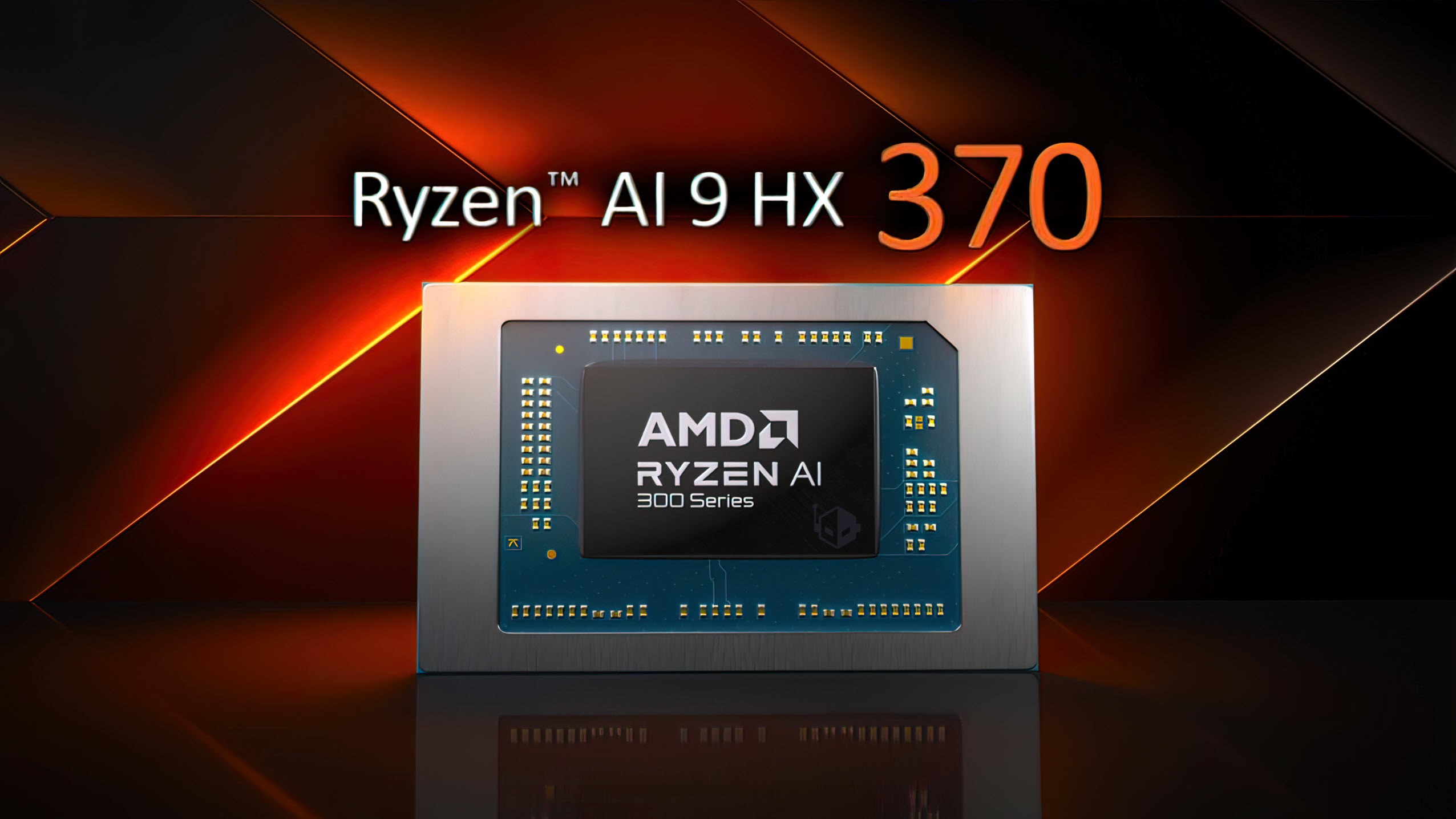
Recent benchmark leaks point to a formidable increase in performance for AMD’s upcoming Ryzen AI 9 HX 370 APU, a component of the highly anticipated “Strix Point” lineup. Preliminary results hint that the new chip may mark a significant step forward in mobile processing, particularly in single-core capabilities.
The Ryzen AI 9 HX 370 APU is set to be a part of AMD’s Ryzen AI 300 series, featuring the brand-new Zen 5 core architecture. The chip, which includes 12 cores and 24 threads split between a four Zen 5 and eight Zen 5C configuration, promises substantial gains over its predecessors. With a 5.1 GHz boost clock frequency, 36 MB of combined cache, and an integrated Radeon 890M iGPU composed of 16 compute units or 1024 cores, this APU signifies a robust generational leap. Specifically, compared to the previous flagship, the Ryzen 9 8945HS, users can anticipate 50% more cores and threads, a 33.3% increase in compute units, and a substantial surge in NPU performance.
Benchmark results from Geekbench have surfaced for laptops featuring this APU—the ASUS Zenbook S16 and ASUS TUF Gaming A14. The figures reveal impressive scores, with the Zenbook S16 earning 2795 points in single-core and 14,124 points in multi-core tests. In contrast, the ASUS TUF Gaming A14 scored slightly higher in single-core performance at 2816 points, but slightly lower in the multi-core with 12,916 points. These results highlight the impact of different TDP configurations on the Ryzen AI 9 HX 370 APU’s multi-core performance, while single-core results demonstrate significant improvement over past records.
In comparison to established chips, these early tests suggest that the AMD Ryzen AI 9 HX 370 “Strix Point” APU boasts a 20% increase in multi-core and an 18.3% increase in single-core performance when compared to the Ryzen 9 8945HS. Furthermore, this chip competes neck-and-neck with the higher TDP and frequency Ryzen 9 7845HX, and it manages to deliver near-identical single-core performance to the Ryzen 9 7945HX3D, which operates at a higher 5.4 GHz frequency.
While these initial benchmarks reflect promising performance data, it’s expected that the final product could deliver even better results, possibly reaching close to 3000 points for single-core performance—a figure that would solidly position the next-gen mobility architecture in the market. Slated for launch in mid-July, AMD’s Strix Point APUs will stand as direct competitors to Qualcomm’s Snapdragon series and Intel’s Lunar Lake processors.
The technology world is eagerly anticipating the release of AMD’s Ryzen AI 300 laptop series, which is set to bring these advancements to consumers. With the integration of Zen 5 architecture, AMD is gearing up to redefine processing efficiency in the mobile sphere, balancing performance with power consumption to fit a wide range of devices.