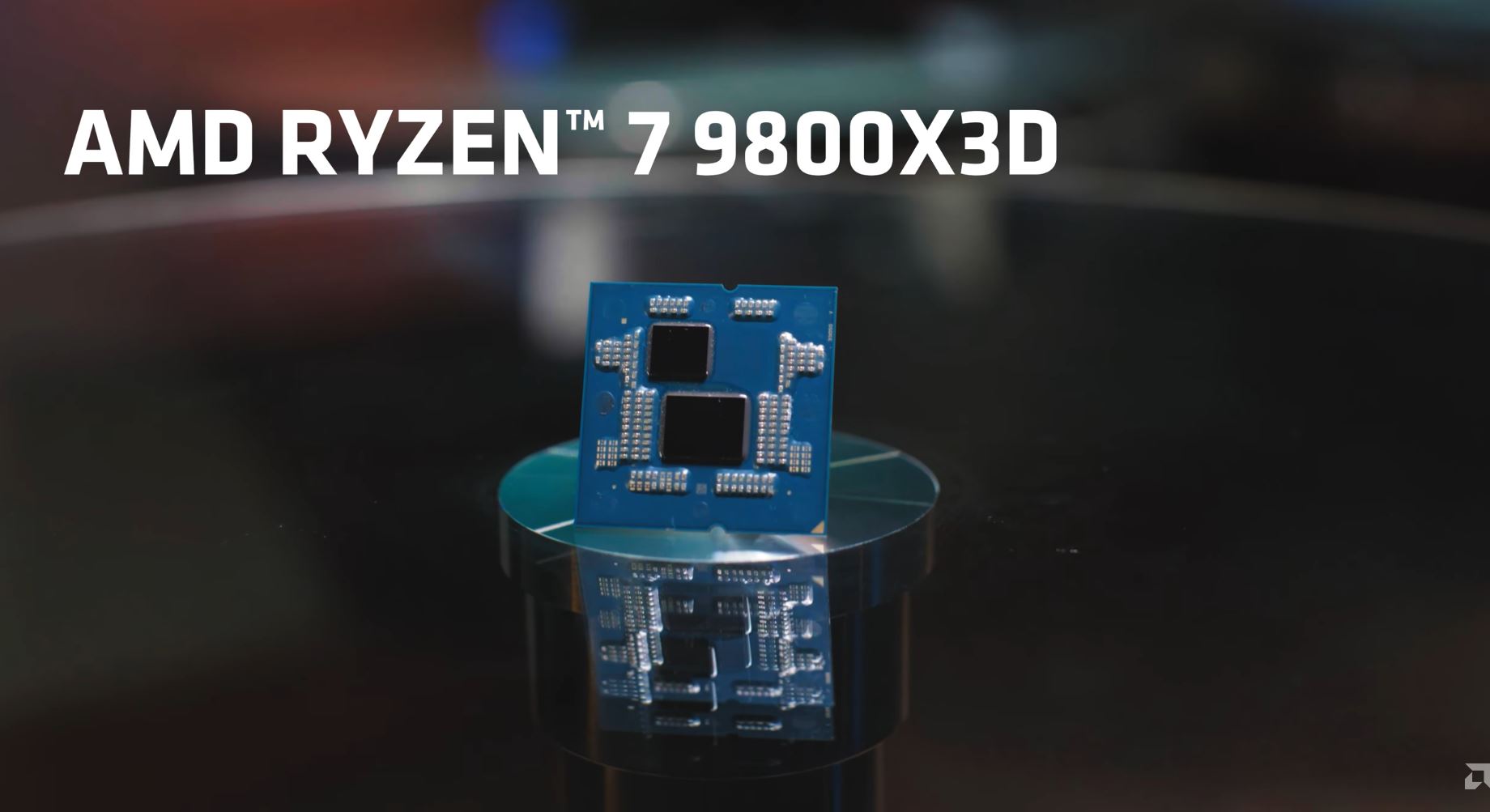
The AMD Ryzen 7 9800X3D has set a new benchmark in gaming performance, thanks to its innovative use of 3D V-Cache technology. Following in the footsteps of its predecessor, the Ryzen 7 5800X3D, AMD has made a significant change in how the 3D stack is positioned. By placing the 3D chiplet beneath the Core Complex Die (CCD), instead of stacking it on top, the 9800X3D enjoys improved thermal performance and enhanced overclocking capabilities. This design tweak enables the processor to achieve speeds up to 4.7 GHz, even at the base clock.
Interestingly, while the Ryzen 7 9800X3D’s structure is primarily occupied by non-functional silicon, this design choice serves an essential purpose. According to semiconductor analyst Tom Wassick, the actual silicon layers involved in the operation are quite thin—just 7.2µm for the CCD and 6µm for the SRAM. The overall die stack measures between 40-45µm, yet the complete CCD breezes past that to a robust 800µm thickness.
The bulk of this thickness comes from 750µm of non-functional silicon, which might seem superfluous at first glance. However, rather than being pointless, these layers are crucial for maintaining the processor’s structural stability and reliability. The added silicon lends much-needed support to the fragile, ultra-thin layers and mitigates the risk of damage during manufacturing or handling. Additionally, the SRAM layer extends 50µm on the sides, further bolstering durability.
This strategic integration of seemingly redundant silicon ensures not only the security of the delicate components but also optimizes the overall stability of the 3D die stack. By embedding the SRAM underneath the CCD, AMD has also tackled heat management, ensuring that the processor cores can be cooled directly and efficiently. Consequently, the Ryzen 7 9800X3D stands as a paragon of performance and innovation, expertly balancing groundbreaking technology with robust design for a superior gaming experience.