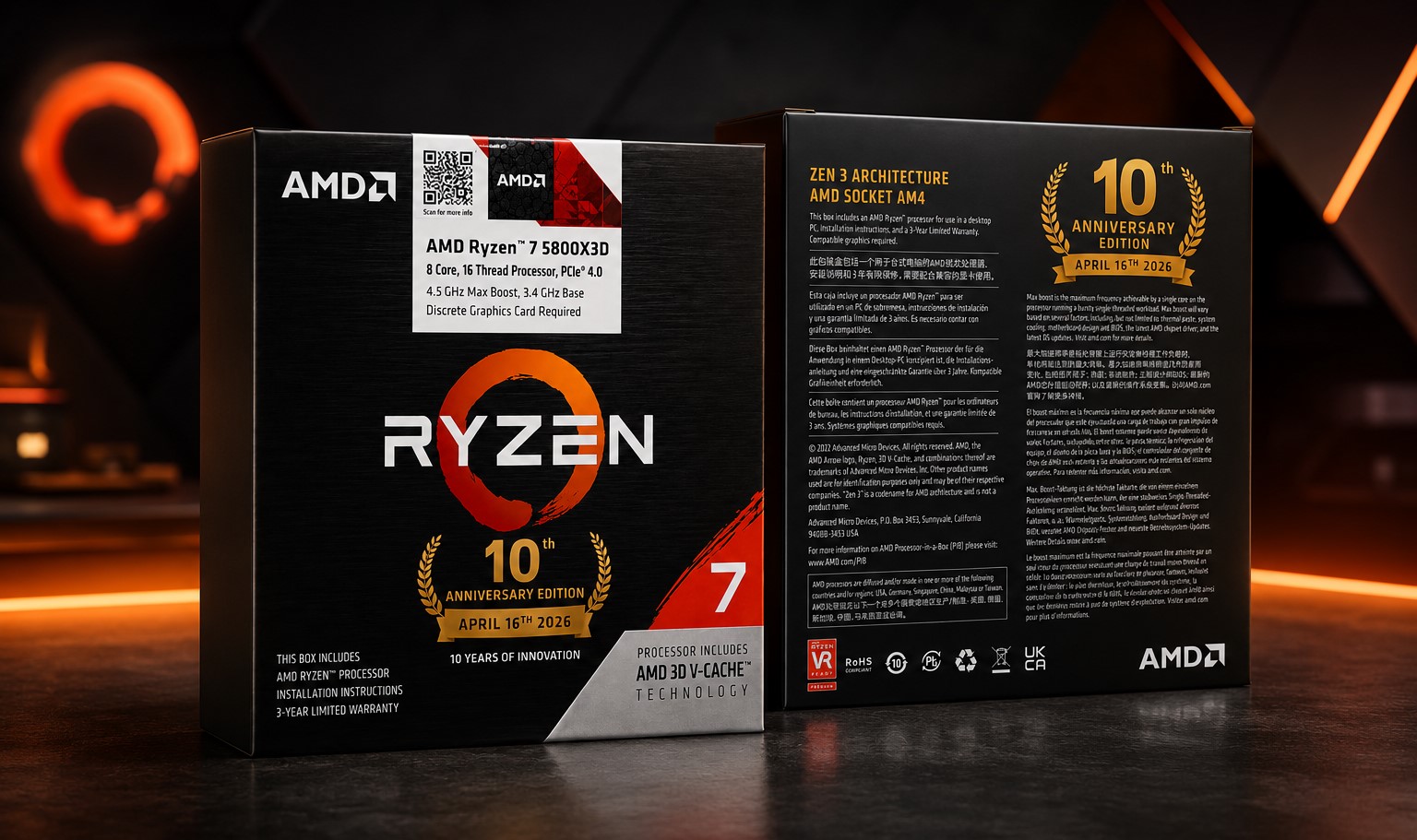
AMD Ryzen 7 5800X3D comeback was far more complicated than expected
The AMD Ryzen 7 5800X3D may look like a familiar CPU returning to store shelves, but AMD says bringing it back was not as simple as restarting an old production line. Behind the scenes, the company reportedly had to carry out a significant engineering effort to revive one of the most popular gaming processors ever released for the AM4 platform.
The Ryzen 7 5800X3D originally launched as AMD’s first consumer processor with 3D V-Cache technology. At the time, it quickly became a favorite among PC gamers because it delivered excellent gaming performance without requiring a full platform upgrade. Even years later, the chip remains highly desirable, especially for users who already own AM4 motherboards and DDR4 memory.
That continued demand is easy to understand. The AM4 platform is still widely used, affordable, and supported by a large number of motherboards. For many gamers, upgrading to a Ryzen 5000 series processor is still cheaper than moving to AM5, which usually requires a new motherboard and DDR5 memory. With DDR5-based builds becoming more expensive for some buyers, interest in strong DDR4 gaming systems has remained surprisingly high.
This is one of the main reasons many users kept asking AMD to bring back CPUs such as the Ryzen 7 5800X3D and Ryzen 7 5700X3D. While newer processors offer higher performance, the older X3D chips still provide a strong balance of price, gaming speed, and upgrade convenience for existing AM4 users.
However, AMD’s challenge was not demand. The real issue was manufacturing.
According to AMD executive David McAfee, the original production method used for the Ryzen 7 5800X3D was no longer available in the same form. The chip depended on an early version of TSMC’s advanced 3D stacking process, which allowed AMD to place an extra cache die directly on top of the CPU die. This was the key technology behind 3D V-Cache and one of the main reasons the 5800X3D performed so well in games.
Since the original release, TSMC’s chip-stacking technology has moved forward. The first-generation process used for the original Ryzen 7 5800X3D had changed, meaning AMD could not simply manufacture the processor exactly the same way it did years ago. Instead, the company had to adapt the chip for a newer generation of the stacking process.
That required more than a minor adjustment. AMD had to re-engineer parts of the product, validate the updated manufacturing method, and make sure the revived processor could maintain the same reliability and performance that made the original so popular. McAfee described the effort as a major body of engineering work, making it clear that this was not just old inventory being pushed back into the market.
This also helps explain why the Ryzen 7 5800X3D became harder to find after being discontinued. Once the original manufacturing technology was no longer available, keeping the chip in production became much more complicated. But with the AM4 platform still active and millions of users looking for affordable gaming upgrades, AMD had a strong reason to bring it back.
The return of the Ryzen 7 5800X3D shows how important 3D V-Cache has become to AMD’s gaming CPU strategy. X3D processors have built a strong reputation among gamers, often delivering standout performance in titles that benefit from extra cache. Even as newer Ryzen X3D chips push performance further, the 5800X3D remains a special product because it extends the life of AM4 systems without forcing users into a full platform change.
For PC builders, that makes the revived Ryzen 7 5800X3D more than just an old processor returning to the market. It is a practical upgrade path for anyone who wants better gaming performance from an existing DDR4 system. It also highlights how much engineering can be required to keep a successful chip alive after the technology used to build it has evolved.
In short, the Ryzen 7 5800X3D comeback was not a simple re-release. It was a carefully reworked revival of one of AMD’s most iconic gaming CPUs, brought back at a time when many gamers are still looking for high performance without the cost of moving to a brand-new platform.