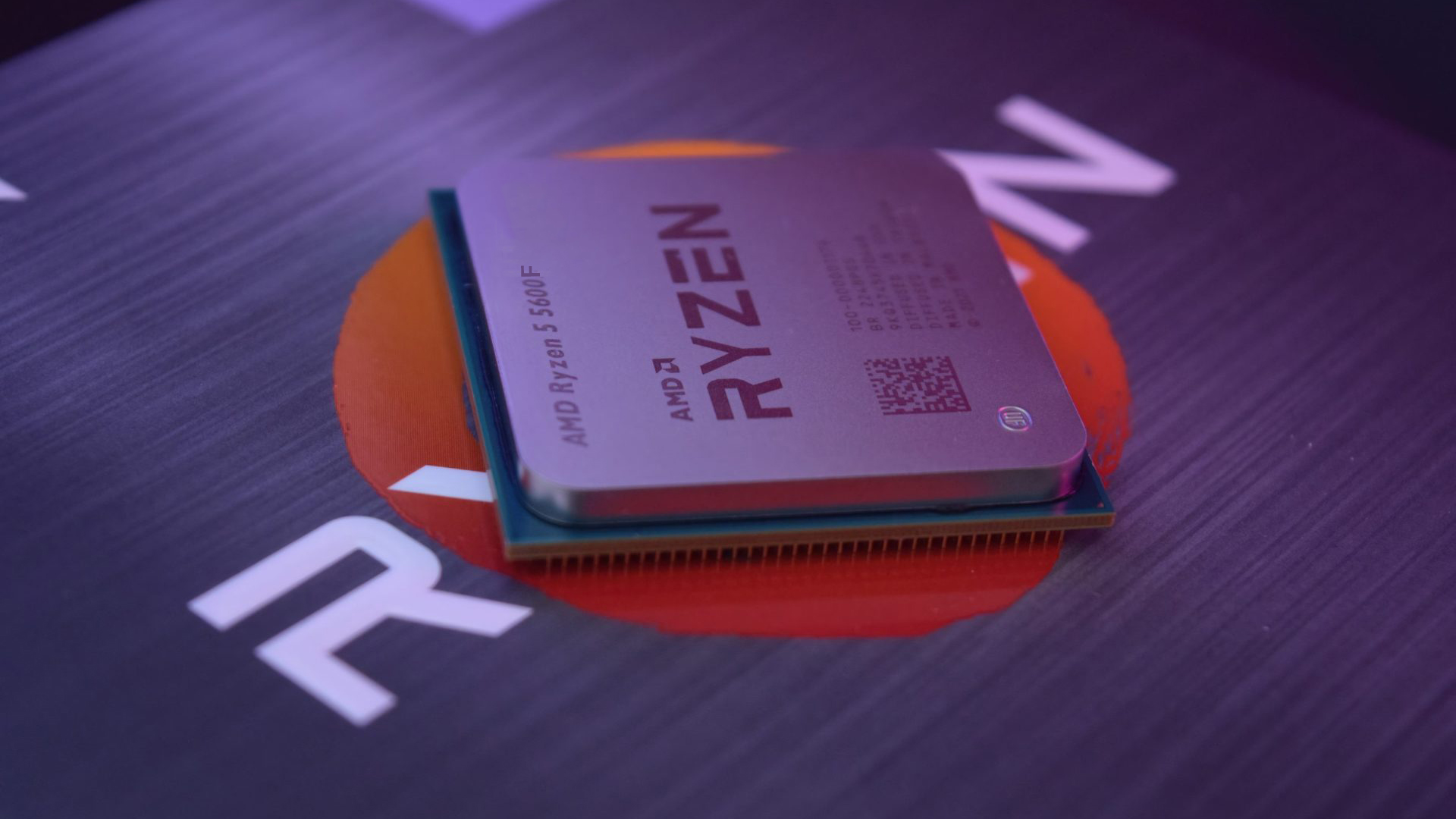
AM4 just won’t quit. AMD has quietly added another Zen 3 chip to its long-lived socket with the Ryzen 5 5600F, a budget-friendly CPU aimed at squeezing even more life out of existing AM4 systems.
The 5600F follows a familiar formula: 6 cores, 12 threads, and no integrated graphics. That last part is what makes the “F” branding a bit puzzling, since most Zen 3 desktop chips already lack an iGPU. Still, the move suggests AMD is continuing to utilize remaining Zen 3 silicon to keep the entry-level market well-stocked.
According to AMD’s official product page, the Ryzen 5 5600F carries notably lower clocks than the standard Ryzen 5 5600. You’re looking at a 3.0 GHz base and 4.0 GHz boost on the 5600F, compared to 3.5 GHz and 4.4 GHz on the 5600. That’s a significant trim, echoing the strategy seen with other recent “F” models. The good news: AMD kept the 32 MB L3 cache intact, which can make a real difference in gaming and select productivity workloads.
Where does it land against the Ryzen 5 5500? On paper, the 5500 holds an advantage in base and boost frequencies, but the 5600F’s larger cache could tip the scales in certain titles and tasks. As usual in this price class, the best choice will come down to what you play, what you do, and how each chip is priced in your region.
Speaking of regions, availability is currently limited to the APJ market (Asia Pacific and Japan). A wider rollout hasn’t been announced. Pricing also hasn’t been disclosed, but expectations point to a sub-$100 position to sit below the standard Ryzen 5 5600, which often hovers around the $100 mark at major retailers, and above the Ryzen 5 5500, which frequently dips under $80.
The Ryzen 5000 series has become AMD’s most expansive desktop family to date, spanning non-X, X, XT, G, GT, X3D, and now F variants. If you’re running an AM4 motherboard that supports Zen 3, the 5600F provides yet another low-cost path to refresh an older system—especially for gamers who value cache-driven performance and don’t need integrated graphics.