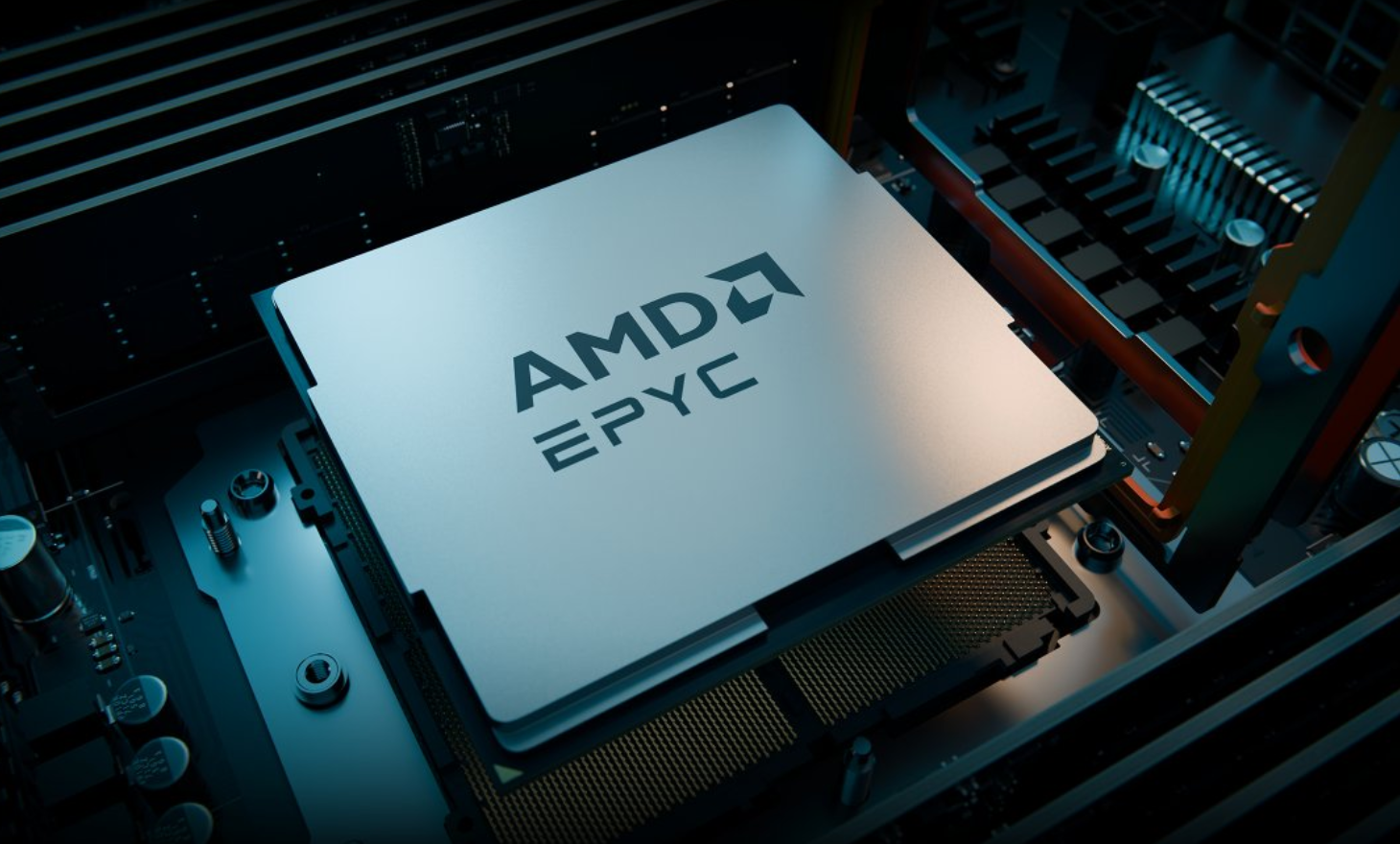
AMD EPYC 8005 “Sorano” debuts with Zen 5 cores, up to 84 cores, and a 225W TDP
AMD has officially introduced its new EPYC 8005 “Sorano” server processor family, bringing Zen 5 performance to compact, power-efficient single-socket systems. Designed for edge computing, telecom, vRAN, cloud storage, and space-constrained server deployments, the new lineup focuses on delivering strong data center capabilities without the higher power and platform requirements of AMD’s larger EPYC 9005 series.
The biggest change with EPYC 8005 is its CPU architecture. Unlike the previous EPYC 8004 “Siena” family, which used compact Zen 4c cores, the new Sorano processors rely entirely on full Zen 5 cores. That means AMD is targeting customers who want higher per-core performance, larger cache configurations, and modern server features in a smaller and more efficient platform.
The EPYC 8005 lineup scales from entry-level 8-core, 16-thread models all the way up to the flagship EPYC 8635P, which features 84 cores and 168 threads. The top chip also includes 384 MB of L3 cache and operates with a default TDP of 225W. Across the full product stack, AMD lists power ranges from 70W to 225W, giving system builders flexibility depending on whether they need low-power edge hardware or higher-density compute performance.
Clock speeds have also improved, with select EPYC 8005 processors reaching boost frequencies of up to 4.5 GHz. Combined with the shift to Zen 5 cores, the lineup is positioned to offer better responsiveness and stronger performance in workloads that benefit from high single-thread and multi-thread throughput.
AMD is not positioning EPYC 8005 as a direct replacement for high-end dual-socket server platforms. Instead, Sorano is built for single-socket deployments where power, cooling, physical space, and cost are major considerations. Typical use cases include cell tower infrastructure, outdoor equipment cabinets, compact storage servers, quiet edge systems, and telecom workloads that need reliable server-class processing in limited environments.
The platform also brings modern I/O and memory support, including PCIe 5.0 connectivity and DDR5 memory. This is important for customers building systems around fast networking, storage acceleration, and high-bandwidth peripherals. For many edge and storage deployments, having access to strong I/O capabilities can be just as important as raw CPU core count.
AMD claims the flagship EPYC 8635P delivers up to 40% higher top-stack integer performance compared with the previous-generation 64-core EPYC 8004 flagship. The company also says the new chip offers 9.5% better performance per watt. Against Intel’s 40-core Xeon 6716P-B, AMD claims up to 91% higher integer performance while running at a 10W lower TDP.
Those figures make the EPYC 8005 series an interesting option for server buyers who want modern Zen 5 performance, large cache capacity, PCIe Gen 5 support, and enterprise-class memory features without moving to a larger and more expensive EPYC 9005 platform.
With EPYC 8005 “Sorano,” AMD is expanding its Zen 5 server portfolio into a segment where efficiency and density matter just as much as performance. By avoiding Zen 5c cores and using full Zen 5 cores across the lineup, AMD is giving edge, telecom, and storage customers a processor family that is compact, efficient, and still capable of serious server workloads.