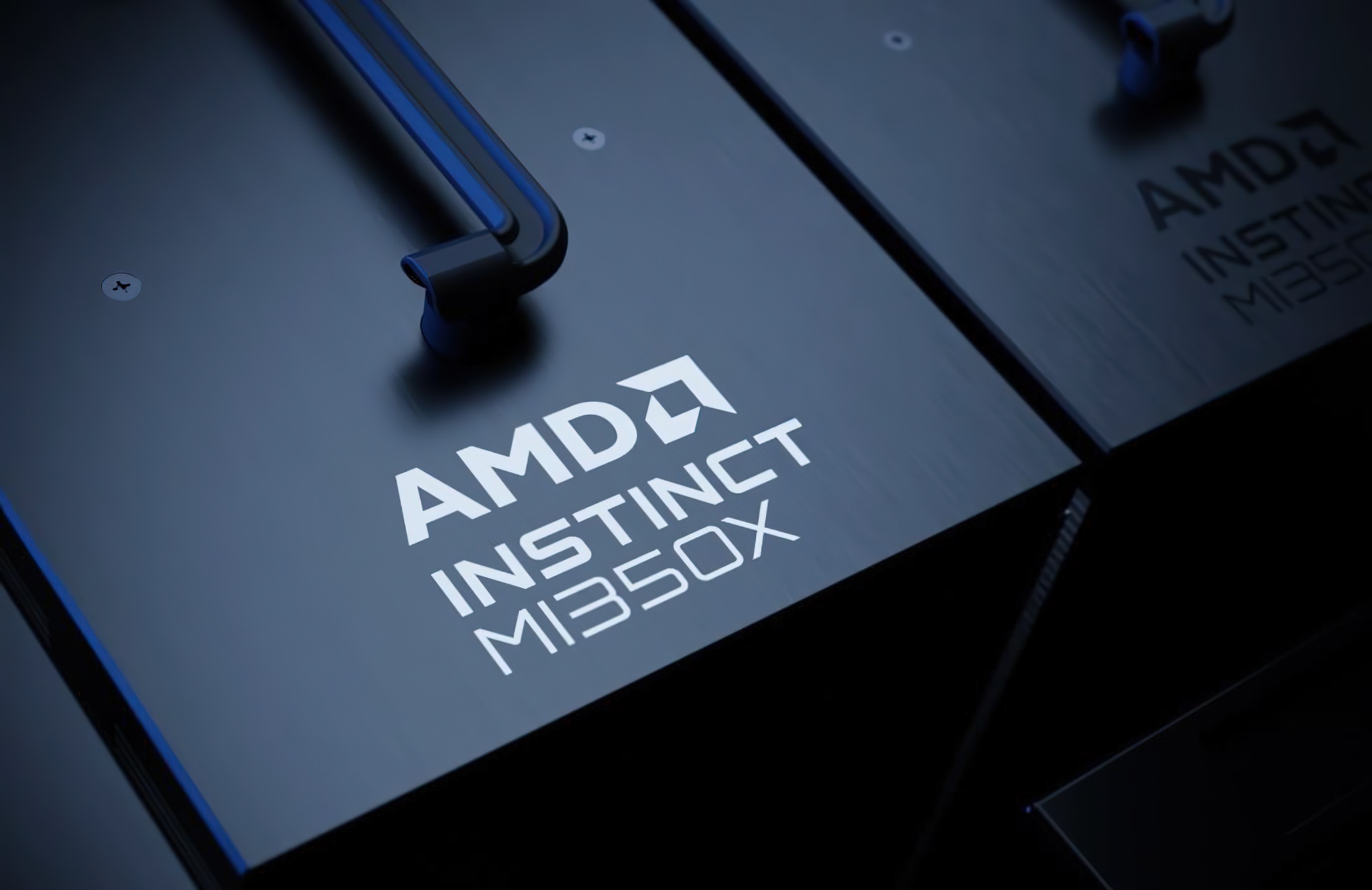
The AI technology landscape is witnessing a fierce competition among key players, with AMD emerging as a driving force in accelerating industry innovation, particularly in the realm of AI accelerators.
Rivalry Spurs Innovation
AMD’s launch of its Instinct GPUs has notably made waves in the industry, influencing NVIDIA to fast-track its AI roadmap. In an interview, AMD’s Data Center Solutions Business Group Executive Vice President and General Manager, Forrest Norrod, highlighted how AMD’s aggressive strategy and commitment to AI have prompted NVIDIA to shift to a yearly release cadence for its Data Center AI products.
The AI field is rapidly advancing, and AMD is determined to cater to customer demands through relentless innovation in hardware and software. The company’s robust ROCm software suite is an example of this dedication. AMD plans to extend its Instinct AI accelerators portfolio with the upcoming MI325, MI350, and MI400 series, scheduled for release between 2024 and 2026.
The Heat Is On: AMD vs. NVIDIA
Forrest expressed that NVIDIA’s “Holy Crap” moment came with AMD’s Instinct MI300 launch, pushing them to press forward to maintain a lead in the AI race—a clash AMD welcomes with open arms. Consequently, NVIDIA has mapped out its roadmap with the Blackwell B100 launch this year and future accelerators like Blackwell Ultra and the Rubin series.
AMD insists they’re not simply reacting to NVIDIA’s moves; they’ve been proactively contesting NVIDIA’s domination in this segment. With the MI325 and MI350 AI accelerator refreshes on the horizon, AMD aspires to reduce the gap with NVIDIA’s launches and even surpass them.
The soon-to-be-released MI325X is anticipated to outperform NVIDIA’s Hopper H200 and compete effectively against the upcoming Blackwell B100. The next-gen MI350 series, equipped with the CDNA 4 architecture, is expected to exceed the projected performance of NVIDIA’s B200.
Optimization and Ecosystems
While AMD acknowledges NVIDIA’s efforts in optimizing CPU and GPU architectures—as seen with their GB200 Grace Hopper and Grace Blackwell solutions—AMD prides itself on setting the groundwork with its own EPYC (Trento) and Instinct MI250 (GPU) for the Frontier supercomputer, achieving both remarkable computing efficiency and the milestone of breaking the Exaflops barrier.
For diverse market needs, AMD offers a range of solutions from tightly packaged APUs in the MI300A series to the more diverse MI300X and MI300A options, underpinning their commitment to an open ecosystem through platforms like Ultra Ethernet (UE) and Ultra Accelerator Link (UAL). This approach allows customers flexibility and freedom from proprietary constraints typically associated with exclusive technology ecosystems.
Competitive Landscape and Pricing Strategy
Forrest also addressed Intel’s Gaudi 3 accelerators’ pricing, suggesting that the listed pricing is unlikely to reflect actual sale prices, insinuating that most products probably sell for less than listed, attributing it to marketing tactics.
As AMD, NVIDIA, and Intel vie for dominance in the lucrative AI segment, the competitive landscape is heating up. AMD asserts its firm dedication to shaking up the AI market, vowing to continue challenging the status quo and propelling the industry forward.
Conclusion
The dynamic between these major technology vendors is an interesting narrative of competition and innovation, showcasing a relentless pursuit of advancement in AI technologies. As these companies jostle for market share, the beneficiaries are not just the entities themselves but the field of AI and the consumers of these technologies. The commitment displayed by AMD to drive forward suggests that the AI race is only just beginning, setting the stage for an exciting evolution of AI capabilities and applications in the coming years.


