AMD Sees Unified Memory Architecture as a Major Step Forward for AI PCs and Future Desktops
Unified Memory Architecture, often called UMA, is quickly becoming one of the most important design trends in modern computing. As AI workloads grow larger and more demanding, PC hardware is being pushed toward tighter integration between the CPU, GPU, and system memory. AMD believes this shift is only beginning, and the company sees major opportunities for UMA across future platforms.
The idea behind Unified Memory Architecture is simple but powerful. Instead of keeping memory resources separated between the processor and graphics chip, UMA allows the CPU and GPU to share a large pool of memory. This can make systems more efficient, flexible, and better suited for demanding workloads such as artificial intelligence, content creation, simulation, and potentially high-end gaming.
The rise of Agentic AI has made this approach even more relevant. Large language models and advanced AI applications often require huge amounts of memory, especially when running locally on a PC or workstation. A unified memory pool can allow the GPU to access far more memory than would typically be available on a traditional graphics card, making it possible to run larger AI models on compact systems.
AMD has already moved in this direction with its Ryzen AI MAX family. These processors combine powerful CPU cores, integrated graphics, and large memory support in a tightly connected design. First-generation Ryzen AI MAX products can support up to 128 GB of memory, with as much as 112 GB potentially available to the GPU depending on the workload.
That kind of memory flexibility is a major advantage for AI computing. Instead of being limited by fixed graphics memory, a UMA-based system can dynamically allocate resources where they are needed most. If an AI model needs more GPU memory, the system can provide it from the shared pool. If CPU-heavy tasks need more memory, the allocation can shift accordingly.
AMD’s David McAfee recently discussed the future of UMA and suggested that the industry is still at the early stage of exploring what these platforms can achieve. He noted that AMD’s Strix Halo design, along with similar moves from other major hardware companies, is bringing more attention to unified memory systems and the kinds of workloads they can enable.
According to McAfee, UMA opens “a world of possibilities” because it addresses a new class of computing needs. AI workloads are changing what users expect from PCs, especially as more advanced models move from cloud servers to local hardware. This shift could influence future AMD product decisions, roadmap planning, and platform designs.
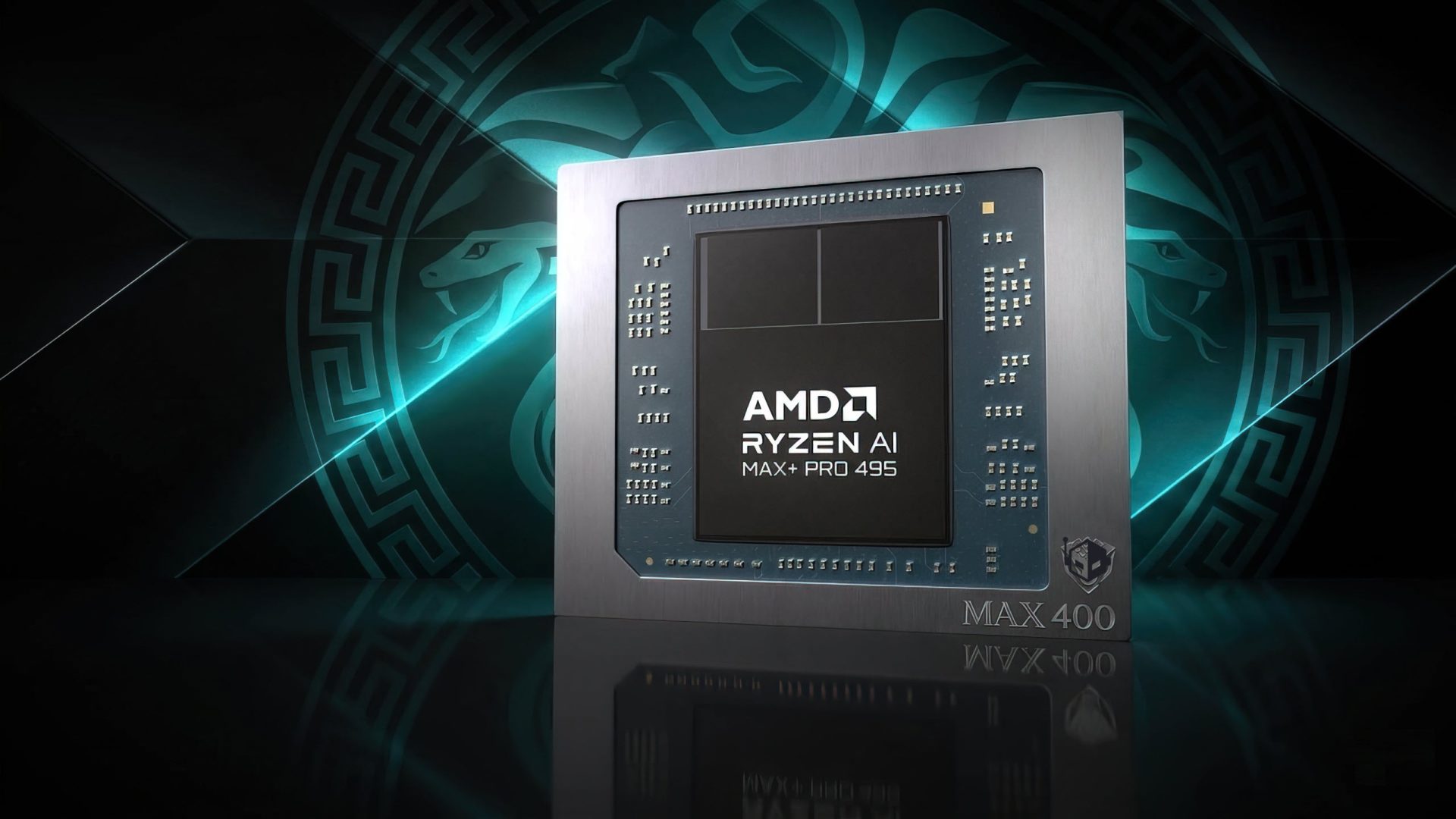
AMD is already preparing its next step with the Ryzen AI MAX 400 series. These upcoming chips are expected to raise the memory ceiling significantly, supporting up to 192 GB of memory. Even more importantly, they may allow up to 160 GB of memory to be dedicated to the GPU. That would make them capable of supporting extremely large AI language models, including models with more than 300 billion parameters.
This is a major development for AI PCs. Running massive models locally has traditionally required expensive server-grade hardware or specialized accelerators. UMA-based systems could make powerful AI capabilities more accessible in smaller desktops, workstations, and high-performance mobile platforms.
One of the most interesting questions surrounding UMA is whether this architecture could eventually appear in Ryzen gaming CPUs or enthusiast desktop processors. McAfee did not confirm any specific product plans, but he acknowledged that the emergence of unified memory systems could transform how the industry thinks about high-performance desktops.
That possibility is especially exciting when paired with other advanced technologies. A future Ryzen processor with a UMA-style design, 3D V-Cache, or premium on-package memory could deliver major performance improvements by reducing latency and increasing bandwidth between the CPU, GPU, and memory. While AMD has not announced such a product, the concept shows how much room there is for innovation.
For gaming, UMA could become useful if integrated graphics continue to grow more powerful and memory bandwidth improves. Traditional gaming PCs still rely heavily on discrete graphics cards with dedicated VRAM, but future platforms may blur the line between integrated and discrete performance. A fast unified memory design could help compact systems deliver stronger graphics performance without requiring a separate GPU.
For AI, the benefits are even clearer. Large models need large memory pools, and UMA directly addresses that challenge. Instead of building a system around a fixed amount of GPU memory, users could benefit from a more flexible architecture that adapts to the task. This is especially important for local AI assistants, AI content generation, coding tools, research models, and enterprise AI applications.
AMD also appears to view broader industry adoption as a positive sign. McAfee suggested that when more companies embrace UMA-like designs, it strengthens the ecosystem and helps software developers better support unified memory platforms. This matters because hardware alone is not enough. For UMA to reach its full potential, operating systems, drivers, development tools, and AI frameworks must be optimized to take advantage of shared memory resources.
The broader message is clear: Unified Memory Architecture is no longer just a niche concept. It is becoming a serious foundation for next-generation AI computing. AMD’s Ryzen AI MAX products are already showing what this approach can do, and the upcoming Ryzen AI MAX 400 series could push the concept much further.
While it remains uncertain whether UMA will soon appear in mainstream Ryzen desktop gaming CPUs, AMD clearly sees unified memory as an important part of the future. The technology could reshape AI PCs, compact workstations, creator systems, and eventually high-performance desktops.
As AI workloads continue to expand, the demand for bigger, faster, and more flexible memory systems will only increase. UMA gives hardware makers a way to meet that demand by connecting CPU, GPU, and memory more closely than ever before.
AMD believes the industry is only at the beginning of this transition. If unified memory systems continue to evolve, they could unlock a new generation of PCs capable of handling massive AI models, advanced creative workloads, and powerful desktop-class performance in more efficient designs. The future of UMA looks promising, and its role in AI PCs and next-generation computing is likely to grow rapidly in the years ahead.