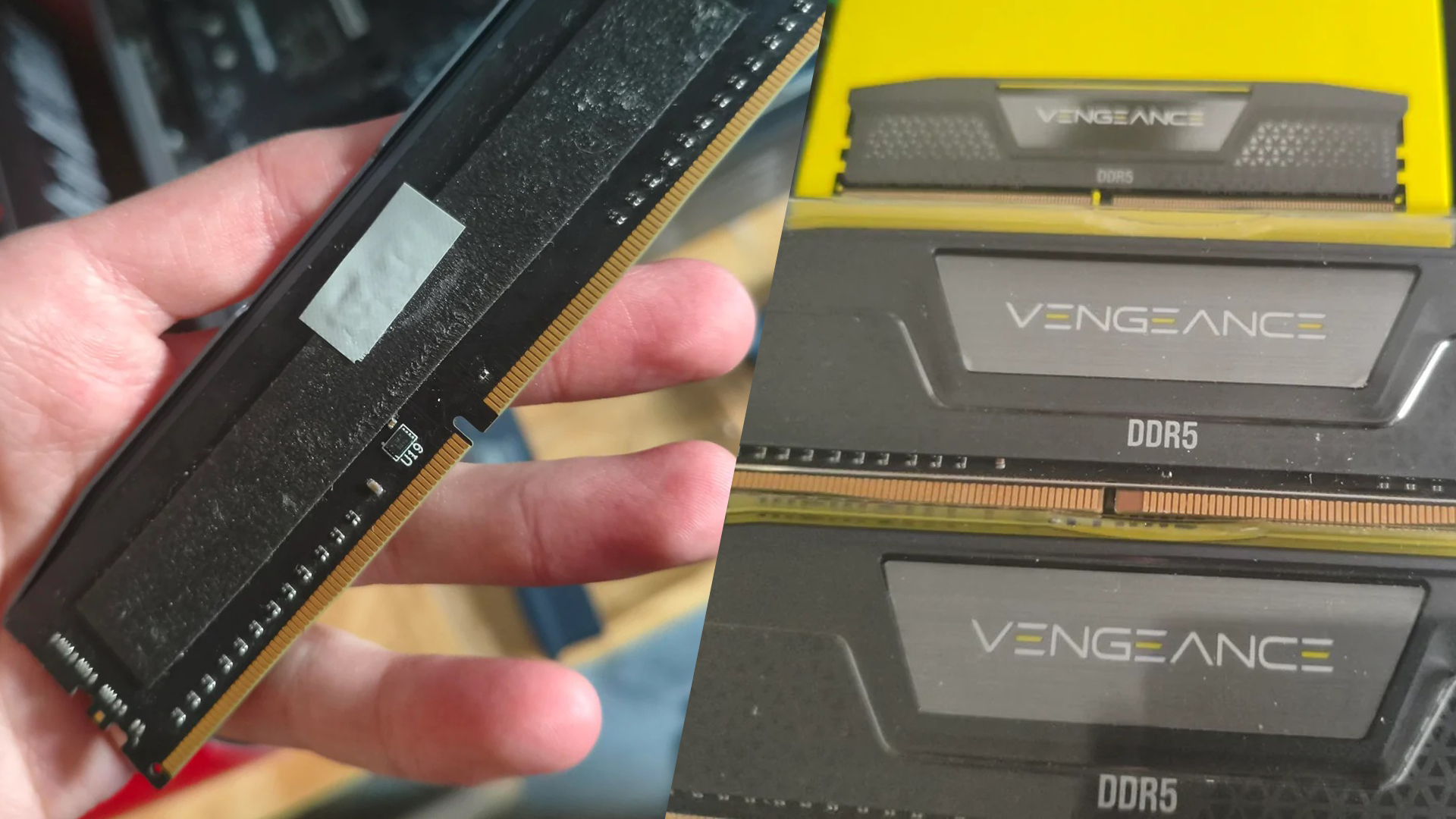
PC builders may need to add one more item to their pre-build checklist: making sure a “DDR5” memory kit is actually DDR5. Reports of counterfeit PC components have popped up for years, but scammers now appear to be targeting DDR5 RAM specifically—sometimes in ways that are hard to spot until you try installing it.
A recent case shared on Reddit describes a buyer who ordered a Corsair Vengeance DDR5 kit through Amazon and ended up with something very different. The package looked legitimate at first glance, but the user noticed the heatsinks on the modules felt loose. That was the first red flag. The bigger problem appeared during installation: the sticks wouldn’t fit properly in a DDR5 motherboard slot.
The key giveaway was the notch position on the gold contacts. DDR5 and DDR4 modules have the notch in different places, which prevents you from inserting the wrong type into the wrong slot. In the photos shared, the notch location lined up with DDR4, not DDR5. When the user removed the heatsink, the hardware underneath didn’t match what was advertised—suggesting the outer casing had been reused to disguise older RAM as newer, more expensive modules.
What makes this situation more concerning is that the purchase wasn’t from a random marketplace listing. According to the post, the kit was sold by Amazon, not a third-party seller. That doesn’t automatically mean the retailer intentionally sold counterfeit parts, but it highlights a common problem in modern tech retail: scams can happen higher up the supply chain, long before products reach a warehouse shelf. Returns fraud, repackaging, and swapped components can slip into inventory and later be shipped as “new.”
This isn’t an isolated type of scam either. Over the past year, there have been multiple high-profile incidents involving counterfeit graphics cards and processors appearing through legitimate retail channels—often not because a store is swapping parts, but because bad actors exploit weaknesses in distribution, packaging, and returns handling.
DDR5 RAM is an especially attractive target right now. As prices rise and demand stays strong, the profit incentive grows for scammers who can flip genuine DDR5 and replace it with cheaper DDR4 hardware hidden under a convincing heatsink. To most buyers, a RAM stick looks like a RAM stick—until the PC won’t boot, the module won’t seat properly, or the system reports the wrong specs.
In this Redditor’s case, they were able to get a refund. Still, it’s a frustrating outcome: time lost, a delayed build, and potentially higher replacement costs if DDR5 pricing continues climbing.
If you’re buying DDR5 memory, it’s worth taking a few precautions as soon as it arrives. Inspect the notch position before installing, look for unusually loose or poorly fitted heatsinks, and double-check the model and specifications once installed in BIOS or system tools. If anything feels off, start a return immediately rather than trying to “make it work.”


