Anthropic Report Suggests AI Server Costs Depend on Workload Patterns, Not Just Model Power
A new threat intelligence report from Anthropic is offering a closer look at how advanced AI systems behave when they are placed under demanding real-world workloads. The findings point to an important shift in how companies may evaluate artificial intelligence infrastructure, especially when deciding whether to buy dedicated AI servers, rent cloud capacity, or host models internally.
For many organizations, the conversation around AI infrastructure has focused heavily on model quality. Businesses often compare accuracy, speed, reasoning ability, and feature sets when choosing an AI system. But Anthropic’s report suggests that another factor may be just as important: how the AI is actually used over time.
The report indicates that AI server demand can vary dramatically depending on the type of task being performed. Some workloads may require short bursts of processing, while others consume large numbers of tokens and run for longer periods. Tasks that involve extended conversations, large documents, code analysis, cybersecurity research, data processing, or multi-step reasoning can quickly increase compute requirements.
This means the true cost of running an AI system is not only tied to the strength of the model. It is also shaped by token consumption, runtime, and how much context or operational state the system must maintain during a task.
For businesses, this could change how AI investments are planned. A company using AI for simple text generation may have very different infrastructure needs than one using AI agents to monitor systems, analyze threats, or perform long-running automated workflows. Even if both companies use similar models, their server costs and performance requirements could be completely different.
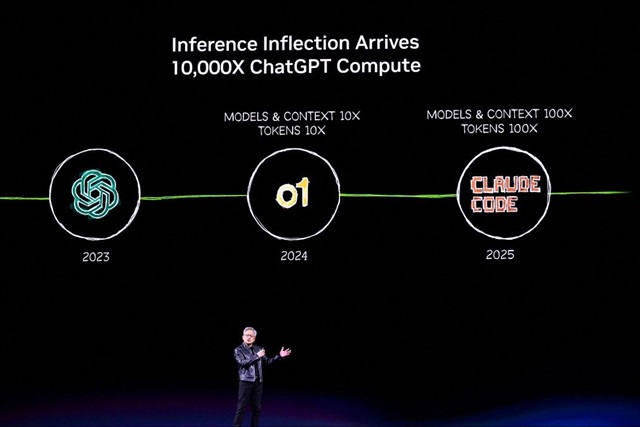
The growing importance of tokens is especially significant. In AI systems, tokens represent the pieces of text processed by the model. The more tokens a task requires, the more computational power is needed. Long prompts, detailed outputs, repeated interactions, and large context windows can all increase token usage. Over time, this can have a major impact on operating costs.
Another key point is state management. Some AI tasks require the system to remember previous steps, track ongoing activity, or maintain context across a long session. This can make workloads heavier and more complex, particularly for AI agents designed to work continuously rather than respond to one request at a time.
Anthropic’s findings suggest that organizations should look beyond benchmark scores when choosing AI infrastructure. Instead, they should analyze their actual usage patterns. Important questions include how long tasks typically run, how many tokens they consume, how much memory is needed, and whether the workload requires persistent context.
This approach could help companies avoid overspending on AI servers that are more powerful than necessary. It could also prevent underinvestment in infrastructure that cannot handle demanding real-world workloads.
As AI adoption expands, the market for AI servers and hosted AI platforms is likely to become more specialized. Businesses may begin choosing infrastructure based on workload categories rather than model names alone. Short, lightweight AI tasks may remain well-suited to cloud-based services, while high-volume or long-running workloads may push some organizations toward dedicated AI hardware or private hosting.
The report highlights a broader reality: AI performance is not just about what a model can do in ideal conditions. It is also about how efficiently it can operate at scale, under pressure, and across tasks that consume different amounts of compute.
For companies planning their next AI infrastructure move, the message is clear. The best choice may not be the most powerful model or the largest server setup. The smarter decision is the one that matches the organization’s real workload, token usage, runtime demands, and long-term operational needs.